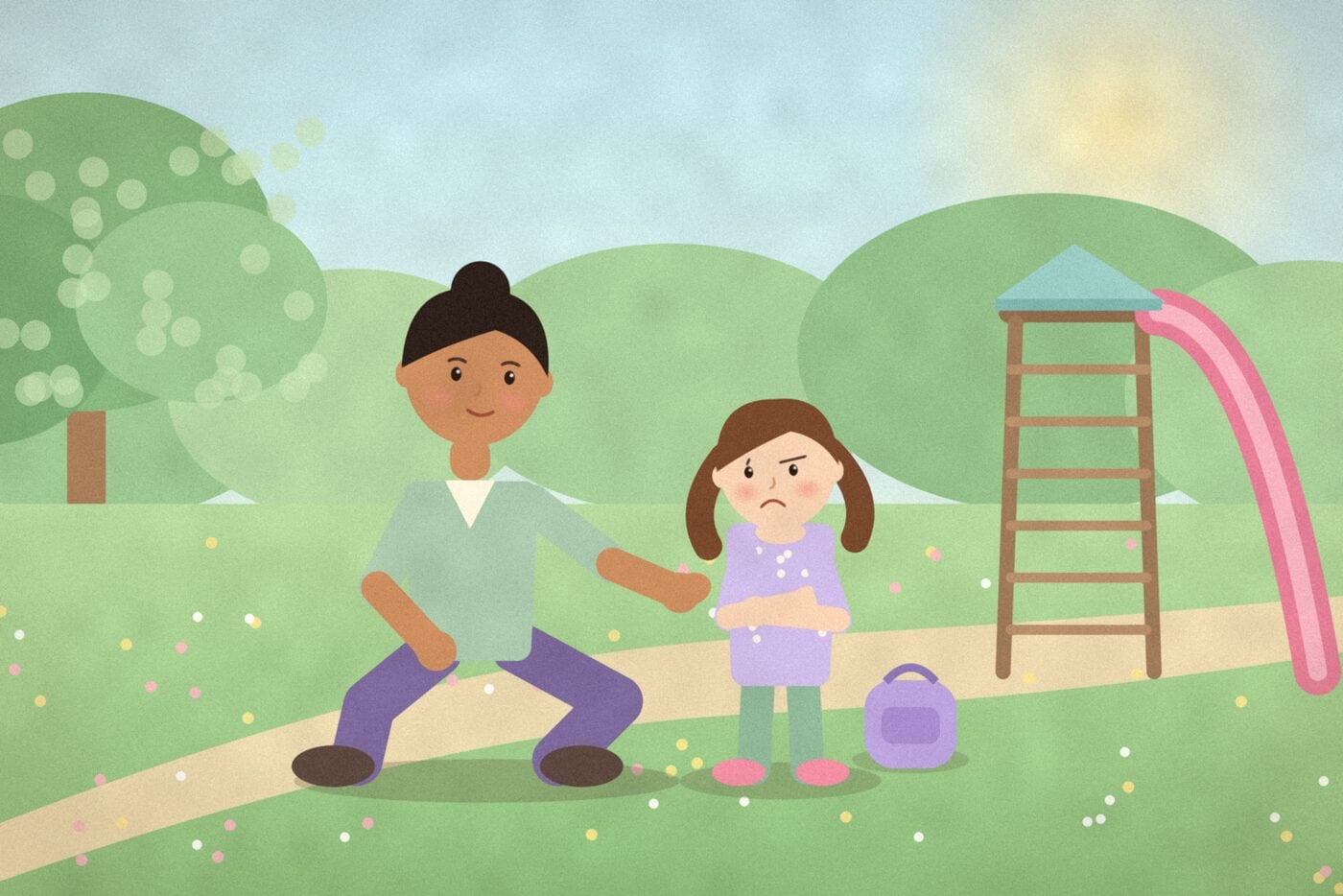
Gentle parenting looks lovely on paper. Then it is time to leave the playground, and your five-year-old has other plans, and those plans involve lying flat on the grass like a starfish. You crouch down. You say, “I can see you’re having so much fun and you’re sad we have to go.” You offer a choice between hopping to the car or walking. Nothing. Ten minutes later you are carrying a stiff, shouting child past a row of parents who are suddenly very interested in their phones.
Somewhere between the gate and the parking lot, the question shows up. Is this approach making things worse?
Plenty of parents are asking it. One 2026 trend roundup describes parents keeping the warmth and the talking but adding firmer, more consistent boundaries, after finding that a permissive version of gentle parenting brought more pushback, not less.
So here is the straight answer. In most households the problem is not the gentleness. The limit quietly went missing.
What gentle parenting is, and what it never promised
At its core, gentle parenting treats a child’s behavior as information. A meltdown tells you something: tired, hungry, overwhelmed, stuck. You answer with empathy instead of fear or shame, and you try to understand before you correct.
Nowhere in that idea does the child get to decide. The feeling is always allowed. The behavior is not always allowed. Short videos tend to cut the second half, and what is left looks like a parent narrating feelings to a child who is climbing the bookshelf.
Decades of research on parenting styles point the same way. Children tend to do best when they get plenty of warmth and clear, consistent expectations together. Researchers call that combination authoritative parenting, and it sits between the cold, strict approach and the permissive one where limits dissolve. Gentle parenting done well lives in that middle. Gentle parenting with the limits removed drifts toward the permissive side, and that is usually where families start to see more pushback, not less.
Where it tends to slip
Most of these are small, and all of them can be fixed.
- Explaining too much, too late. A child in the middle of a meltdown cannot absorb a three-minute talk about why we need to leave. Words work after calm, not during.
- Asking questions that are not questions. “Shall we put your shoes on, okay?” invites a no, and now you are stuck, because shoes were never optional.
- Empathy with no ending. You name the feeling beautifully and then wait for the child to stop having it. The feeling can stay. The plan still goes ahead.
- Following through some of the time. If a limit holds on Monday and dissolves on Wednesday, your child learns it is worth testing every single day.
- Staying calm at any cost. Gentle does not mean you never get irritated or never raise your voice. It means you come back and repair it afterwards, which we cover in our guide to apologizing to your child after yelling.
What it looks like when it works
Back to the playground, with the limit put back in.
You get down to her level and say it once, calmly. “You’re not ready to leave. It’s hard to stop when you’re having fun. We’re going now. You can walk to the car or I’ll carry you.” Then you do exactly what you said. If she walks, good. If you carry her, you carry her, with no lecture on the way and no bargaining at the gate.
It may not feel gentle to the people watching. It is, though. You stayed kind, you named the feeling, and you did not turn the rules into a negotiation. What matters over time is not that she stopped crying by the car. She learns that the limit holds and that you are still on her side while it does.
Notice how short that script is. Two sentences of empathy, one of limit, one of choice. A choice only works when both options are ones you can live with.
A quick check before you decide it is not working
Run through these first.
- Is your child tired, hungry or overstimulated? A lot of “bad behavior” at 5 pm is a body that needs a snack and some quiet.
- Could you state the limit in one sentence?
- Do you respond the same way each time, or does it depend on your mood and who is watching?
- Are you offering real choices, or asking permission for things that are not up for debate?
- Is the expectation right for the age? A two-year-old cannot calm down on request. A nine-year-old can handle far more explanation.
If you want more ideas for the in-between moments, our list of 10 positive parenting hacks to tame tantrums is a good start, and the science of rewards covers what to do instead of bribes. If your requests keep going unheard, it may help to make the next request easier to follow.
When it is more than a phase
Pushback is normal, especially between two and five and again in the tween years. If the aggression is frequent, if your child hurts themselves or others, or if you are dreading every day, talk to your pediatrician or a child psychologist. Asking for help does not mean gentle parenting failed. Good parents do it all the time.
You do not need to pick a camp. Warm and firm can sit in the same sentence, and most days they should.