AI chatbots for kids are suddenly everywhere, and nobody seems to agree on the rules. A ten-year-old asks the family tablet to explain fractions. A thirteen-year-old chats with a cartoon character in an app, late at night, under the covers. A twelve-year-old discovers there is a chatbot built into the messaging app all her friends use. All three count as “using AI,” and they are very different situations.
Parents are getting mixed messages. Schools talk about AI as a skill. Child-safety groups are warning about it. Both can be true, because the risk depends on what kind of chatbot a child is talking to and why.
Three kinds of chatbot
It helps to separate them, because the advice is not the same.
- General assistants, the kind people use for questions, writing and homework help.
- Companion apps, built to act like a friend, a partner or a character, and designed so that you keep talking.
- Chatbots tucked inside apps your child already uses, often switched on by default.
Most of the serious concern right now is about the second and third kinds.
What the experts say about AI chatbots for kids
The American Academy of Child and Adolescent Psychiatry published a family guide in July 2026 with a blunt message: AI companions are not safe tools for children. It suggests parents strongly consider restricting or removing access, and it notes that teens who already struggle with anxiety or depression may be more vulnerable.
Common Sense Media’s age and stage guidance goes a step further for little ones. Young children cannot reliably tell an AI from a real person, so it recommends no chatbots at all for that age. For older kids, its main worry is emotional support: in its testing, chatbots missed warning signs of mental health problems and sometimes went along with risky ideas instead of pushing back.
A fair caveat. This is new, and nobody has long-term studies on children who grew up chatting with AI. The advice above is cautious because the evidence is thin, not because the harm has been mapped out.
Why a chatbot is not just a fancy search engine
A search engine gives you a page and lets you leave. A companion chatbot is built to sound warm, to remember you and to keep the conversation going. It rarely gets tired, rarely disagrees and never has a bad day.
That is exactly what makes it appealing to a lonely or anxious kid, and exactly what makes it a poor stand-in for people. Real friendships involve disagreement, awkward silences and repair. Children learn to handle those by practicing on real people.
Homework adds another wrinkle. If the answer arrives instantly, the struggle that builds skill never happens. A better rule: try first, then use the tool to check or to quiz you. We go deeper on this in AI and homework: how to help your child learn without handing over the thinking.
What to do this week
- Find out what is actually installed. Look for chatbots built into apps and games, not only the ones your child downloaded on purpose.
- Ask before you ban. “Have you tried any of the AI chat things? What do you use them for?” You will learn more from curiosity than from a lecture, and your child is more likely to tell you the truth next time.
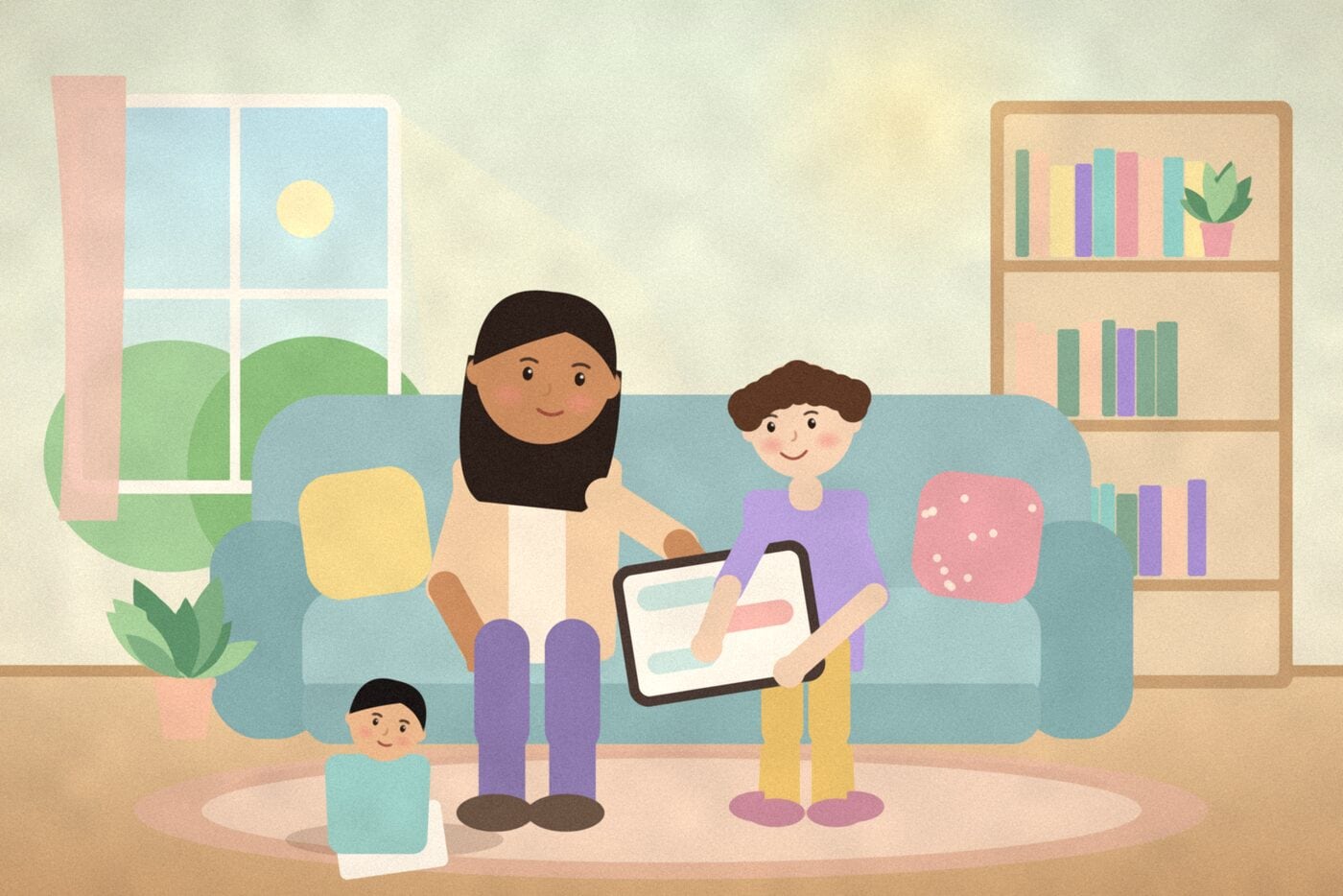
- Keep it in shared spaces. Chatbot use in the living room is a different thing from chatbot use behind a closed door at midnight.
- Make one clear rule about feelings. Chatbots are not for crises, health questions or heavy emotional stuff. Those go to a person: a parent, a relative, a school counselor, a doctor.
- Teach one habit. Ask your child where they disagreed with what the AI said. If the answer is “nowhere,” that is worth a conversation.
- Check the age limits in the terms of service and the privacy and safety settings. Many services set minimum ages, and “everyone uses it” is not a reason to ignore them.
Warning signs worth taking seriously
- Your child hides the conversations or gets upset when you ask about them.
- They seem to prefer the chatbot to friends or family.
- They get distressed when access is limited.
- You see romantic or sexual content, or advice about risky behavior.
If you notice any of this, stay calm and keep your child talking. Punishing the discovery teaches them to hide it better. Bring in the school counselor or your pediatrician if it is affecting sleep, mood or friendships.
If a child ever says they want to hurt themselves, treat it as urgent and contact your local emergency number or a crisis service straight away. Do not leave it to an app.
The bottom line
For young children, the safest answer is no chatbots. For older kids and teens, the goal is a child who understands what the tool is, uses it for the right jobs, and knows that when things get hard, the people who can help are human. That conversation is easier to have early and often, around the dinner table, than once there is a problem. If you have a teenager who already talks to an AI like a friend, our guide to talking to your teen about AI friends is the natural next read.