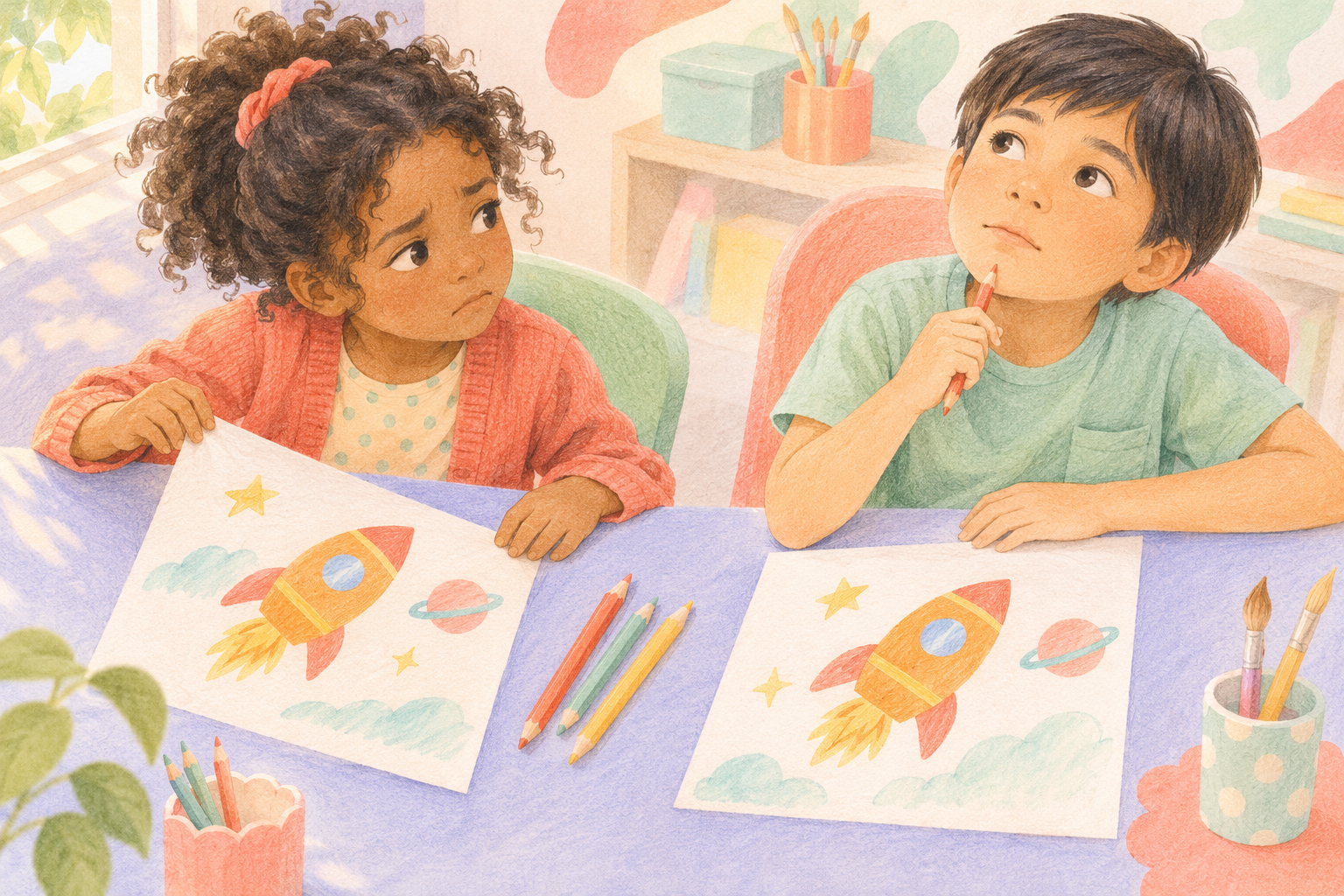
“She drew the same rocket as me. Then she copied everything I said.” Your child may tell both parts of the story in one breath. Before you decide what to do, find out which part bothered them most. Two children can like the same rocket design. Having someone repeat your words every time you try to speak can feel very different.
Start with a small observation. “You were excited about your drawing, and then you got really annoyed.” Give your child a chance to correct you. They might be angry about the drawing, embarrassed because others laughed, or upset that their friend kept going after they asked them to stop. Each answer points to something different you can help with.
Sort out what your child wants to change
Ask for one example. “What happened after she repeated your words?” If your child hasn’t said anything yet, see whether they want help finding the words. If they’ve asked several times and nothing changed, help them decide what support they need. You can take their feelings seriously without guessing why the other child copied them.
- They used the same idea. “You wanted your rocket to feel like your own. You can choose what you add to it or ask to draw separately for a while.” A friend can use the same colours or draw a rocket too. If they reach for your child’s actual page, your child can ask them to leave it on the table or give it back.
- They keep echoing words or movements. Help your child name the action and ask for a change. “Please stop repeating my words. I want to finish telling you.” If the friend keeps doing it, your child can step away and finish the conversation somewhere else.
- Both children were playing a copying game. A child can enjoy a game for a while and then want it to end. Try “I’m done with the copying game. Do you want to build with me?” Practise stopping when either child says they’re done, including when it’s your child who wants the game to carry on.
Practise one sentence and one next move
Ask, “What would sound like you?” A preschooler may use “Stop copying me” or hold up a hand while a caregiver helps with the words. A school-age child can add a request, such as “Please stop saying it back. I want to talk.” A preteen who hates being watched might prefer to say something when the other children have moved on. They can also go straight to a trusted adult if speaking to the friend feels unsafe.
Practise once while everyone is calm. Let your child choose how to signal “stop,” including with a familiar gesture, a card or a communication device. Then choose one next move, such as sitting by a different friend, going to the teacher or taking their own drawing to another table. If moving away is difficult, plan how to get an adult’s attention from where they are.
If you see your child about to grab or shove, step in and make space between the children. “I’ll help you get some room. Keep your hands on your own paper.” You can talk through the copying when the children have settled. If the friend stopped after hearing the request, ask your child later whether they want to play together again or would rather leave it for another day. There’s time to decide.
When the same thing keeps happening
Involve a teacher or another adult who supervises the children if the copying keeps happening after your child asks for space, if other children join in to humiliate them, or if your child feels unsafe. A group repeatedly mimicking one child for laughs can be a bullying concern, especially when that child has less power to make it stop. A single hurtful incident also deserves a response. Your child can ask for help without knowing what to call it.
If it’s happening at school, describe the action and its effect. “At the art table this week, some classmates kept repeating what Maya said and laughing. She’s started staying away from that table. Can someone watch what’s happening and help her find a way to get support?” Ask when you can check in again. If a child is mocked for how they speak or communicate, tell staff that detail privately so they can address it directly.
For ordinary disagreements, EdCaptain has a step-by-step guide to working things out with a friend. If the behaviour spreads or your child is being singled out, the guide to recognising bullying and getting support can help you prepare for the next conversation.