- Ask what the session is meant to change
- Explain the concern without claiming every child will react alike
- Offer a replacement that still meets the goal
- Keep your child out of an unwanted spokesperson role
- Send a concrete request to school
- Make the follow-up suitable for the child’s age
- If the simulation has already happened
- Sources and further reading
By EdCaptain editorial desk · Published
General educational guidance. No qualified clinical review is recorded for this article. Health and safety information.
The school newsletter announces an awareness day. Children will briefly cover their eyes or try unfamiliar mobility equipment to “understand disability”. You welcome the aim of inclusion, but wonder what pupils will actually learn—and whether your own child will become the example everyone looks at.
For families with children aged 6–12, a useful response starts with the learning goal and offers a different route. Children can learn about access, discrimination and respectful relationships without pretending that a short exercise tells them what another person’s life is like.
Ask what the session is meant to change
Request the outline before assuming what will happen. Is the aim to challenge stereotypes, introduce accessible design, improve invitations to play or explain a particular access tool? Who helped plan it, and what will pupils be encouraged to conclude?
A demonstration led by a knowledgeable user who explains their own tools is different from asking children to imitate a disability. The important questions concern who controls the explanation, what claims are made and how participants are treated.
You might ask: “Could you share the activities and intended learning? I would like to understand how disabled people’s perspectives are included, and how pupils’ privacy and choice will be protected.” Keep the conversation with the teacher or organiser rather than debating a particular child in a class group chat.
Explain the concern without claiming every child will react alike
The University of Washington’s DO-IT guidance warns that brief simulations can leave inaccurate impressions: participants experience unfamiliar difficulty without the skills, strategies and tools a disabled person may have developed.
The South Carolina Statewide Independent Living Council’s position statement opposes these exercises and stresses that they cannot represent the diversity of disabled people’s lives. These are reasons to question the method, not a claim that every learner will have the same reaction.
A simple explanation for your child is: “Finding a task hard for a few minutes does not tell us everything about someone’s life. We can listen to people describing their own experiences and notice what helps them take part.” Do not follow the explanation with a home simulation to prove the point.
Offer a replacement that still meets the goal
Suggest one manageable alternative, rather than asking school to replace a whole programme overnight. Keep the focus on what children should understand or do afterwards.
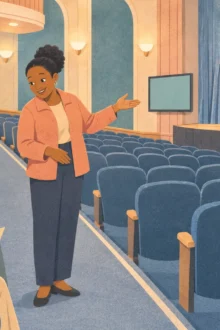
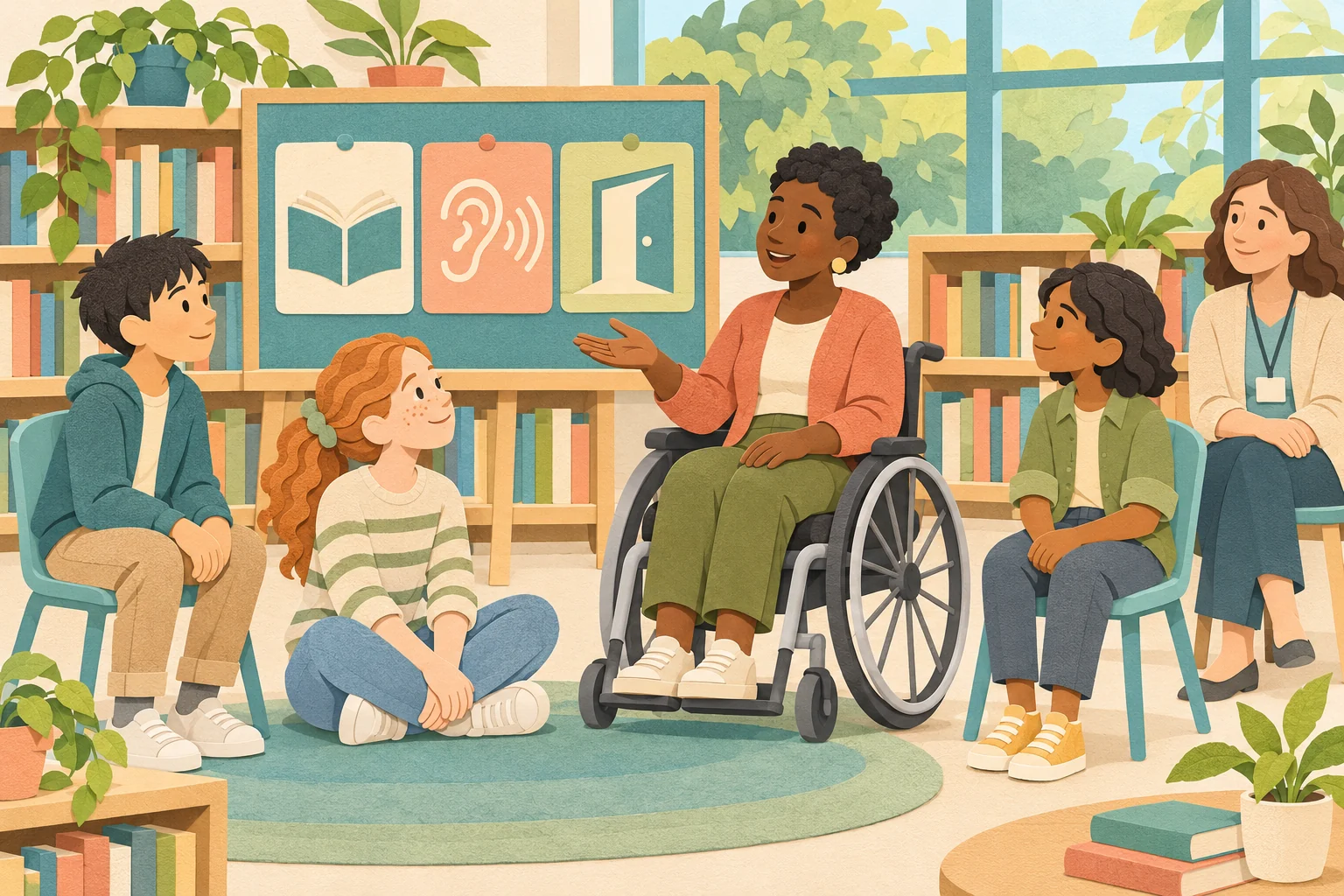
- If the goal is understanding people’s experiences: propose an age-appropriate first-person account or an invited disabled speaker. DO-IT’s guidance on alternatives suggests panels and videos in which people speak for themselves. An adult should preview the actual material, including its language and accessibility.
- If the goal is understanding tools: ask for a demonstration by someone who uses or understands the tool, with permission and time for questions. Pupils can learn what it enables without borrowing a classmate’s wheelchair, hearing equipment or communication device.
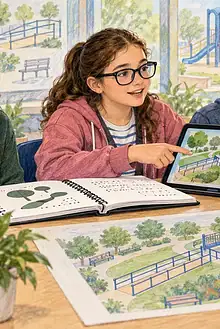
- If the goal is improving access: suggest examining an ordinary classroom resource or routine and asking who can use it. Identify one possible improvement and ask people affected whether it would help.
A speaker should know the audience and proposed questions in advance, be able to decline personal questions and have their access needs arranged. Ask school how it will recognise the speaker’s time and expertise. One person’s experience should not be presented as everyone’s experience.
Keep your child out of an unwanted spokesperson role
If your child is disabled, ask privately whether they want to contribute at all. They might want to suggest a question, help choose a resource, attend without speaking, or keep their own situation separate from the lesson.
Try: “You do not have to explain your body, your diagnosis or your equipment to the class. If you want to share something, we can agree exactly what and with whom.” Agree who will respond if an unexpected question arises.
Do not offer your child as the speaker before asking them. Equally, do not prevent a willing child from contributing simply because adults feel awkward. Plan a bounded, supported contribution with a way to change their mind. Their participation does not transfer responsibility for the session to them.
Our guide to answering disability questions respectfully offers language for protecting privacy while responding to curiosity.
Send a concrete request to school
You could adapt this message:
“Thank you for planning learning about disability and inclusion. I am concerned that a brief simulation could be understood as showing what disabled people’s lives are like. Could the session instead use a first-person account and a discussion of barriers and access? Please also confirm that no pupil will be expected to disclose personal information or demonstrate their own equipment. I would welcome the revised outline and the practical change pupils will work towards.”
If the event is imminent, ask what alternative participation will be available while the concern is considered. Avoid leaving your child to argue with staff at the classroom door. Follow the school’s usual contact or concerns process if you cannot get a clear response.
Access supports should remain available. An awareness activity is not a reason to remove someone’s communication, hearing or mobility support. Raise any proposed removal promptly with the responsible adult.
Make the follow-up suitable for the child’s age
For ages 6–9, keep questions concrete: “What did the speaker choose to tell us?” and “What could make that activity easier to join?” Correct a pity-based conclusion gently: “They described things they enjoy and barriers that need changing. Let’s remember both.”
For ages 10–12, compare the claim with the evidence. “Does this one account describe everyone? What do we still need to ask?” Children can help prepare respectful questions or suggest one change, while adults arrange permission and follow-through.
If the class chooses to observe access in a familiar place, use the existing child-led accessibility walk guide for its safety and privacy boundaries. Do not photograph people as examples or ask strangers to demonstrate a barrier.
If the simulation has already happened
Ask what your child thinks it showed. You can acknowledge their difficulty without validating a sweeping conclusion: “That was unfamiliar for you. It does not mean you now know what every blind person experiences.” Invite a fuller account from an appropriate first-person resource.
If your child felt exposed or mocked, listen privately, record the specific concern and contact school. They should not have to explain the problem publicly to secure a response. Ask what will change next time and when you will hear back.
Look beyond a successful awareness day. Did a classroom routine become more accessible? Are children invited directly into shared activities? Following through on an agreed change gives the learning somewhere useful to go.
Sources and further reading
- UW DO-IT: Building Empathy through Engaging People with Disabilities
- UW DO-IT: alternatives to disability-related simulations
- South Carolina Statewide Independent Living Council: position on disability simulations
Read our editorial policy and review methodology.