Family traditions are supposed to create belonging, yet they can quietly assign one child the role of spectator. A fast cooking ritual, crowded religious gathering, long photograph session or noisy game may exclude a disabled child even when everyone means well. Inclusion does not require every person to perform the same task. It requires every child to have access to something meaningful and a voice in how the tradition works.
Find the heart of the tradition
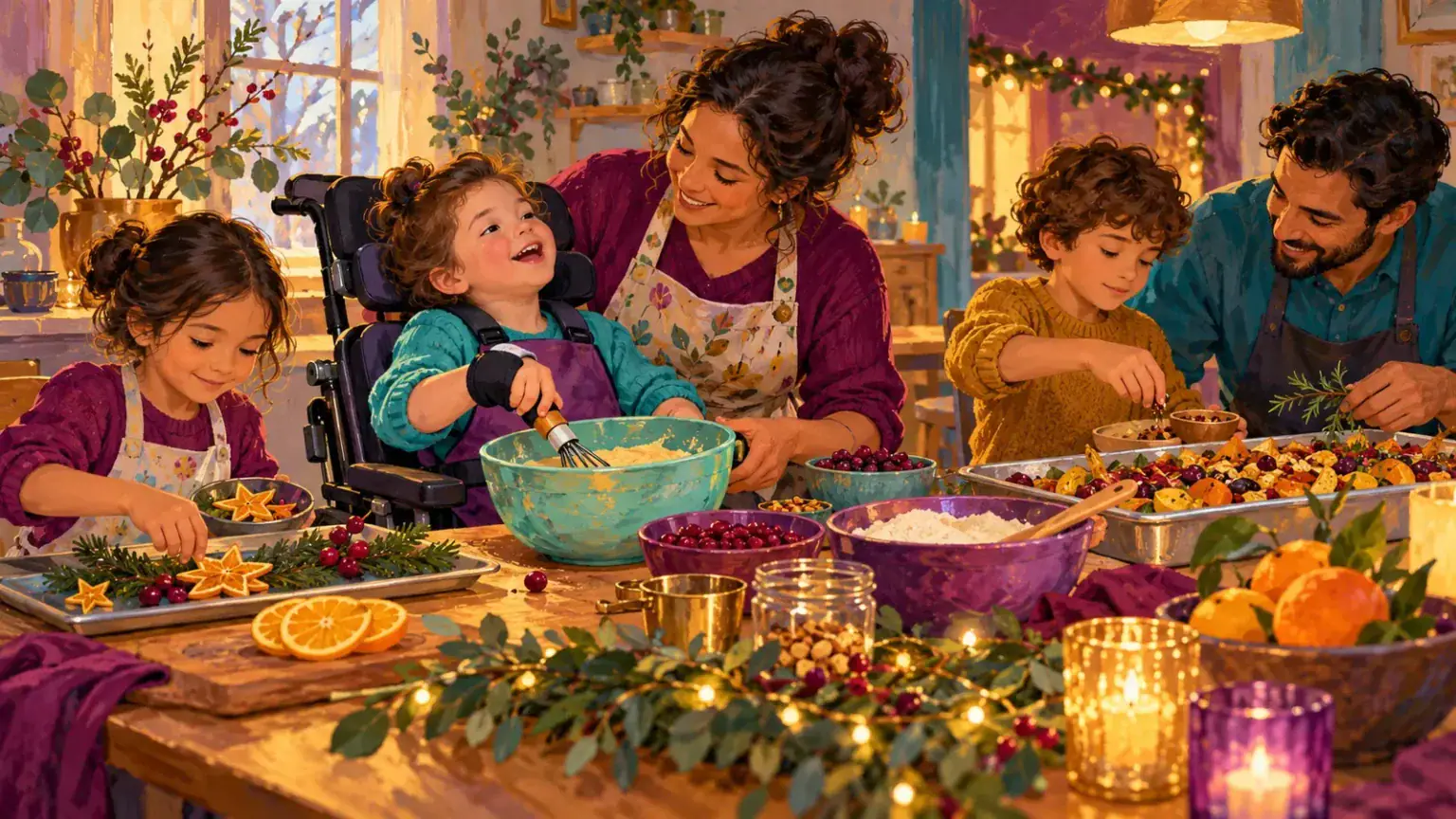
Ask what the family values: preparing food together, remembering someone, welcoming guests, making music or spending unrushed time. Once the purpose is clear, the method can change. If kneading dough is difficult, a child might measure with an adapted cup, choose spices, control a mixer switch or announce the next step. The role should contribute to the shared event, not be a pretend job created to keep them busy.
Ask each child, separately when useful
A disabled child may want a familiar role, a new challenge or permission to opt out. A sibling may feel proud, overlooked, embarrassed or tired of always helping. Make room for mixed feelings without asking one child to protect another. Try: “What part matters to you?” and “What would make it easier?” Younger children can choose from pictures or objects.
Explain fairness without promising sameness
Children notice extra time, different rules and expensive equipment. A clear explanation is better than secrecy: “Fair means each person gets what helps them take part safely. It will not always look the same.” Then check whether siblings also have needs going unmet—time with a parent, a chance to choose music, or a break from a helper role. Do not make a sibling responsible for access that adults should organize.
When you need to rotate attention, this guide to keeping one child meaningfully occupied while helping another can reduce waiting and resentment.
Design several ways to belong
- Offer seated and standing versions of an activity.
- Use pictures, objects, sign, captions or AAC for key words and choices.
- Reduce noise or create a nearby quiet place without isolating the child.
- Schedule the important part before fatigue becomes overwhelming.
- Let children contribute before, during or after the main gathering.
Keep mobility, hearing and communication equipment available. Ask before touching bodies or devices. If personal care is needed, protect privacy and do not turn it into a family performance.
Handle the moment a plan fails
If the child becomes tired or overloaded, say, “This setup is not working; we’ll adjust,” rather than blaming behaviour. One adult can move with the child while the tradition continues, but return a valued part to them later—a quieter toast, a saved decorating task or a short visit with relatives. Avoid announcing that everyone’s fun has ended “because of” one child.
Let traditions evolve
Afterward, ask what to keep and change. Children grow; equipment, energy and preferences change too. A teenager may no longer want the childlike role they once enjoyed. A younger sibling may want to lead. Photos can preserve continuity even when the format changes.
Use respectful disability language around relatives and answer questions without sharing private details. This guide to children’s questions about disability offers practical phrases. For friendships and celebrations beyond the family, see planning an inclusive party without putting one child on display.
A durable family tradition is not a frozen script. It is a repeated promise: you belong here, your contribution matters and the family can adapt together.
Before the next gathering, share a two-line access plan with relatives: what will help and who is responsible. Keep private details private. One person can set up the quiet corner; another can check the route; another can make sure every child has a chosen task. Clear adult ownership prevents siblings from being recruited at the last minute.