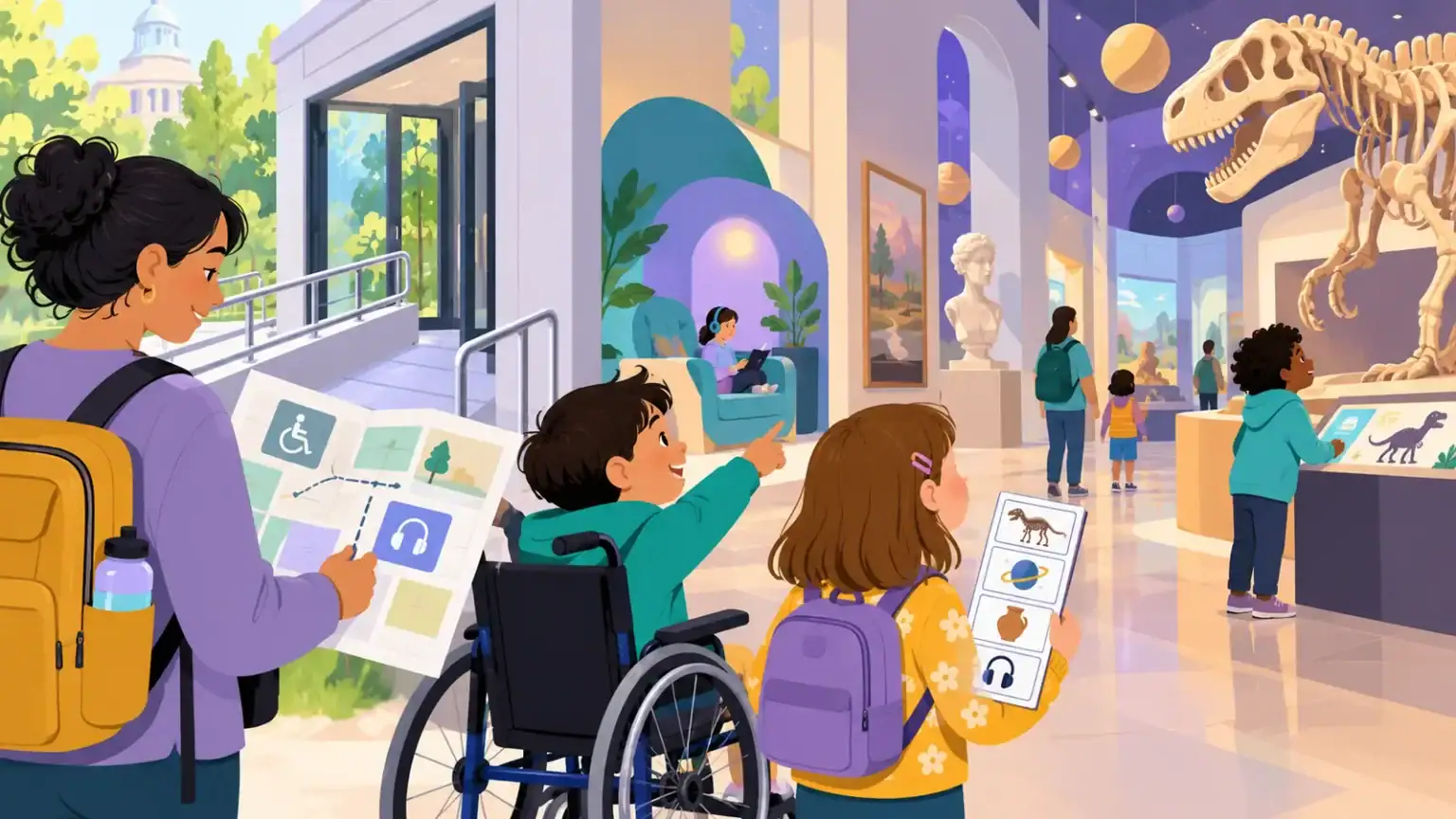
An outing can look accessible on a website and still fail at the first heavy door, broken lift or crowded queue. A little advance checking protects energy and gives the disabled child a real say in what the family does. The aim is not to eliminate every surprise. It is to identify the barriers that would end participation and create a workable backup.
Begin with the child’s priorities
Ask what they most want to do: see the dinosaurs, go on one ride, picnic with cousins or buy a postcard. That priority becomes the part you protect if time or energy runs short. Offer information in a useful format—photos, a simple visual schedule, a map, written times or a short conversation. Young children can choose between two destinations; older children can help contact the venue.
Ask the venue questions that require real answers
- Is the route from arrival to the activity step-free, and are lifts working today?
- What are the doorway widths, surfaces and seating options?
- Is there an accessible toilet and changing space? Is it open?
- Can we avoid a queue or wait seated without losing our place?
- Are captions, hearing loops, audio description, large print or quiet sessions available?
- Where can a child rest, eat, take medicine or reduce sensory input?
Do not rely on “wheelchair friendly” as a complete answer. Ask about the exact route your family will use. If equipment or personal support is involved, follow the child’s normal safety plan rather than accepting improvised lifting by venue staff.
Budget energy as carefully as time
Travel, transfers, noise, communication and sitting upright can all cost energy before the main activity begins. Put the priority activity early, add a chosen rest point and keep the final hour flexible. This is pacing, not exclusion. The guide to planning for fatigue without planning a child out offers ideas that transfer beyond school.
Pack only what improves access: charged communication or hearing devices, power bank, required medication, water, a familiar sensory tool, sun or weather protection and a copy of essential contact details. Label equipment discreetly. Never leave a communication device in the car because “it’s only a short visit.”
Share the plan without making one child the problem
Tell the whole family: “We’ll enter by the garden gate, visit the gallery first, rest at the café, and decide together whether to stay.” Avoid saying, “We have to leave because of your sister.” Everyone benefits from food, toilets and breaks. Give siblings meaningful choices within the accessible plan rather than promising an impossible day.
Use a Plan B that still feels like an outing
If the lift fails or the crowd becomes unmanageable, the alternative should not be one child waiting outside. Identify a nearby accessible café, outdoor exhibit, livestream, quiet trail or take-home activity. Record what went wrong and tell the venue specifically. A respectful complaint can help the next family; children can also contribute to a civic service request when appropriate.
Review with curiosity
Later ask: What was fun? What was hard? What should we change? Accept communication through rating cards, pointing or drawing. Do not evaluate the child’s behaviour as the success measure. The useful measure is whether they could access something they valued, communicate choices and recover without avoidable harm.
For parties and playdates, the same principles apply: clear information, flexible activities and discreet options. See planning an inclusive party.
Before leaving home, give one adult responsibility for access checks and another for ordinary family logistics. This prevents the disabled child from becoming the trip manager. Share the venue contact, transport details and backup plan with both. If access information was inaccurate, send a factual note afterward so the venue can correct its public guidance.