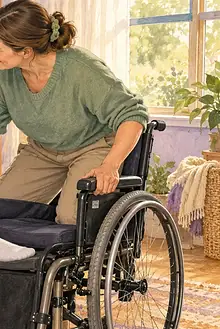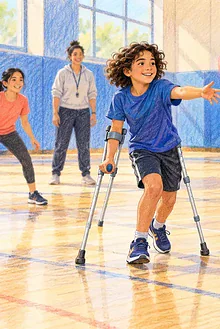
When a child tires easily, adults may react by removing PE, trips, clubs and social time. That can reduce effort, but it can also remove the very parts of school that create belonging. A better plan asks where energy is being spent and changes access, timing and workload so the child can choose meaningful participation.
Map the hidden energy costs
For one week, note mobility, thinking, communication, pain, noise, social effort and recovery—not just steps. A long corridor before maths may affect concentration. Dressing after swimming may cost more energy than the lesson. Holding posture, carrying equipment or repeatedly asking adults to move obstacles also counts.
Invite the child to rate energy in a way that works for them: colours, battery icons, a 1–5 scale or short voice note. Do not turn tracking into constant surveillance. The aim is to find patterns, not prove that the child is tired enough to deserve support.
Change the timetable before lowering the goal
- Schedule demanding tasks after an easier transition where possible.
- Provide accessible routes, lifts and nearby storage so energy goes to learning rather than avoidable distance.
- Offer a seat, mobility aid or alternative position without making it a punishment.
- Break long tasks into stages and allow a planned pause before exhaustion.
- Keep rest space near peers and activities, not in a remote room by default.
- Adapt the route, pace or equipment in PE instead of automatically replacing participation.
The guide to inclusive PE for physical disability helps teams keep the learning goal while changing rules or equipment. A broader whole-day access plan can assign responsibility for routes, furniture and transitions.
Use rest as a tool, not an exclusion
Agree what a useful break looks like. It might be five minutes seated with water, a change of position, a quieter workspace or reduced walking. The child should know how to request it and how to rejoin. “Rest until you feel better” can become indefinite; “pause for five minutes, then choose the next step” is clearer.
Preserve friendship. If the class moves outdoors, consider an accessible place to pause near the group. If a child skips one physical segment of a trip, plan how they will rejoin rather than sending them home. Ask which activities matter most so limited energy is not spent only on adult priorities.
Review health changes
Fatigue can have many causes, and a school plan should not diagnose it. New or worsening fatigue, pain, breathlessness, fainting, sleep disruption, weakness, weight change or reduced function deserves clinical discussion. Follow individualized medical and therapy advice; do not push through severe symptoms or prescribe exercise from a generic schedule.
Meet after two to four weeks and compare participation, symptoms and recovery. If the child still spends the evening recovering from school, the plan may need more access changes, not more encouragement. The best measure is not perfect attendance in every activity. It is whether the child can learn, connect and recover with a level of effort that is safe and sustainable for them.
Agree how adults will talk about energy
Language can either support self-awareness or make a child defend every need. Replace “You look fine” and “You did it yesterday” with “What is your energy like now?” and “Which part should we adjust?” Avoid praising a child for hiding pain or pushing until they crash. At the same time, do not assume fatigue means no challenge is possible. Offer two safe ways to reach the same goal and let the child help choose. Share the plan with cover teachers, trip leaders and club staff so the child does not renegotiate access repeatedly. Where attendance or work is affected, record the access barrier and response rather than describing the child as lazy, avoidant or lacking resilience.
Plan for tests, trips and special events
Unusual days can concentrate energy demands. For an exam, consider accessible arrival, rest before starting, permitted access arrangements and a route that avoids unnecessary distance. For a trip, map toilets, seating, terrain, transport and a way to leave early without isolating the child. For performances or sports days, schedule rehearsal and recovery rather than adding them to a full day unchanged. Ask the child which event is important and protect energy for that priority. A flexible plan does not promise that symptoms will disappear. It reduces avoidable barriers and makes decisions explicit, so the child is not repeatedly forced to choose between participation now and being able to function later.