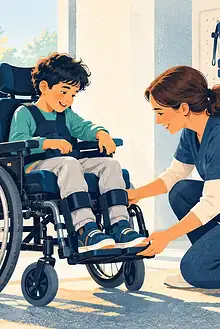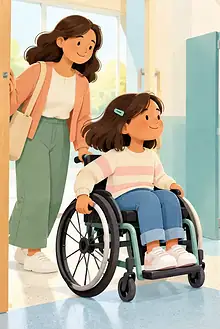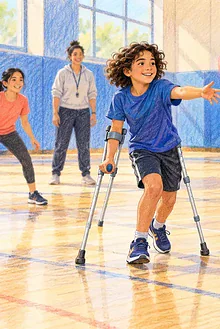
“Someone will carry them” is not an evacuation plan. It leaves the child, staff and mobility equipment vulnerable when lifts are unavailable, routes are blocked or the usual helper is absent. A useful plan is written for one child in one setting, developed with the child and family, and approved by the people responsible for safety.
Start with each location
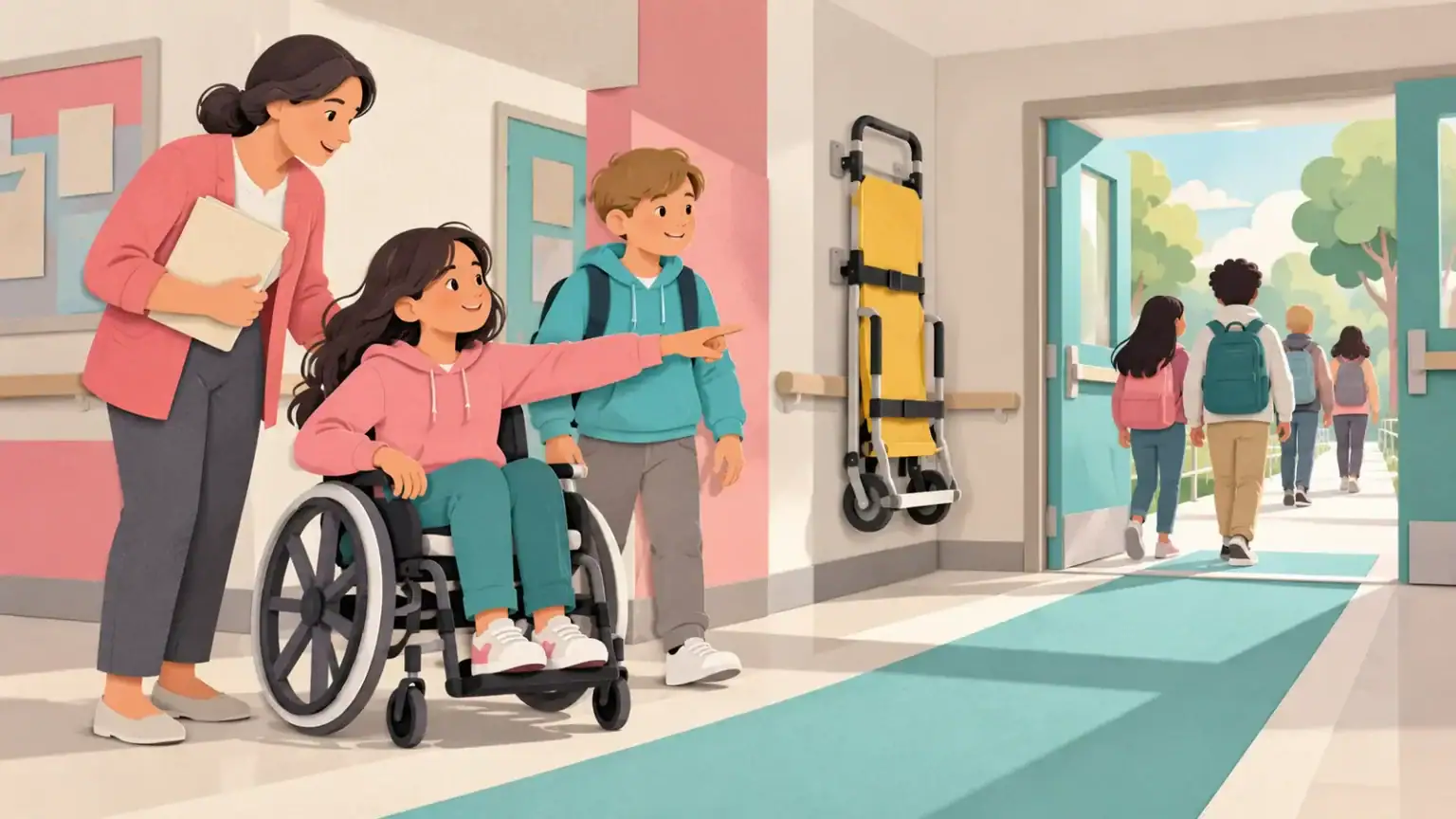
List the places the child actually uses: classrooms, toilets, playground, transport, hall, upper floors and after-school rooms. For each, identify a primary accessible route, an alternative route, a safe waiting area if local procedure uses one, and a reunification point. Check doors, thresholds, slopes and assembly surfaces with the child’s mobility aid—not from a floor plan alone.
Coordinate this with the existing whole-day school access plan. Emergency arrangements must also cover trips, sport and temporary classrooms.
Name trained roles and backups
Record who alerts the child, who checks the route, who assists with mobility and who brings essential communication or medical items if safe. Every role needs a backup. Avoid relying on one friend, sibling or untrained staff member. Peers can offer companionship, but adults and the institution remain responsible for safety.
If an evacuation chair, hoist or special transfer is part of the plan, only trained people should use it. The plan must reflect professional moving-and-handling advice. Never practise carrying a child or wheelchair down stairs as an improvised drill.
Protect mobility and communication
Whenever safe and consistent with local emergency procedures, keep the child’s mobility aid and communication system with them. If a device must be left, record how an appropriate replacement will reach the child. Include charger or battery information, essential medication handled under policy, and concise instructions that reveal no more personal information than responders need.
Give the child an accessible version: pictures, large print, audio, simple steps or AAC vocabulary. Practise words such as “I need my chair,” “Do not lift me,” or “My backup route is blocked.” Related ideas from the accessible emergency plan for a blind child can help families think about alerts and communication across different access needs.
Run a calm, announced rehearsal
- Preview the sound, people and sequence so the drill does not become a surprise test.
- Move at realistic speed along the primary route.
- Practise one alternative route without creating unsafe lifting.
- Confirm the assembly point, attendance check and family reunification process.
- Debrief privately with the child: what worked, what felt unsafe and what should change?
Some children may need sensory, communication or trauma-informed adaptations. Rehearsal should build competence, not demand that a frightened child endure distress to prove the plan.
Review when anything changes
Update after a move of classroom, new timetable, building work, equipment change, growth, new staff, transport change or a drill that exposes a gap. Keep copies where responsible adults can reach them, while protecting confidential information. Families should also make a home and community plan using local emergency guidance, current contact numbers and the hazards relevant to where they live.
The child does not need to carry the whole plan in their head. Their job is to know the few actions they can use; adults and institutions must make the route, equipment and trained help real.
Cover home equipment and power loss
At home, list equipment that depends on electricity, how long batteries last and who to contact during an outage. Follow provider guidance for charging and backup power; never connect medical or mobility equipment to an unapproved power source. Keep exits free and avoid storing the wheelchair where smoke, floodwater or fallen objects could block it. If the household may need to leave quickly, know how the mobility aid will travel and where an accessible destination is located. Practise the communication plan without staging frightening surprises. Children can help check a contact card or choose a comfort item, while adults remain responsible for supplies, transport and decisions. Review local alerts and emergency numbers because online checklists from another country may not match local services.
Ask what the drill actually tested
A drill may prove that an alarm works while leaving the child’s route untested. Record whether the correct helper was present, doors opened, the alternative route was usable, equipment arrived, communication was understood and the assembly surface supported the mobility aid. Note the time only as one piece of evidence; rushing must not replace safe procedure. Fix one gap promptly and repeat that element. If the plan depends on a lift, confirm whether emergency services permit its use during the relevant hazard. If refuge areas are used locally, explain how communication and rescue responsibility work. Never leave the child alone simply because a written plan names a waiting area.