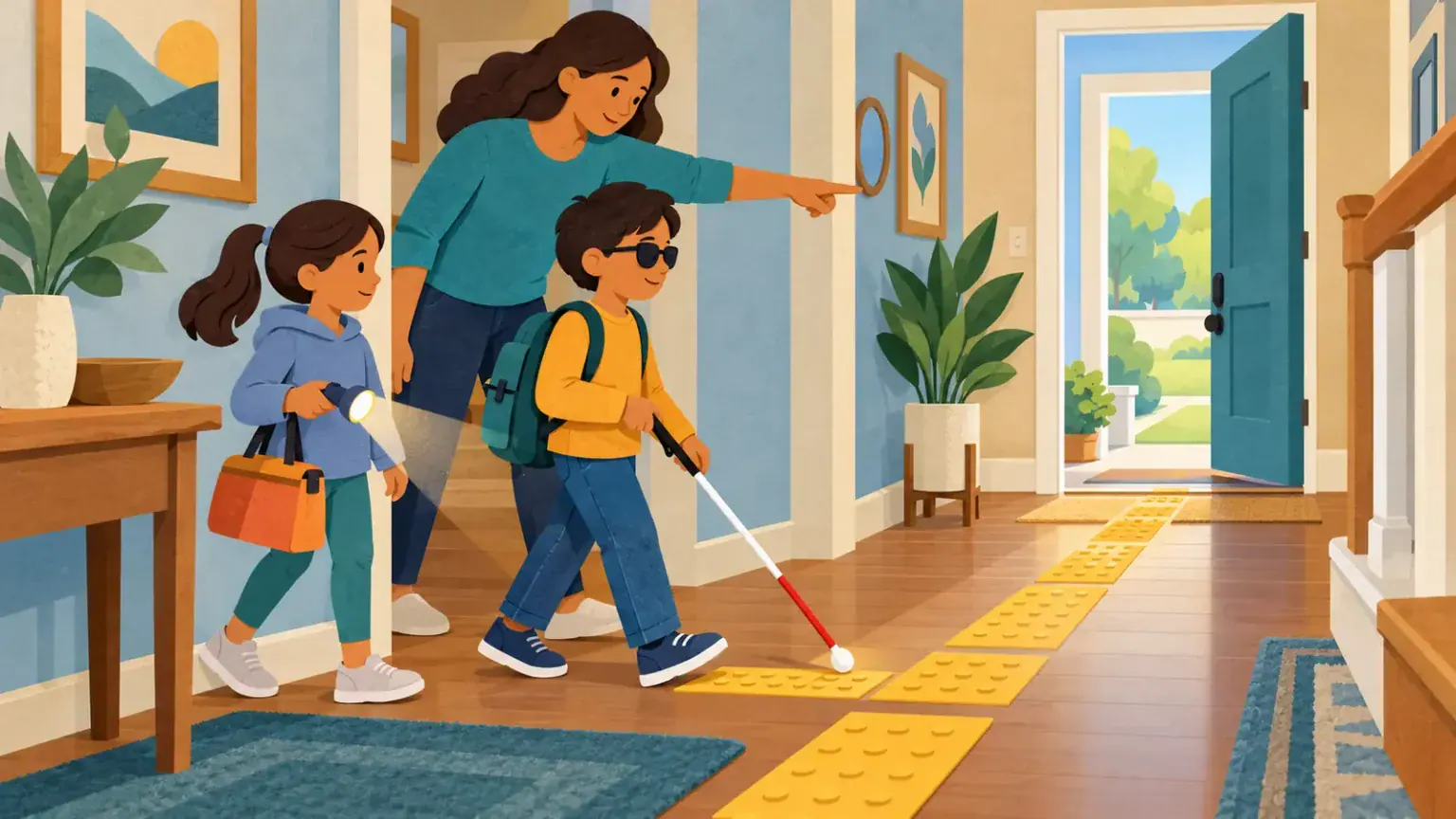
An emergency plan that depends on a printed notice, a flashing alert or following the person in front is not accessible to a blind or low-vision child. Build access into the plan before a storm, fire, earthquake or evacuation. The child should know what information they will receive, what action they can take and where adults will meet them.
Start with the hazards that are realistic where you live. Use local emergency guidance and numbers. One clear plan practised calmly is more useful than frightening a child with every possible disaster.
Map the plan through action
Walk the primary exit and an alternative while the home is quiet. The child should use their normal mobility method. Identify stable landmarks, doors, stairs, surface changes and the outdoor meeting point. Do not create temporary obstacles for a drill. If furniture moves, tell the child and practise again.
At school, ask how alarms, evacuation instructions, refuge areas, transport and reunification are made accessible. “A buddy will help” is incomplete. Name the trained adult, the backup, the child’s role and what happens if the group separates. The child’s cane or mobility device should remain with them unless an immediate life-threatening situation makes that impossible.
Make alerts and instructions usable
- Use more than one alert channel: sound, vibration, spoken message and a direct check-in.
- Store the plan in the child’s reading format—braille, large print, accessible digital text, audio or a combination.
- Label essential supplies with tactile or high-contrast markers the child understands.
- Describe changes plainly. “The usual front route is blocked; we are using the kitchen door” is better than “Come this way.”
Check whether local emergency apps and warning systems work with the child’s device and assistive technology. Never assume an app is accessible because it opens.
Pack for access, not only survival
Include ordinary recommended emergency supplies plus disability-related items: spare cane tip if used, glasses or low-vision device case, batteries or power bank, charging cables, accessible copies of essential contacts and information about equipment. Keep necessary medication in its original labelled container and follow local advice about storage and replacement. Do not place irreplaceable equipment in a bag that will sit unused for years without checking it.
Review the kit on a regular family date. Charge power banks, replace expired items and make sure the child can identify the bag. Ready.gov specifically recommends accessible labels and planning for communication and equipment needs.
Give the child a real role
A preschooler might carry a small comfort item to the meeting point. A school-age child might retrieve the accessible contact card. A teenager might check the backup battery and confirm the family message. The role should be achievable even when the child is stressed; it should not make them responsible for younger siblings or adult safety.
Practise communication: who is the out-of-area contact, what message should be sent, and what happens if networks are busy? Teach the child not to share sensitive information with an unverified stranger. Include a family password or another safe verification method if appropriate.
Run short, calm drills
Tell the child that a practice is coming. Use the actual alert sound at a tolerable level, follow one route, meet at the agreed point and stop. Ask three questions: What information was clear? What was hard to locate? What should change? A surprise drill may measure panic rather than readiness, especially for a child with previous trauma or sensory sensitivity.
Link this plan to the broader family emergency communication plan. Our guide to safe home orientation and mobility helps with route learning, and the accessible emergency plan for a deaf child shows why alerts must use more than one channel.
No plan removes all uncertainty. A good one reduces avoidable barriers, keeps essential access tools close and gives the child language and practice they can use when routines suddenly change.
Include people outside the home
Share the accessible parts of the plan with relatives, neighbours, transport providers or support workers who may be present. Confirm that they know how to offer guidance and where the child’s essential equipment stays. If a service animal is part of the family, include food, water, records and handling arrangements without separating the animal unnecessarily. For power-dependent equipment, identify charging locations and what the family will do during a longer outage. Review these arrangements after a move, school change, new device or change in the child’s mobility.