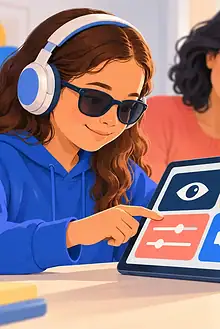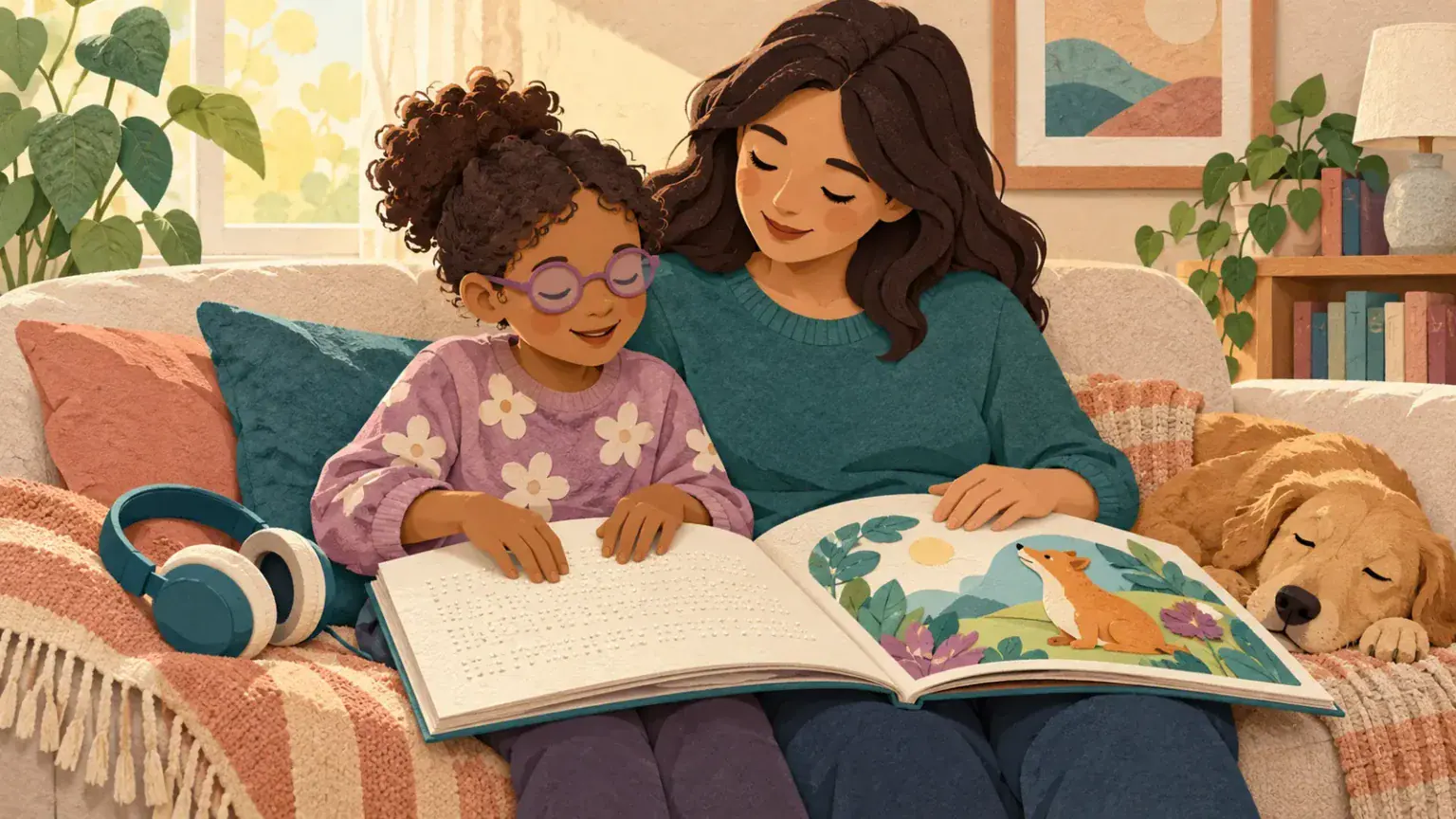
A good reading life is not defined by one format. A blind child may read braille, listen to audio, use a refreshable braille display or combine them. A child with low vision may prefer large print for a short picture book and audio for a long chapter. The useful question is not, “Which format is best?” but, “What gives this child comfortable, independent access to this book today?”
Begin with interest. Dinosaurs, jokes, football, friendship dramas and instructions for making things all count as reading. Choice matters because access work takes effort. When the subject is worth that effort, a child has a reason to persist.
Build a small menu of formats
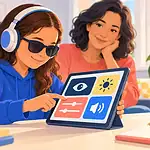
Ask the child’s vision specialist or teacher which literacy media they are learning and how home practice can support—not replace—instruction. Braille is a full reading and writing system, not a decorative extra. Audio gives fast access to stories and information but does not teach spelling or punctuation on its own. Large print can help some readers, but “bigger” is not automatically easier if the page becomes hard to scan. Digital text can offer adjustable size, spacing, contrast, speech and braille output.
Keep two or three options available. For the same story, you might borrow an audio edition, add braille to a print book, or use an accessible ebook. In the United States, the National Library Service offers eligible young readers braille and audio materials; elsewhere, ask a public library, school or blindness organization about local services.
Set up for comfort, not appearance
- Let a low-vision child choose lighting, viewing distance, page angle and contrast. Avoid insisting that they sit “normally” if a closer position is comfortable and recommended.
- Place braille books on a stable surface with enough room for both hands. Large braille volumes may be easier at a table than on a lap.
- Reduce glare from shiny pages or screens. A movable lamp or window shade may help.
- For audio, use a speaker when reading together or comfortable headphones when the child wants privacy. Keep volume at a safe, moderate level.
If reading causes headaches, eye discomfort, unusual fatigue or a sudden change in access, pause and seek advice from the child’s eye-care or vision-support team.
Make shared reading genuinely shared
A caregiver does not need to describe every picture before the story can begin. Give a short description that supports the plot, then let conversation grow from the child’s questions. Offer the book for tactile exploration when safe. Real objects can clarify a key idea—a whisk for a cooking story or a smooth stone for a nature book—but they should support the story rather than interrupt every page.
Take turns in a way that respects the child’s reading method. A beginning braille reader might find one familiar word while an adult reads the rest. An older child might control the audio playback and stop to discuss a confusing section. Avoid quizzing after every page. Comments such as “That choice surprised me” invite thinking without making the book feel like an assessment.
Protect reading from becoming therapy
Short, frequent access is usually kinder than a long struggle. End while the experience still feels successful. Keep a few books that are simply for pleasure, with no performance goal. If adults correct every finger movement, posture choice or missed word, a child may learn that reading means being watched.
Coordinate with school so the child receives materials before—not after—classmates. Our guide to an inclusive school plan for blind and low-vision students explains how accessible materials and literacy teaching fit together. For younger children, everyday concept-building play can give words in stories a concrete meaning. If access needs are still unclear, see how to prepare for a low-vision assessment.
A simple weekly rhythm
Choose one library visit or download session, two relaxed shared-reading times and several independent choices. Notice which combinations reduce effort and increase engagement. Record useful details—preferred font size, braille volume position, speech rate or lighting—so the child can gradually explain their own access needs.
The goal is not to make every book look the same as it does for a sighted reader. It is to give the child timely access, real choice and the pleasure of getting lost in a story.