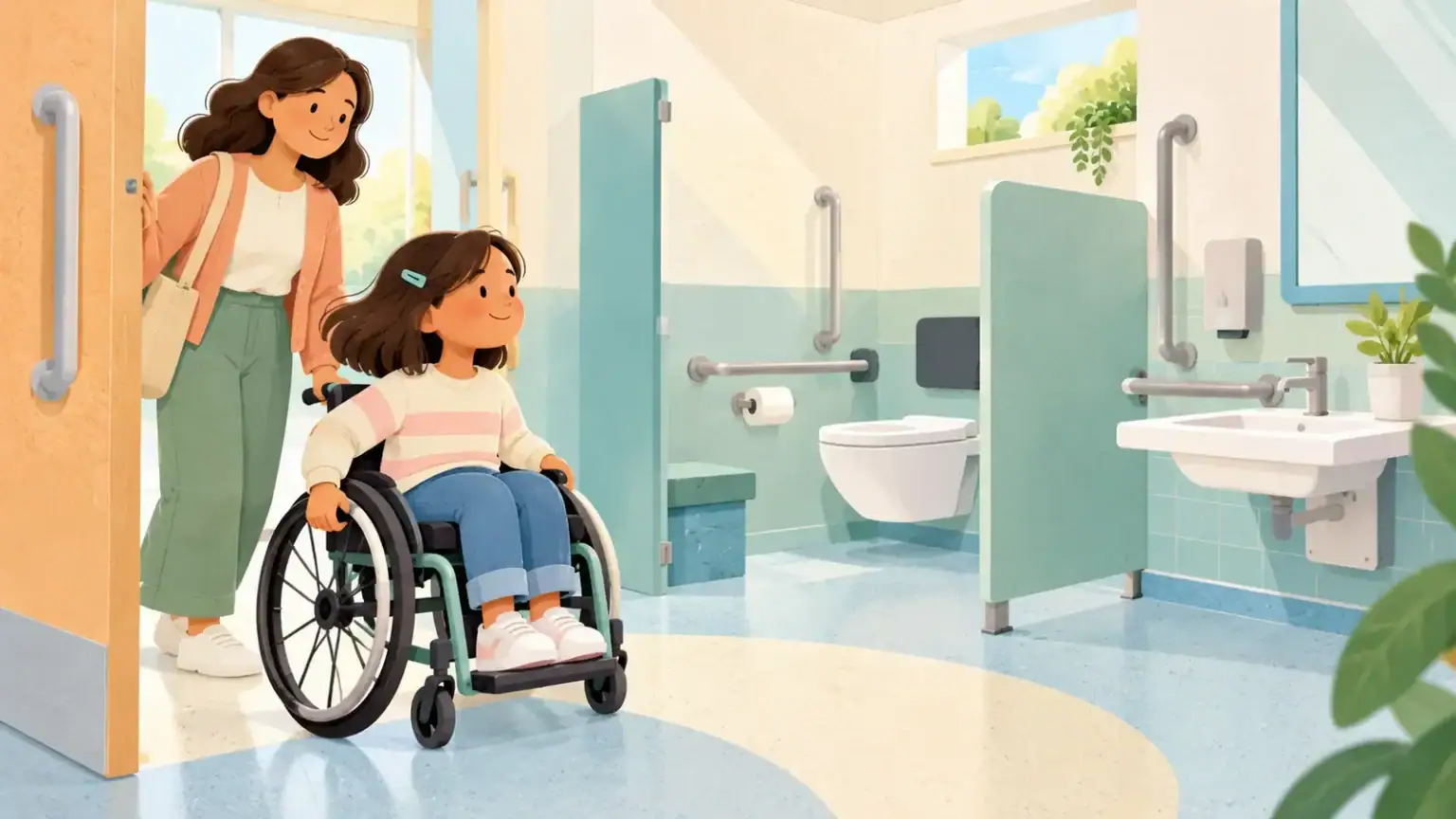
A toilet may be labelled accessible and still be unusable for one particular child. The route may be narrow, the door too heavy, the transfer side blocked, the support rail in the wrong place, or the changing surface missing. A useful plan begins with the child’s real routine and protects privacy as carefully as safety.
Walk the whole route
Visit at the time the child is likely to use the toilet. Start from the classroom, playground, café table or transport stop rather than at the bathroom door. Check slopes, thresholds, door weight, turning space and whether queues block the route. Inside, notice which side offers space for a wheelchair, walker or helper and whether the child can reach the lock, paper, flush, sink and drying method.
Ask the child what makes a bathroom feel manageable. One child may need a rail on a specific side; another may need a stable foot support, extra time, a quiet cubicle or a changing bench. Do not test a transfer or new piece of equipment by improvising. An occupational therapist, physiotherapist or relevant clinician can advise on seating, positioning, transfers and adaptations. The earlier guide on preparing for a mobility-aid assessment can help families collect useful observations.
Write a six-part plan
- Route: name the accessible route and who keeps it clear.
- Space and equipment: record the required transfer side, rails, seat, changing surface, hoist or other prescribed support.
- Assistance: state exactly what the child can do, what they want help with and which trained adults may help.
- Privacy: agree how the door, clothing, personal care and conversations will be handled.
- Supplies: keep required pads, wipes, spare clothes or disposal bags in a discreet, reachable place.
- Backup: identify another usable toilet and what happens if equipment breaks or the room is occupied.
Use neutral language. “Ask before moving the chair” is clearer and more respectful than “needs full help.” Give the child an easy way to request the toilet without announcing personal information. For younger children this might be a picture card or agreed gesture; older children may prefer a message or pass.
Plan outings before the child is desperate
Phone or message a venue with specific questions: door width, level access, transfer space on the needed side, adult-sized changing provision, hoist availability and whether staff need a key. “Wheelchair accessible” is not enough detail. Carry a compact backup kit, but do not make the child responsible for solving an inaccessible building.
At school, fold the toilet plan into the broader whole-day access plan. Review it after a growth spurt, equipment change, new timetable, recurring accidents, pain, skin concerns or any change in the amount of help required. Sudden difficulty passing urine or stool, severe pain, blood, fever, dehydration, new weakness or a significant change in bladder or bowel control needs prompt medical advice.
Protect dignity during help
Knock, explain, ask permission and keep the number of helpers to the minimum required for safety. Speak to the child, not over them. Offer ordinary choices such as whether to manage clothing before or after a transfer. A good plan makes access predictable without turning personal care into public business.
Use a simple review after real use
After the first week, ask the child what happened at the moments adults did not see. Was the route blocked by cleaning equipment? Did a helper arrive late? Could the child reach soap and dry their hands? Did classmates wait outside the door? Record one change at a time and give it an owner and date. For a younger child, use pictures of “easy,” “hard” and “change.” For an older child, offer a private conversation rather than requiring disclosure in a large meeting. If the facility cannot be made usable immediately, the temporary arrangement must still protect health, privacy, attendance and equal access. It should have a deadline and named action; “use it with help for now” is not a permanent solution.
Questions to take to the school or venue
Ask who can unlock or clear the room, how the child requests help, whether trained cover is available, where personal supplies are stored, and how missed learning time will be prevented. Confirm that the toilet is not routinely used for storage or as a general changing room. If a hoist is required, ask about the sling, inspection schedule and trained operators; do not assume any sling fits any hoist or child. Agree how staff will report a fault without discussing intimate details in front of peers. On a trip, assign one adult to confirm access before departure and another backup contact. These practical details turn a broad promise of inclusion into a routine the child can actually rely on.