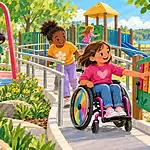
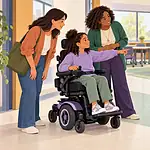
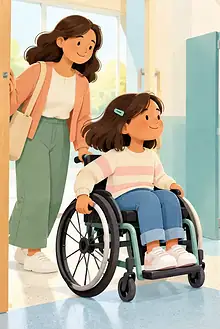
A child with a physical disability does not need a separate worksheet every time classmates run, throw or play a team game. The lesson goal may be reachable through a different movement, rule, distance, pace or piece of equipment. Inclusion begins by naming that goal clearly and asking the child how they want to take part.
“Participate as able” is not a plan. It leaves decisions until the lesson is already moving. A better plan identifies options in advance and keeps the child in the learning, teamwork and fun.
Separate the goal from one fixed method
If the goal is accurate passing, a child may pass from a wheelchair, standing frame, bench or stable floor position. If the goal is cardiovascular effort, wheelchair propulsion, supported cycling, swimming or upper-body movement may be relevant. If the goal is team strategy, the child needs an active decision-making role—not permanent scorekeeping.
Ask: “What part of this game do you most want to do?” Then adapt only what is necessary. Making every task easy can be as excluding as making it impossible.
Change one variable at a time
- Space: shorten distance, widen lanes, create a turning area or remove clutter.
- Time: allow a longer response window, stagger starts or use shorter active rounds with planned rest.
- Equipment: try a lighter, larger or softer ball; lower a target; use a stable grip or adapted handle assessed for the child.
- Rules: allow a bounce, extra pass or safe mobility zone while preserving the game’s main challenge.
- Communication: give the child advance notice of transitions and a clear stop signal.
Test the change with the child. An adaptation that helps one student can slow, destabilize or embarrass another.
Plan health and safety individually
Some children need guidance about joint protection, bone health, breathing, heart conditions, seizures, skin, temperature regulation, pain or fatigue. Families should discuss relevant restrictions and warning signs with the child’s clinical team. A teacher should receive clear functional guidance—what to do, avoid and monitor—without unnecessary private medical detail.
The American Academy of Pediatrics encourages sports and recreation for children with disabilities and recommends a pre-participation discussion when needed. Stop activity and follow the child’s health plan for chest pain, fainting, severe breathlessness, new weakness, injury or other urgent symptoms.
Treat mobility aids as part of access
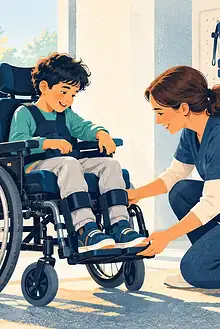
Do not move a wheelchair, walker or crutches out of reach without permission. Check brakes, straps or sport-specific equipment according to the child’s established routine; staff should not improvise modifications. Create storage that is secure yet accessible. After floor activities, plan how the child will return to their device with dignity and the agreed assistance.
Build a class culture, not a spectacle
Use adaptations that make sense for everyone when possible: varied throwing lines, choice of ball or rotating roles. Peers can be partners, but they are not unpaid personal assistants. Teach teammates to ask before pushing a chair, taking a crutch or providing physical help.
Assessment should reflect the goal and the child’s progress. Compare the child with their earlier performance, not with a movement pattern their body cannot use. Ask for the child’s reflection: “Did the adaptation give you enough challenge?”
Our family movement talk test supports non-competitive effort awareness. The inclusive school planning guide offers a model for participation goals, and keeping schoolwork manageable during illness or recovery shows how to adjust demands when health fluctuates.
Use a pre-lesson check
Before a new unit, confirm the child’s chosen role, equipment, route, rest option, support person and emergency information. After the first lesson, change what failed. Good inclusion is iterative.
The purpose is not to make disability invisible. It is to remove avoidable barriers so the child can exert effort, learn a skill, make decisions and be recognized as a real member of the group.
Coordinate without over-medicalizing class
A brief planning conversation between the student, family, PE teacher and relevant therapist can translate clinical guidance into practical access. Focus on function: safe ranges, rest signs, equipment handling and emergency steps. Do not discuss the child’s diagnosis in front of classmates unless the child wants that. Substitute teachers also need the operational plan. If a support person is absent, the backup should preserve participation rather than cancel it. Revisit the plan when the unit, equipment, body, pain or energy changes.