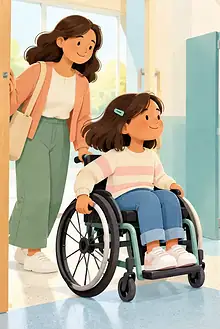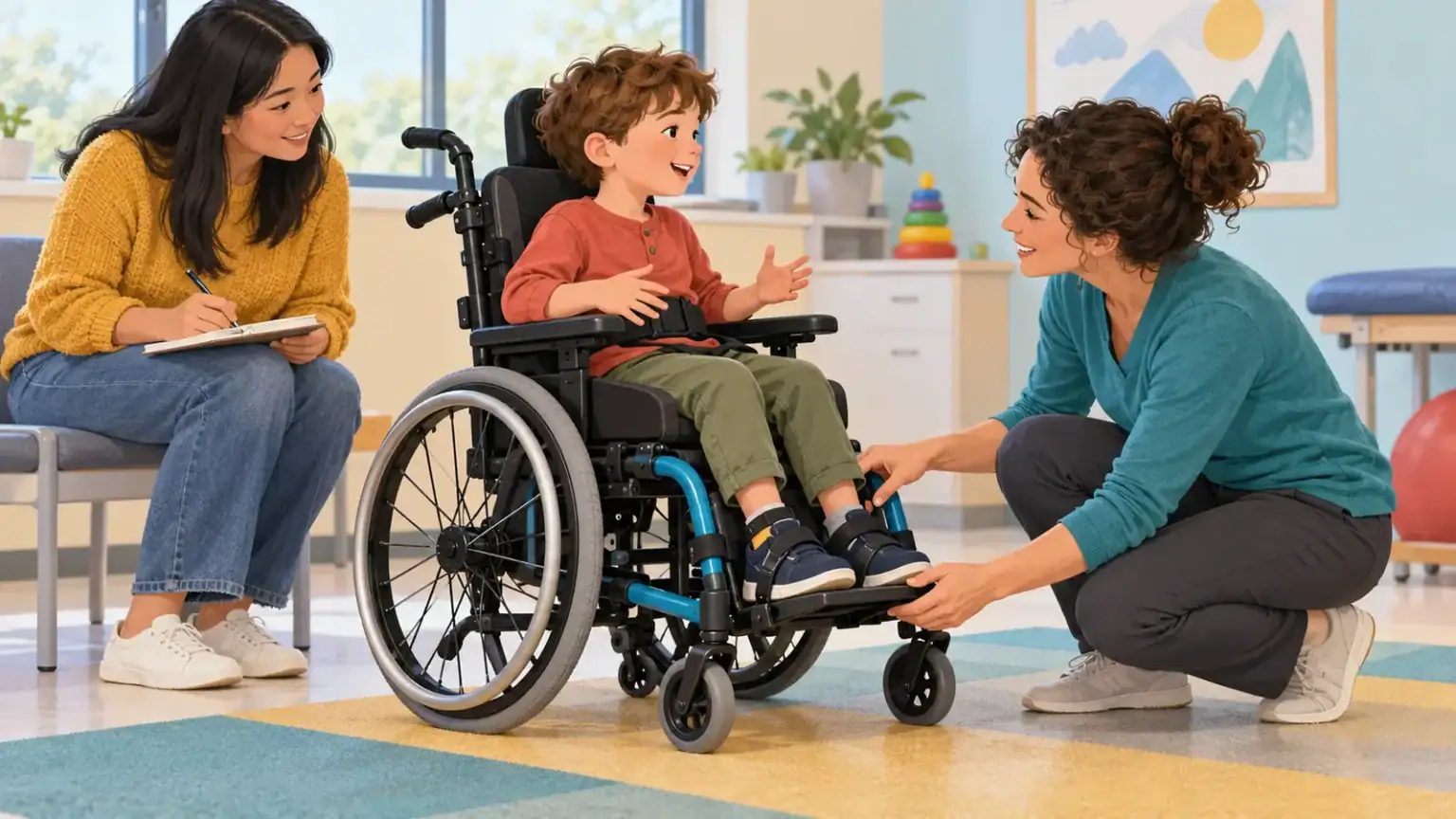
A wheelchair, walker or other mobility aid is not a sign that a child has stopped developing. It can be the tool that lets the child reach friends, explore, conserve energy and take part in school. A good assessment therefore asks more than, “Can the child walk?” It asks where the child wants to go, what gets in the way and which combination of equipment, skills and environmental changes supports participation.
The World Health Organization’s wheelchair guidance applies to children and emphasizes a service process around an appropriate product. A device handed over without assessment, fitting, training and follow-up is not complete provision.
Bring the child’s real day into the room
Before the appointment, list the places and tasks that matter: moving between classrooms, reaching the toilet, sitting with family, travelling in a vehicle, crossing rough ground, joining play and managing fatigue. Note door widths, steps, surfaces, transport constraints and storage. Photos or measurements can help, but do not buy or alter equipment from measurements alone.
Bring current braces, seating inserts, shoes and mobility devices if asked. Share changes in pain, skin, growth, strength, endurance, falls or function. Mention the child’s communication style and sensory preferences so the appointment itself is accessible.
Expect several kinds of questions
- Goals: What does the child want to do more independently or with less effort?
- Body support: How do posture, joint range, pressure, comfort and movement change across the day?
- Mobility: Will the child push, steer, use powered controls, walk for some distances or combine methods?
- Environment: Does the device fit home, school, transport and community routes?
- Care: Can caregivers safely lift, fold, charge, maintain or transport it without replacing the child’s own role?
No diagnosis automatically produces one correct chair. Two children with the same diagnosis may need different supports, controls and combinations of walking and wheeled mobility.
Ask for a meaningful trial
A few minutes on a smooth clinic floor cannot show everything. When possible, the child should try equipment in relevant tasks and settings. Watch turning, stopping, transfers, desk access, slopes and fatigue. For powered mobility, training may begin before final equipment is chosen; children need safe opportunities to learn cause and effect, steering and stopping.
Listen to the child’s feedback. “It feels tippy,” “I can’t reach the wheel,” or “this headrest blocks my view” are assessment data. Cosmetic preferences also matter because a device becomes part of daily life. Choice can improve ownership, but it should not override fit or safety.
Clarify the full package
Ask what is included: cushion, supports, straps, tray, anti-tip devices, charger, weather protection, spares and transport tie-down information. Ask who will train the child, family and school staff; who handles repairs; what to do during a breakdown; and when growth or function will be reviewed.
Seek prompt advice for persistent redness, pain, numbness, swelling, breathing difficulty, worsening posture or a sudden decline in function. Do not make structural adjustments or add cushions without guidance from the team, because a small change can alter pressure and stability.
Plan the environment too
The best-fitted device cannot overcome every stair, narrow toilet or inaccessible timetable. Equipment and environmental access must be planned together. Our inclusive school planning guide offers a useful model for assigning responsibilities. The family neighbourhood landmark map can help document routes, while a crowded-place safety plan supports outings.
Leave with written next steps: what is being trialled or ordered, who is responsible, likely timelines, interim access and the review date. Keep a short record of what works and what does not once the child uses the device in real life.
A successful assessment does not simply produce equipment. It produces a safer, more usable path to the child’s own goals.
Watch the first weeks, not only the handover
Real-life use may reveal issues the clinic trial missed. Note where the child tires, slips, cannot reach, avoids a route or needs repeated help. Take photos of equipment problems only with the child’s consent and share them securely with the service. Do not wait for the next annual appointment if fit, skin, pain, function or safety is changing. Ask how temporary repairs and loan equipment work. Growth is not solved by ordering an oversized device; a child needs appropriate support now and a clear adjustment and review plan.