By EdCaptain editorial desk · Published
General educational guidance. No qualified clinical review is recorded for this article. Health and safety information.
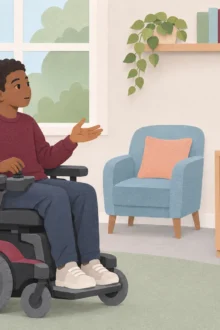
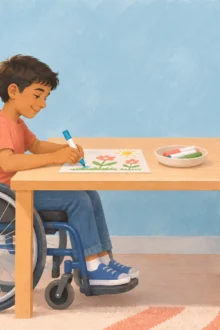
“But I saw you walking yesterday.” A relative says it at lunch, or a classmate asks why your child has brought a wheelchair on the school trip. Your child may be able to walk and still need the chair. Those two facts can belong in the same sentence.
For families of children aged 6–18, the immediate task is often explaining that combination without making every outing a discussion of symptoms. Start with the child’s actual mobility plan and the words they are comfortable using. This guide is about communication and access, not deciding when a child should walk or use a wheelchair.
Give a factual answer before a long explanation
Whizz Kidz’s language guidance recognises that, depending on their disability, wheelchair users may also walk. Enhance The UK’s myth-busting guide explains that some people use a wheelchair for longer distances or have needs that change over time. Walking ability is not a simple yes-or-no description of every journey.
A useful response is: “She can walk some of the time, and she also uses a wheelchair. It helps her take part in this outing.” Use only the explanation that is accurate for your child. Do not add a diagnosis, pain story or prediction about the future to make the answer sound more convincing.
If the child uses the term ambulatory wheelchair user, you can explain that it means a wheelchair user who can also walk. They do not have to adopt a particular label. Ask whether they prefer “I use my chair for some journeys,” another description, or no explanation in that moment.
Stop treating each change as a verdict
Standing for a photograph does not tell another person what the child needs for a whole day out. Equally, using a wheelchair today does not by itself explain whether a condition has changed. Avoid turning every switch between walking and wheeling into public evidence of improvement, decline or effort.
Relatives can be given one clear request: “Please don’t praise walking as being good and describe chair use as giving up. We want her to join the activity using the support in her plan.” That leaves room to celebrate what matters to the child: seeing friends, choosing a book or enjoying the visit.
If someone is concerned about movement, exercise or treatment, those questions belong with the professionals responsible for the child’s care. A family conversation should not create a new walking target, remove equipment or replace an agreed therapy plan.
WHO’s wheelchair guidance overview emphasises individual assessment, fitting, training and follow-up by trained personnel. If you are still working out the right combination of support, our guide to a child’s mobility-aid assessment explains what to discuss.
Prepare a response the child can choose
Talk privately, away from the person who has asked a difficult question. Try: “Would you like to answer questions about your chair yourself, have me answer, or change the subject?” A child can choose differently with friends, relatives and strangers.
- Ages 6–9: offer one simple sentence, such as “I walk and I use my chair.” Agree a familiar way to ask a trusted adult to step in. They do not need to explain stamina or medical information.
- Ages 10–12: help them choose a reply for curious peers: “Walking a little and doing the whole trip are different.” They might prefer “Let’s talk about the game” after a brief answer.
- Ages 13–18: invite the teenager to decide what they want shared, including in photos, messages or social posts. They may choose to explain their experience in detail, use a short boundary or ask an adult to handle a challenge.
Use speech, writing, AAC or another familiar communication method. A child who stays quiet has not volunteered for a public explanation. If they want to practise, rehearse the conversation only; do not ask them to stand or walk to demonstrate it.
For broader decisions about information sharing, see helping a child choose what to share when asking for access.
Keep school arrangements consistent
If the child uses different mobility methods, staff need a practical agreement rather than guesses based on what they saw at breaktime. Ask the responsible school contact to record the support agreed with the child, family and relevant professionals.
Include where the wheelchair will be available, who assists when needed, how the child requests support, and what staff should do if needs change. Equipment should not be moved out of reach simply because the child walked earlier. Any assistance or transfer should follow the child’s established arrangements.
A message might say: “Please follow the agreed mobility plan during the trip. Seeing Alex walk in class does not establish what support is needed for the whole route. If staff have questions about the arrangements, contact us beforehand rather than asking Alex to demonstrate walking on the day.”
If a teacher reports something new, listen to the specific observation and discuss it with the appropriate team. Consistent support does not mean ignoring a change; it means having a clear route for reviewing one.
Respond differently to curiosity and pressure
A friend may simply not know that some wheelchair users walk. A brief answer may resolve the question. An adult who keeps demanding proof after an explanation needs a firmer boundary: “We have explained the practical need. We are not asking our child to demonstrate it.”
If support is being refused, ask to speak privately with the person responsible for access. Describe the barrier, the agreed arrangement and the action needed now. Keep a factual note of what was said and the effect on participation. Formal accommodation processes and documentation rules vary by place; a discussion with classmates is different from a confidential administrative process.
Do not require your child to stay in an unsafe or humiliating exchange. If comments become repeated teasing, intimidation or interference with equipment, involve the responsible organisation’s safeguarding or bullying process. Adults should lead that follow-up.
Return attention to the child’s day
After a difficult interaction, ask whether the response helped and what they would prefer next time. Avoid asking the child to reassure you or produce a polished advocacy speech. They may want to carry on with the visit.
Keep following the individual mobility plan. Report new pain, repeated falls, skin concerns or a change in function to the child’s health professional or wheelchair service; seek urgent local help for serious injury or immediate danger. Do not assume every change is simply part of using different mobility methods.
The useful outcome is ordinary participation with appropriate support. Your child can walk, wheel, communicate their preferences and enjoy a day that is about more than explaining their equipment.