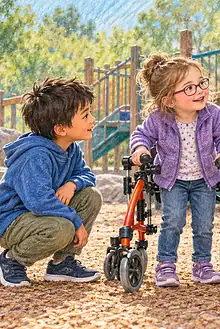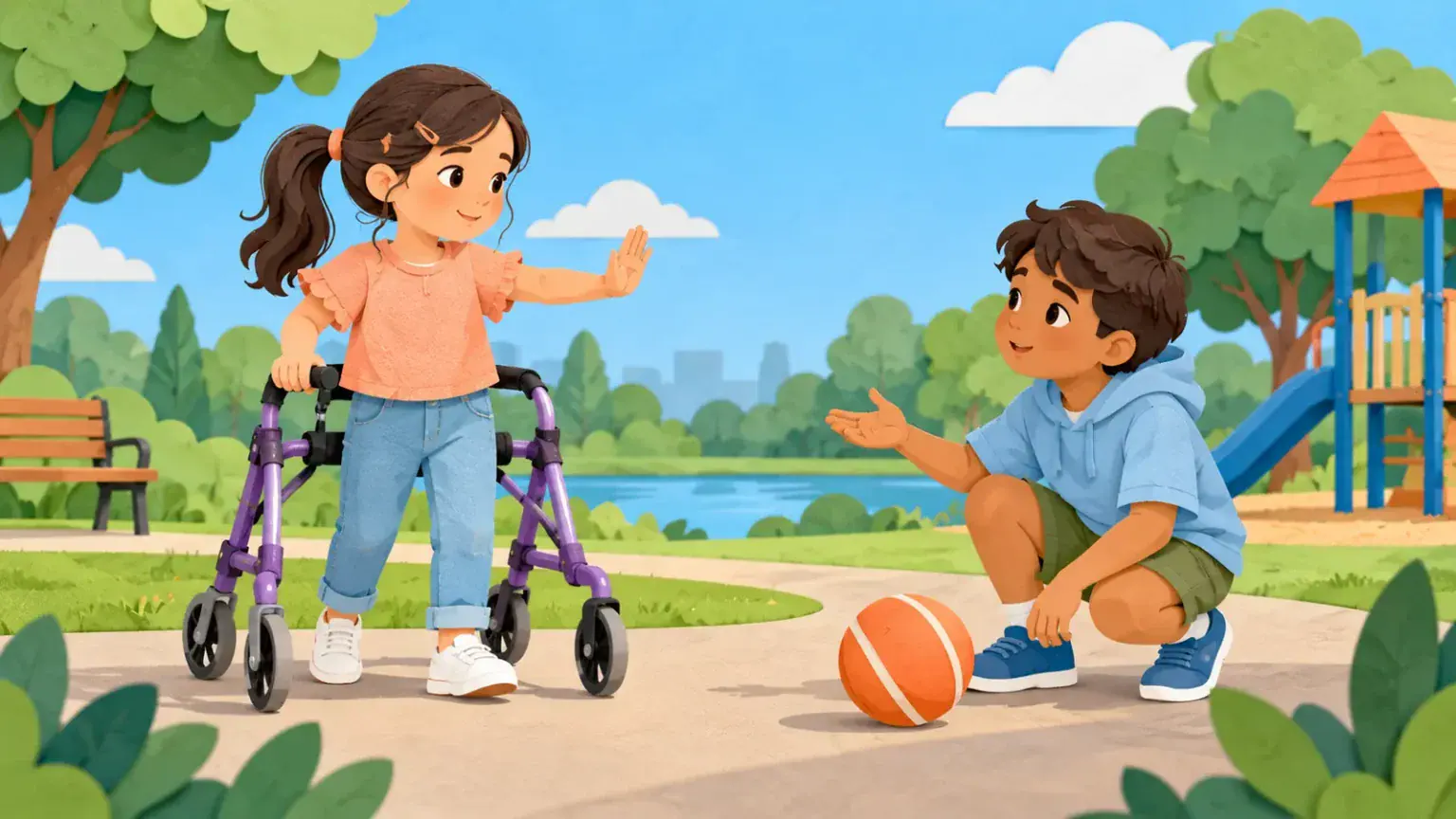
A child sees a classmate using a walker drop a ball and rushes to grab both the ball and the walker. The intention is kind, but the result can be startling, unsafe or simply annoying. Useful help begins with a pause. Children can learn that a disabled peer is the expert on their own body, equipment and preferred support.
Use a three-part habit
- Notice, but do not assume. Give the person a moment to solve the problem in their own way.
- Ask one clear question. “Would you like help?” or “What would be useful?”
- Follow the answer. A no means no. A yes is not permission to improvise; listen for the specific direction.
Model this in ordinary family life. Before opening a package, moving a chair or finishing a puzzle for someone, ask. Children understand the principle more easily when it is not presented as a special rule only for disability.
Practise words for different ages
A preschooler can learn, “Help?” and then wait. A primary-age child can say, “Do you want me to pick that up?” An older child can ask, “Would you like an arm, directions, or space?” Teach an equally calm response to refusal: “Okay.” No sulking, repeated offers or “Are you sure?” A disabled child should not have to accept help to protect someone else’s feelings.
If communication takes longer, wait. Speak to the child, not only to an adult beside them. Keep AAC available and do not answer on their behalf. This guide to making communication easier explains useful wait time and direct conversation.
Bodies and equipment need permission
Wheelchairs, walkers, canes, hearing devices and communication tools are part of a person’s access. Do not push, lean on, steer, remove or play with them. Even when help is accepted, ask how: “Where should I hold?” A person may want the door held, not their chair pushed. During transfers or personal care, only trained adults following the child-specific plan should assist. Our safe transfer guide explains why preserving control matters.
Turn rescuing into shared participation
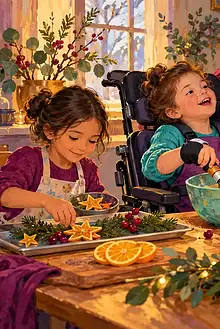
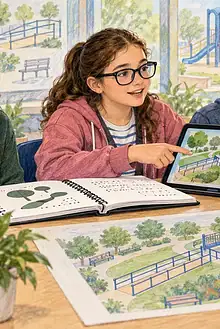
Sometimes adults praise one child for “helping” so much that the disabled child becomes a project. Watch for one-way roles: the same peer always pushes, speaks, carries or decides. Create activities with reciprocal contributions instead. One child may hold the map, another read clues, another keep score. Help should remove a barrier, not remove the person’s role.
When a child takes over, correct the action without shaming the intention: “You wanted to help. First ask, then wait.” If someone touches equipment after being told not to, return it immediately and acknowledge the boundary. Avoid demanding that the disabled child reassure the helper.
What adults can change
Often the best help is environmental. Move a cluttered bag from the route, provide a reachable shelf, share instructions visually, allow more time or choose a step-free entrance. Ask the disabled child which change would improve the task. UNICEF’s disability-inclusion guidance emphasizes asking children directly and addressing physical, communication and attitudinal barriers.
At school or a club, agree on when adults should step in for safety and when to wait. Emergencies are different: anyone may need to act quickly, but explain what you are doing and preserve the child’s choices as far as possible. In everyday situations, the pause is powerful. It changes help from something done to a child into support directed by them.
For more practice in equal participation, see joining a club as a participant, not a guest.
Try a family role-play with harmless objects: one person drops a scarf, another asks, and the first chooses yes, no or a different kind of help. Swap roles so every child practises receiving a no without embarrassment. Praise the pause and the listening, not speed. That rehearsal makes respectful help more likely when a real moment is busy.