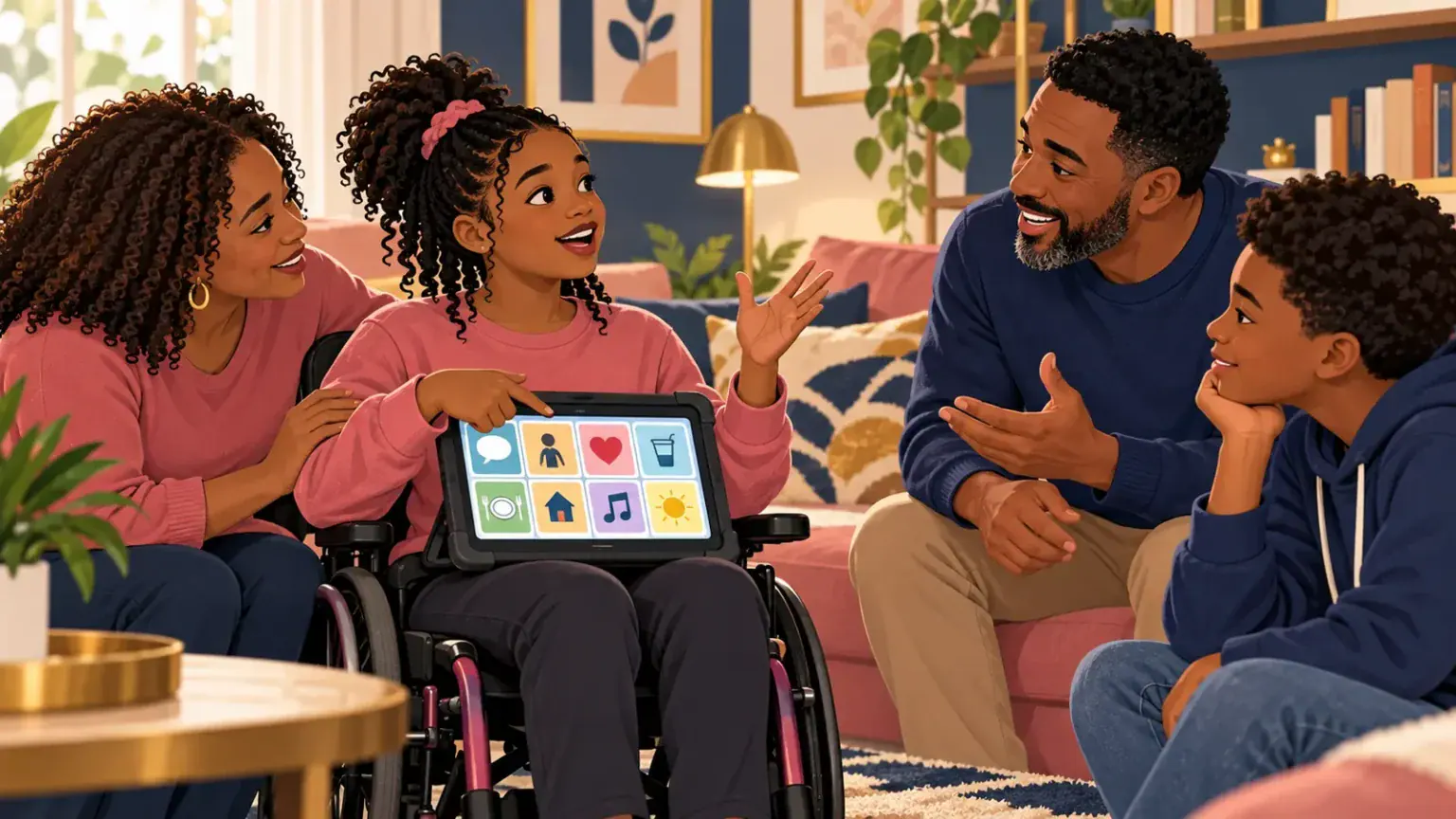
A child with intellectual disability may understand more than they can express, need longer to process language, or communicate through speech, gesture, sign, facial expression, pictures and AAC. Better communication begins with the partner. Slow the exchange, make information accessible and speak to the child—not around them.
Ask what works
Start with the child and people who know them well. What means yes, no, pain, stop, more and finished? Which words, symbols or languages are familiar? Does noise make listening harder? Record useful strategies in a one-page communication profile and update it as skills change.
Do not assume that limited speech means limited understanding. Also do not pretend the child understood because they nodded. Respect and checking can coexist.
Change how adults speak
- Get attention by name or a visual cue; avoid unexpected touch.
- Use one idea at a time: “Shoes on,” then pause, rather than a chain of instructions.
- Use concrete words and show the object, picture or action.
- State what to do: “Walk beside me” is clearer than “Don’t wander.”
- Reduce background conversation and give full attention.
- Repeat once in simpler language, not louder language.
Clear language should still be age-respectful. A teenager may need short sentences without being spoken to like a toddler.
Give real wait time
After a question or instruction, silently count to ten or longer if the child needs it. Keep a calm, expectant posture. Repeating, rephrasing and asking a second question too quickly restarts processing. If there is no response, offer a choice, visual or model rather than treating silence as refusal.
Make choices genuine
Offer two acceptable options and show them: “Blue shirt or green shirt?” Include a way to reject both. Avoid false choices when the decision is already made. Say, “It is time for medicine. Water or juice afterward?” rather than “Do you want medicine?”
Keep AAC available
Augmentative and alternative communication can include gestures, signs, objects, picture boards, writing or speech-generating devices. It can supplement speech; a child does not have to “fail” at talking first. Keep the system charged, within reach and available across home, school and community. Adults should model a few words on it without requiring imitation.
Vocabulary must go beyond requesting snacks. Include people, places, feelings, comments, questions, “no,” “stop,” “I don’t know,” “different” and words for health and safety. A speech-language professional can help select and adapt a system. For a broader introduction, see EdCaptain’s AAC beyond diagnosis guide.
Confirm understanding respectfully
Ask the child to show, choose or explain in their own way: “Point to where we go next.” Avoid “Do you understand?” as the only check. For important decisions, present information in small pieces and revisit it. Communication support is not permission for another person to answer on the child’s behalf when the child can participate.
Support breakdowns
When a message is unclear, say, “I know you are telling me something. Let’s try another way.” Offer the board, paper, gesture or yes/no questions. Stay alert to pain, distress and safeguarding concerns; sudden communication change or loss of skills needs health assessment.
Share successful strategies with teachers and clinicians. EdCaptain’s guide to collaborating across communication differences can help peers participate without taking over.
Build a communication-rich day
Create reasons to comment, protest, joke, ask and share—not only comply. Pause during a familiar routine, notice the child’s signal and respond. Measure progress by agency and participation: more messages understood, easier repair and more influence over daily life. If communication remains difficult, request a speech-language and hearing assessment that considers all of the child’s modes, cultures and settings.