Friendship cannot be assigned, but the conditions for friendship can be built. Children with intellectual disability are sometimes physically included while still being left out of conversation, invitations and shared decision-making. At other times, a peer is asked to “look after” them, creating a helper relationship rather than an equal one. Belonging grows from repeated contact, shared interests, communication access and the chance for every child to contribute.
Begin with what the child enjoys
List activities that reliably hold your child’s interest: drumming, trains, swimming, baking, animals, comics, gardening or a particular game. Look for small, recurring groups rather than one large special event. Seeing the same people each week gives everyone time to become familiar. Ask the child which setting feels promising; a socially busy club is not automatically better than a quiet two-person project.
Observe access before blaming “social skills.” Can your child understand the game? Is conversation too fast? Is the room painfully noisy? Can they use AAC or sign without interruption? Does transport make them arrive late and leave early? Change the barrier first.
Set up reciprocal roles
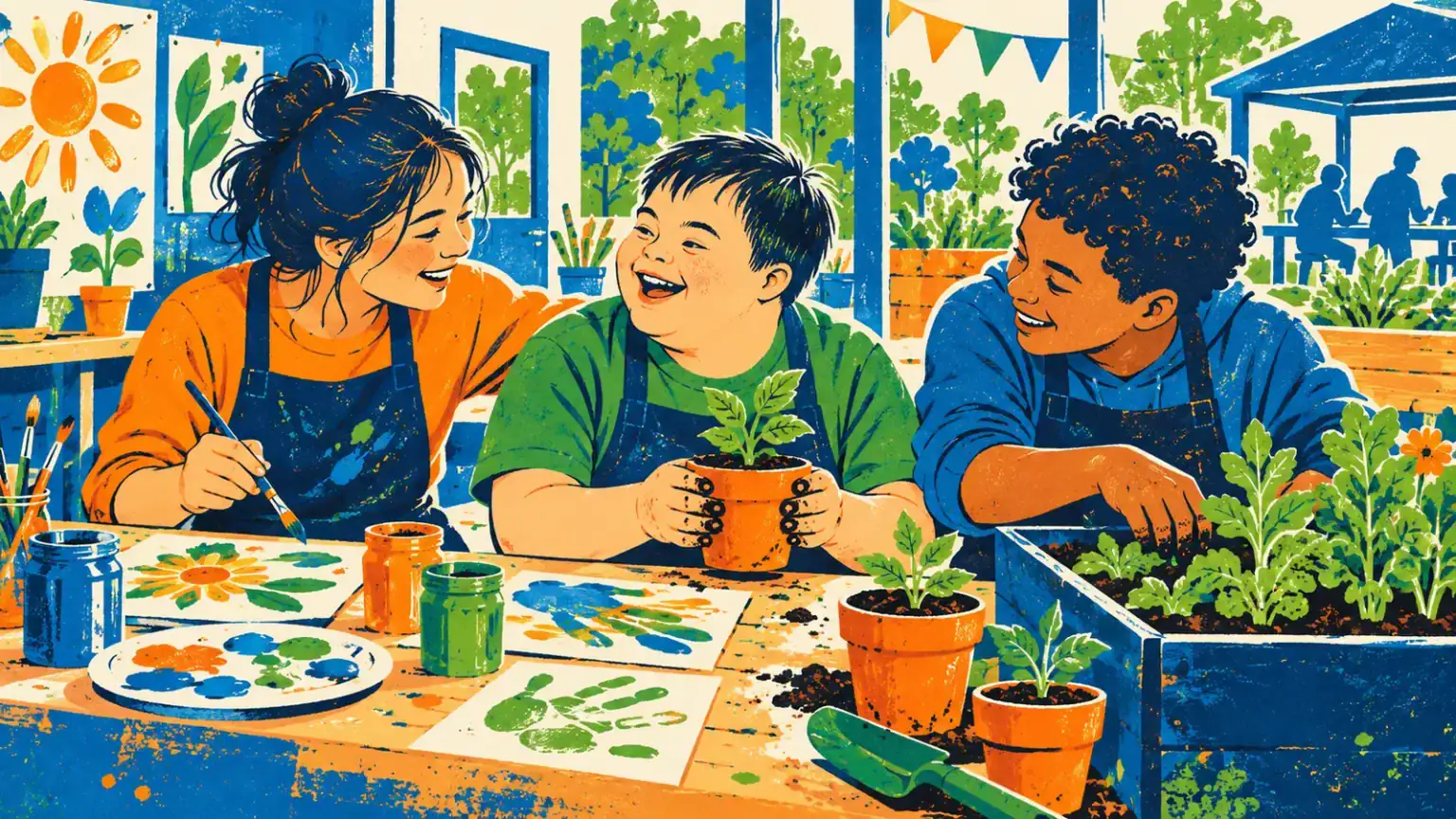
Choose activities in which each participant has a useful part. In a garden, one child fills pots, another plants and another labels. In a cooking group, each person can measure, stir, choose music or photograph the result. Rotate roles rather than always giving the child with disability the easiest task.
Adults can make a brief introduction—“Maya knows a lot about herbs, and Leo likes choosing colours”—then step back. Avoid narrating every interaction or praising a peer for basic friendliness. If a peer needs guidance, say privately, “Ask Maya directly and give her time to answer,” not “Be her buddy.”
Make communication travel
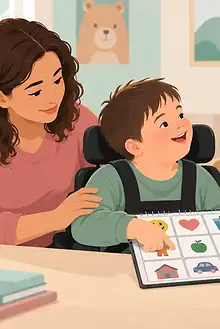
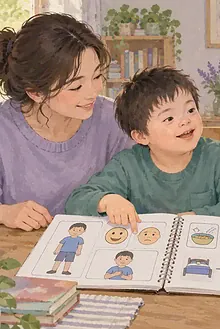
Put useful messages into the child’s communication system before the activity: greetings, names, jokes, “my turn,” “not that,” “show me,” “want to play?” and “I need a break.” Include vocabulary for the shared interest, not only requests for care. Teach partners to wait and respond to all communication forms. Our guide to making communication easier has additional strategies.
Do not speak for the child automatically. If someone asks you a question about them while they are present, redirect warmly: “You can ask Jonah. He may answer with his device.” Provide support only as needed.
Coach around a real moment
After an interaction, keep reflection short and specific. “You both wanted the blue marker. What could we try next time?” is more useful than “You need to share better.” Offer two possible scripts, role-play once, and return to the activity. Do not require eye contact, a particular facial expression or constant conversation as proof of friendship.
If the child seems rejected, listen before solving. They may want help, time alone or a different group. Rejection hurts; avoid insisting that everyone is a friend. Support one safe next step and keep the child’s dignity intact.
Invite without taking over
For younger children, a short planned meet-up can help: one familiar activity, a snack and a clear ending. Ask both children what they want to do. For older children and teens, support direct invitations by text, AAC or a card. Help with logistics while preserving privacy. A caregiver can be nearby without sitting in the middle of every exchange.
Check whether support staff or family routines unintentionally prevent contact. Can a teen stay ten extra minutes? Can transport be changed once a month? Can a friend visit the home? Small logistical changes often matter more than another worksheet about friendship.
Protect safety without constant surveillance
Teach boundaries, consent, money and online safety accessibly. Agree on a way to ask for help that does not require explaining everything in public. Watch for relationships based on coercion, gifts, secrecy, humiliation or unequal control. At the same time, allow age-appropriate privacy and ordinary disagreements. Risk cannot be eliminated without eliminating participation.
Ask schools and groups what inclusion looks like
A strong plan addresses participation beyond seating. Ask who the child communicates with, which activities allow contribution, how staff support peer interaction without hovering, and whether the child is invited to clubs, trips and informal moments. Connect this with the child’s inclusive school plan.
Measure progress by quality, not popularity: one person who seeks your child out, a shared joke, an invitation returned, a disagreement repaired, or a group where their absence is noticed. Real friendship includes giving, receiving, choosing and sometimes saying no. The adult’s role is to open doors and remove barriers—not to manufacture affection.