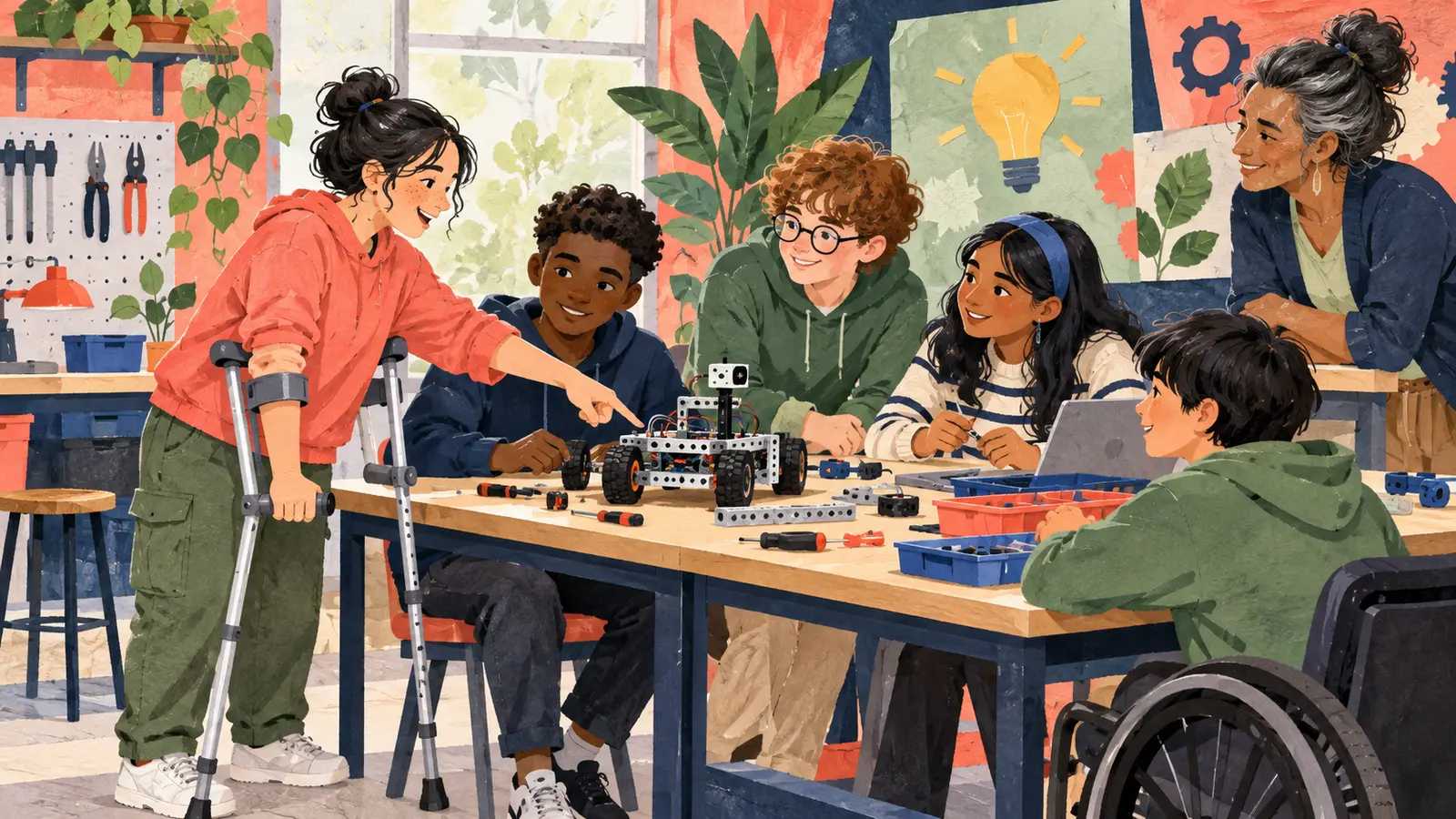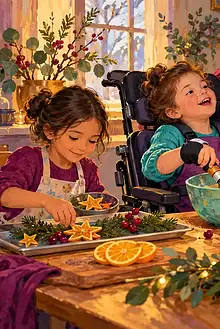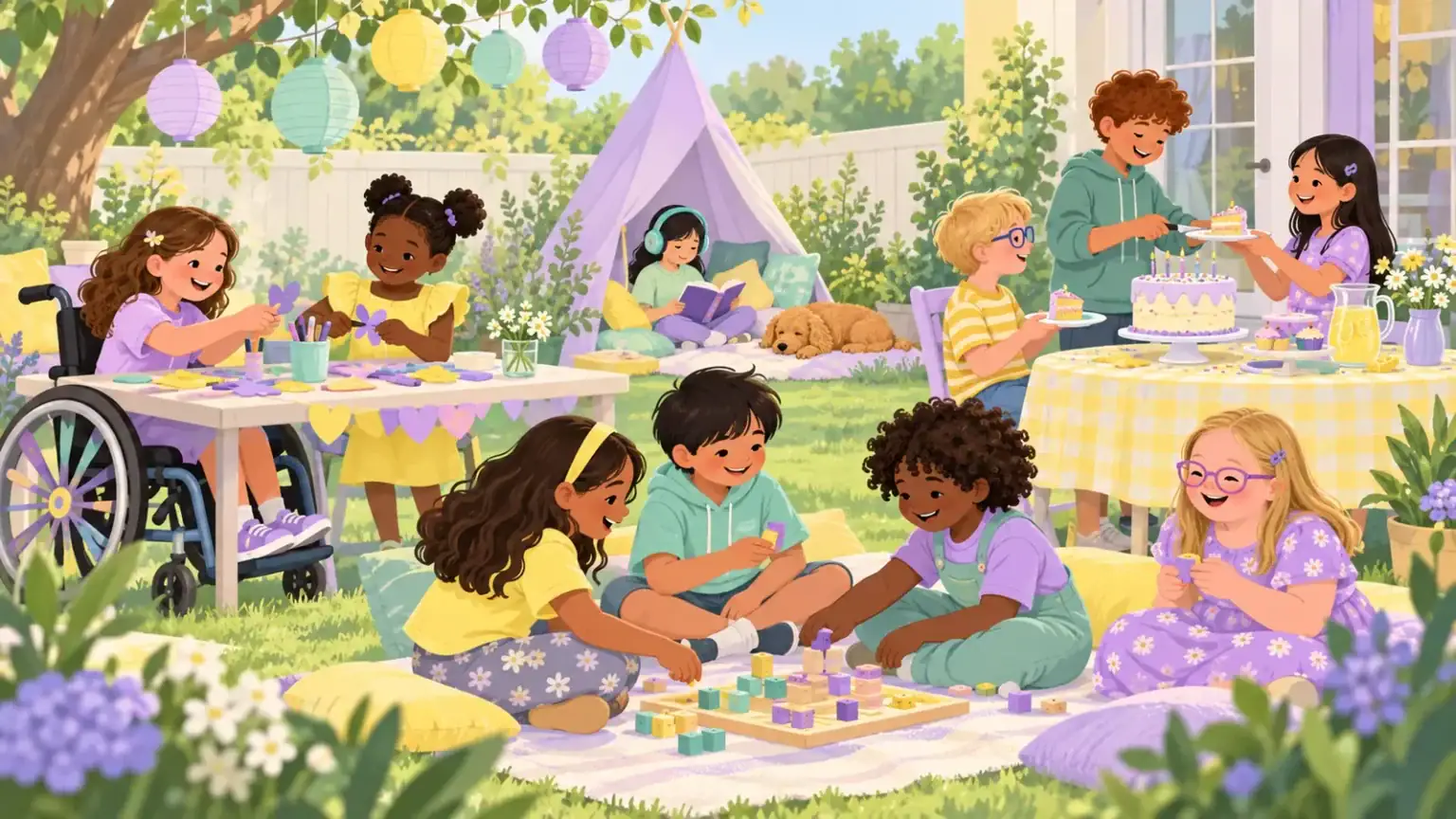
An inclusive party is not a separate activity for “the child who needs help.” It is a gathering designed with several ways to join, pause and connect. Flexible choices are useful for many guests: the child who uses a wheelchair, the child overwhelmed by noise, the shy cousin who wants to watch first and the energetic friend who needs movement.
Ask privately, then design broadly
Contact the family or older child directly: “We want Sam to enjoy the party. Is there anything about the space, food, noise, communication or activities we should plan for?” Ask what information may be shared with other adults. Do not request a diagnosis when practical details are enough.
Use the answer to improve the whole plan. If one child needs picture instructions, provide a simple visual schedule for everyone. If another needs a quieter space, create a calm corner open to any guest. UNICEF’s inclusion guidance recommends recognizing individual needs and adapting activities so children are not merely present but can participate fully.
Send useful information in advance
Tell families the address, start and finish time, likely noise level, food, pets, activity sequence and whether a caregiver may stay. Include photos of the entrance or room if helpful. Say what can change: “Children can join any activity, watch first or take a break.” Predictability supports choice without singling anyone out.
Check the space from arrival to toilet
- Is there a step-free route and enough turning space?
- Can children reach the craft, food and game surfaces?
- Is seating available with backs, arms or open space for a mobility device?
- Is there a calmer area that remains supervised but is not a punishment zone?
- Are trip hazards, balloons, candles, small parts and food risks managed for the ages present?
If the venue has a barrier that cannot be fixed, change the venue or the plan rather than expecting a child to be carried without consent.
Offer parallel ways into the fun
Choose a shared theme with flexible participation: decorating, building, treasure clues, music choices or a collaborative mural. In a movement game, one child might move, direct, keep rhythm or call the next challenge. Avoid elimination formats that leave children watching for long periods. The welcome strategies in “You can sit here” can help hosts notice who has not yet found a way in.
Keep craft materials within reach and provide larger handles or pre-cut pieces when useful. Offer communication time. A child who uses AAC may need a pause to answer; do not let the group rush past. For a nonverbal social option, try ideas from silent introductions.
Brief adults without making announcements
Tell helpers the general approach: invite, wait, offer two choices and accept “no.” Share only the specific personal information each adult needs for safety or access. Never introduce a child by listing accommodations to the group. If peers ask questions, give a short factual answer and redirect toward connection.
Let the plan bend
A child may use the quiet space, skip cake, arrive late or leave early. That is participation, not failure. Keep transitions gentle and give warnings before loud moments such as singing. Check in privately: “Do you want to stay here, join the game or choose something else?”
Afterward, ask the child or family one useful question: “What should we keep or change next time?” Inclusion is an ongoing practice. UNICEF’s adolescent guidance recommends consulting participants as activities are planned, run and reviewed—even when they take part in different ways.
Keep the host child involved as well. Explain that a good host offers choices, notices when someone is alone and accepts that friends may enjoy different parts of the party. They do not need to become a carer or enforce participation. Adults remain responsible for access and safety while children are free to build genuine friendships.
Have a backup for the key moments
If the main game becomes inaccessible, keep an equally valued alternative ready rather than improvising a solitary activity. If food information is uncertain, do not guess; contact the family and keep original packaging available. If a support person is delayed, know which adult will welcome the child and explain choices. A backup should preserve participation, not quietly lower expectations or separate the child from friends.