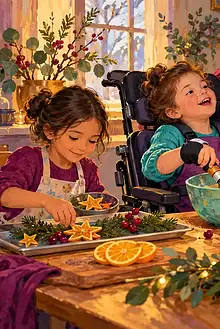
Children notice wheelchairs, hearing devices, different movements, AAC and other ways people access the world. A loud question can make adults panic. Shushing may protect no one; it can teach that disability is embarrassing. A brief, factual answer—combined with respect for the other child’s privacy—usually creates a better path.
Pause before you answer
Check whether the person being asked about wants to respond. If it is your child, agree in advance on signals: they may answer, want you to answer, or prefer not to discuss it. If it is another child, do not explain their diagnosis or history. You can address the general observation without speaking for them.
Try this three-part shape:
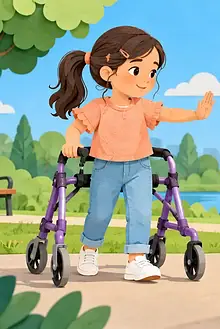
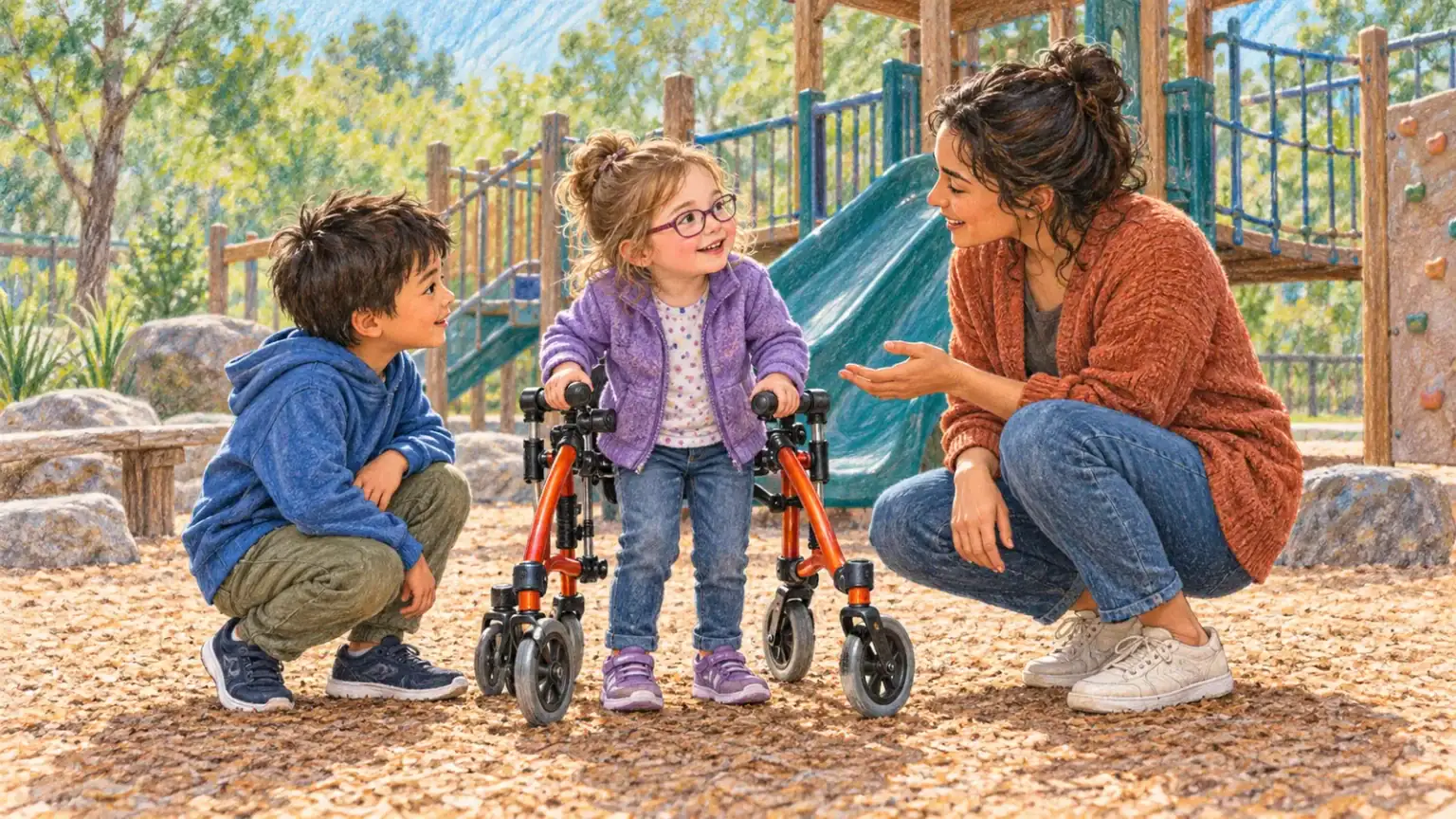
- Name the observation simply: “That is a walker.”
- Explain its purpose generally: “It helps some people balance and move around.”
- Return to relationship: “You can ask if she wants to play.”
This language treats the tool as ordinary and the child as a person, not a lesson.
Useful responses for common moments
“Why does he talk with that tablet?”
“Some people speak with their voice, signs, pictures or a device. Give him time to answer.”
“What happened to her?”
“That is personal, so we do not ask for someone’s medical story. You can ask her name or what she likes to play.”
“Can I touch the wheelchair?”
“Ask first. A mobility device is part of someone’s personal space.”
“Is it contagious?”
“No, you cannot catch a disability by playing together.” If you do not know the situation, say, “I do not know her private health information, but it is fine to be kind and include her.”
“That’s not fair—he gets extra time.”
“Fair does not always mean identical. People get the tools or time they need to take part.”
Correct hurtful words without labelling the child
Respond to the behaviour: “That word can hurt people. Say what you mean without using disability as an insult.” Then offer a repair: “You can say, ‘I was frustrated,’ and try again.” Avoid a public lecture that makes the child defensive or turns a disabled peer into the centre of attention.
Do not require the affected child to teach the group or accept an immediate apology. Check with them privately. UNICEF’s engagement principles centre dignity, autonomy, individual choice and full participation; those values apply to everyday conversation too.
Talk about barriers, not tragedy
UNICEF explains that many restrictions arise from physical and attitudinal barriers. A useful example is, “The stairs are a barrier for someone using wheels, so a ramp or lift helps.” Avoid saying people are “confined” to mobility devices or praising ordinary activities as inspirational. Access tools often create freedom.
Books, toys and media can make disability familiar, but choose stories where disabled characters have humour, interests and agency—not only stories about overcoming a condition. Shared activities such as playing in different ways with the same right to belong turn respectful words into practice.
Support the child whose privacy is involved
Ask later: “Did that answer feel okay? What would you like us to say next time?” Help them prepare options such as “It helps me move,” “I don’t want to talk about that,” or “Ask me about the game instead.” The goal is not a perfect script. It is control.
Encourage peers to use normal ways of connecting: introduce themselves, ask before helping, wait for communication and accept no. Small welcoming actions matter more than knowing someone’s diagnosis.
Adults will occasionally get the wording wrong. Model a simple correction: “I should not have answered for her. Let’s ask what she prefers.” Repair demonstrates respect more effectively than pretending to be perfectly informed. Keep listening to disabled children and adults, because language and individual preferences differ; one person’s preferred description is not a rule for everyone.
Prepare children before a shared activity
Without naming a particular child, remind the group: people move, play and communicate in different ways; ask before helping or touching equipment; and give everyone time to answer. Then use the same rules for everyone. This short preparation reduces the chance that one child must correct every misconception in the moment. It also keeps disability within an ordinary conversation about respect, consent and how a group makes space for all its members. If questions continue, invite them later so the shared activity can begin without turning one person into the subject of group attention.