A story can be enjoyable and still carry a narrow message. Perhaps every hero is a boy, every girl is valued for beauty, fathers appear only as jokes, or care work happens invisibly. Children do not need adults to interrupt every scene. A few well-timed questions can help them notice patterns while keeping pleasure and curiosity alive.
Start with observation, not accusation
Ask, “Who solves the problem?” “Who gets to be silly?” “Who needs rescuing?” “What do we learn about this character besides how they look?” These questions invite evidence from the story. They work better than announcing that a beloved film is bad.
One character does not have to represent everyone. Look for repetition across stories: which genders lead, care, invent, fight, apologise, age visibly or speak the fewest lines?
Notice the full production
Stereotypes appear in more than plot. Packaging, camera angles, costume, music and voice can tell the audience who is powerful or decorative. In a game, notice which avatars are available, whose clothing is practical, and whether different bodies receive different abilities.
Advertisements deserve their own questions: “What is this trying to sell?” “Why is one version pink and another blue?” “Does the product really work differently?” UNICEF recommends being aware of how marketing can reinforce gender norms and choosing varied, positive representations.
Use the swap test carefully
Ask what changes if a character’s gender changes. Would a confident girl be called bossy while a boy is called a leader? Would a caring father be treated as extraordinary for ordinary parenting? The swap test reveals double standards, but it should not imply that all characters fit only two identical boxes. People have varied identities and experiences.
Add stories instead of banning everything
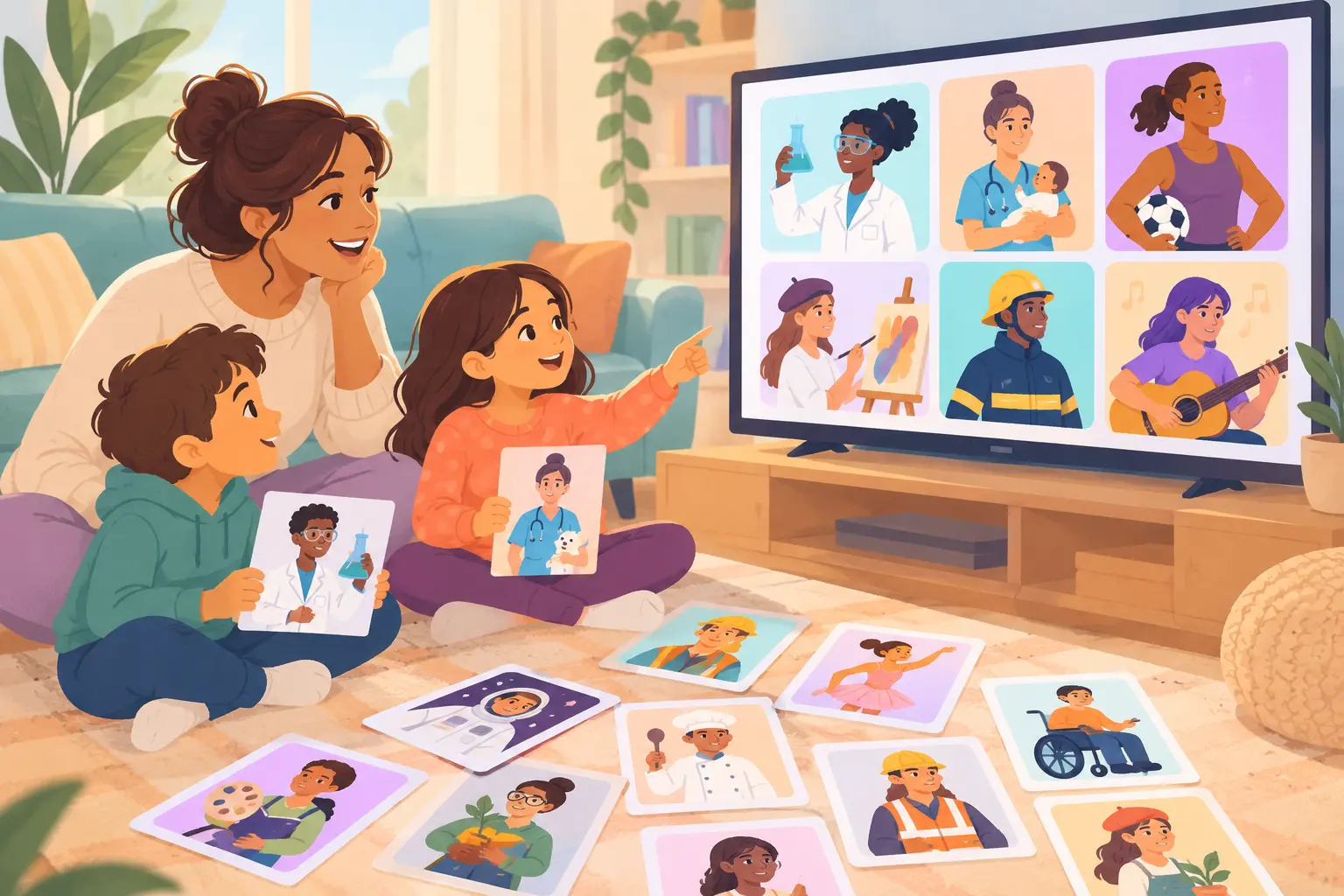
Removing every imperfect classic can make media literacy feel like punishment. Balance the shelf and playlist with characters who have different strengths, families, bodies and ambitions. Look for girls who are funny, flawed and technically skilled; boys who are tender, cautious and creative; and gender-diverse characters who are more than a lesson.
Choose creators with lived connection to the communities portrayed. No single “strong female character” repairs a whole media diet; variety matters.
Let children disagree
Your child may see a scene differently. Ask, “What makes you think that?” and return to details. They may also enjoy something while recognising its limitation: “The adventure is exciting, and the girls still get fewer choices.” Holding two ideas at once is a useful critical-thinking skill.
Try a ten-minute media lab
- Choose one short scene, book spread or advert.
- List who speaks, decides, cares and receives credit.
- Notice one visual or sound cue that signals power.
- Invent one change that widens possibilities without rewriting the whole story.
- Ask whether the new version feels more believable, fair or interesting.
Children might redesign a toy package, give a silent character one decision, or imagine a different ending. Keep the activity playful rather than grading the “correct” interpretation.
Connect media to everyday life
Ask where the same message appears at school, in sport or at home. Then look at your own patterns. If adults share care, repairs and decision-making, children have a real-life counterexample. The activity sharing everyday care without gender rules offers a simple practice.
For toys and advertising, see opening the whole world of play. For stereotypes that become humour, use responding to a sexist joke.
Adapt by age
- Ages 6–9: Count who gets to act and who waits. Keep questions concrete.
- Ages 10–12: Compare two adverts or characters and notice design choices.
- Teens: Discuss algorithms, influencers, sexualisation, representation behind the camera and who profits from insecurity.
The goal is not a child who searches every story for a mistake. It is a child who can enjoy media, notice the messages travelling with it and imagine a wider range of lives.