Families often describe different rules for sons and daughters as protection. Some risks are real, but gender alone is a poor shortcut for deciding who may travel, stay out, visit friends, wear certain clothes or manage money. Unequal freedom can teach girls that danger is their responsibility and boys that they do not need the same safety skills.
A fair rule begins with the situation, the child’s readiness and a clear safety purpose. Fair does not always mean identical, but every difference should be explainable without relying on “because you’re a girl” or “boys can handle it.”
Write down the actual rules
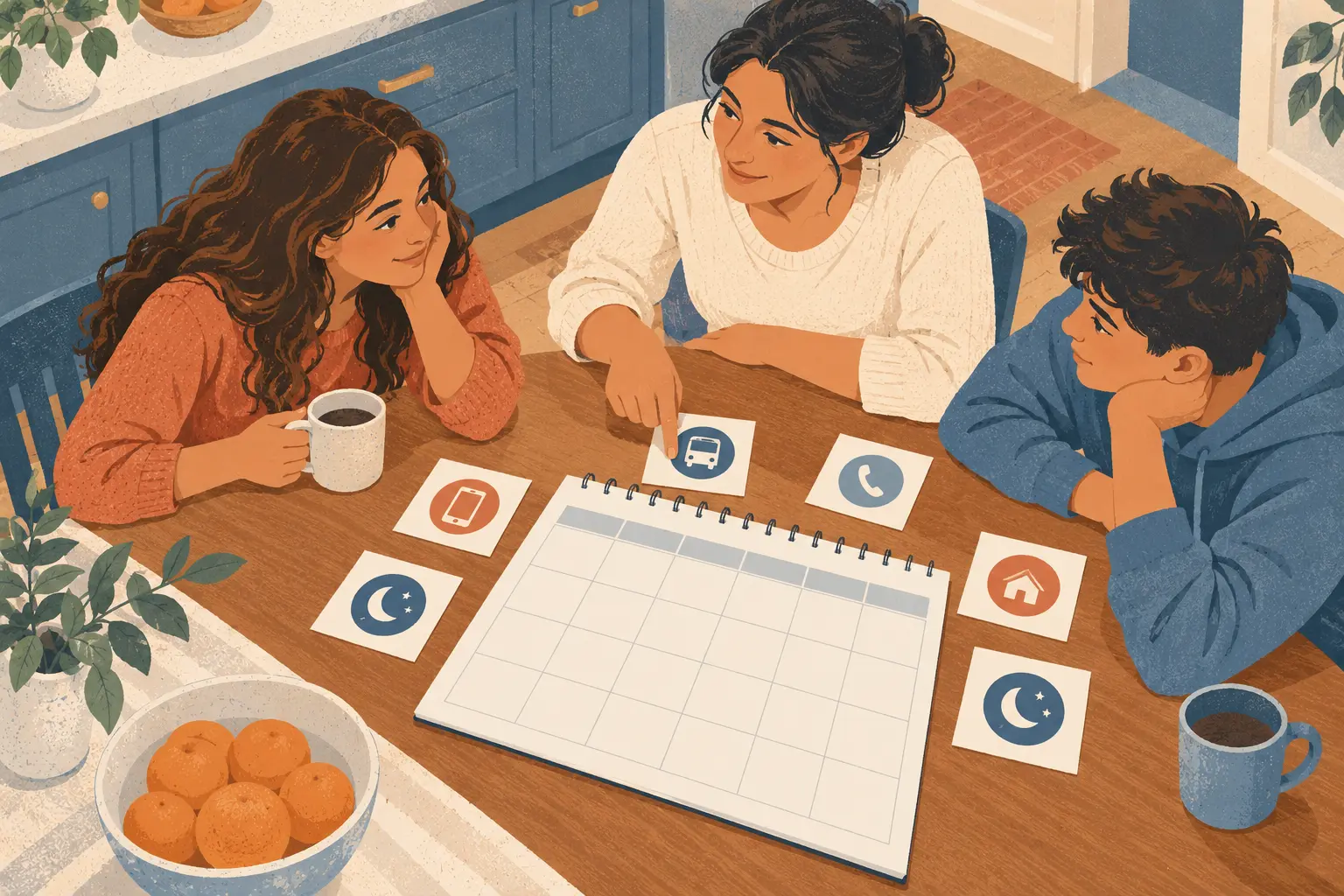
List expectations for curfews, transport, sleepovers, clothing, devices, dating, chores, spending and checking in. Add the reason beside each one. “Home by 9 because the last safe bus is at 9:15” is specific. “Girls shouldn’t be out late” is a gender rule disguised as a safety plan.
Compare siblings at the same age, not only their current ages. Did one child receive a phone, key or later curfew earlier? Differences may be justified by location, behaviour or changing family circumstances. Name those reasons openly.
Use readiness markers
Ask whether the child can:
- follow agreed check-in times;
- plan safe transport and a backup;
- recognise pressure and leave an unsafe setting;
- contact a trusted adult without fear of immediate punishment;
- handle money, keys and a charged phone responsibly.
Turn these into a route to more freedom. “After four reliable check-ins, we’ll review the curfew” is clearer than an indefinite no.
Teach safety to everyone
Boys also face harassment, violence, substance pressure and exploitation. Girls also need confidence, navigation and decision-making, not only restriction. Teach every child consent, bystander skills, transport planning, emergency contacts, digital privacy and how to help a friend.
Make the rescue promise explicit: “If you feel unsafe, call us. We will get you home first and discuss decisions later.” A consequence can wait; safety cannot.
Discuss clothing without blame
Families can have values about dress, weather, activities or formal occasions. Explain the value and invite practical input. Do not suggest that clothing causes another person’s harassment or removes their responsibility. A child deserves protection and respect in any outfit.
If relatives enforce different standards, caregivers should carry the disagreement rather than leaving a teen to defend themselves alone. Try: “We have agreed on this outfit. Please speak to me if you are concerned.”
Include the child in the review
Ask, “Which rule feels unfair?” and “What safety concern do you think we are trying to solve?” Listening does not mean granting every request. It reveals hidden effects and gives the child practice negotiating.
Use a trial when possible: a later curfew for one event, independent travel on a familiar route, or a check-in plan for a gathering. Review what happened without searching for perfection.
When siblings have different rules
State the specific reason without comparing character. “Your sister’s route is direct and well lit; your event ends after public transport stops.” Then ask what would make the second plan workable. Avoid making a daughter responsible for a brother’s care or giving a son freedom because he is expected to protect himself physically.
Our guide to deciding alone or asking an adult offers a safety ladder that can be used with every child. For money and choice, see spend, save or wait.
Adapt by stage
- Ages 10–12: Start with short independent tasks, familiar routes and concrete check-ins.
- Teens: Review rules regularly as transport, relationships, work and judgment change. Privacy should grow with demonstrated readiness.
Correct your own double standard
If you notice bias, say so: “We gave different answers for the same situation. That was not fair. Here is the rule we will use now.” This does not weaken authority; it shows that family decisions can be accountable.
UNICEF guidance urges equal opportunities and warns against limiting children’s choices based on what is considered appropriate for boys or girls. A family audit turns that principle into daily practice: equal dignity, shared safety skills and freedom that grows for understandable reasons.