- Begin with the promise they heard
- Three short script cards
- Card 1: I forgot or overcommitted
- Card 2: Something changed outside my control
- Card 3: I cannot honestly renew this promise
- Let the response stay unfinished
- Match the amount of detail to the child
- Make follow-through visible to yourself
- Sources and further reading
By EdCaptain editorial desk · Published
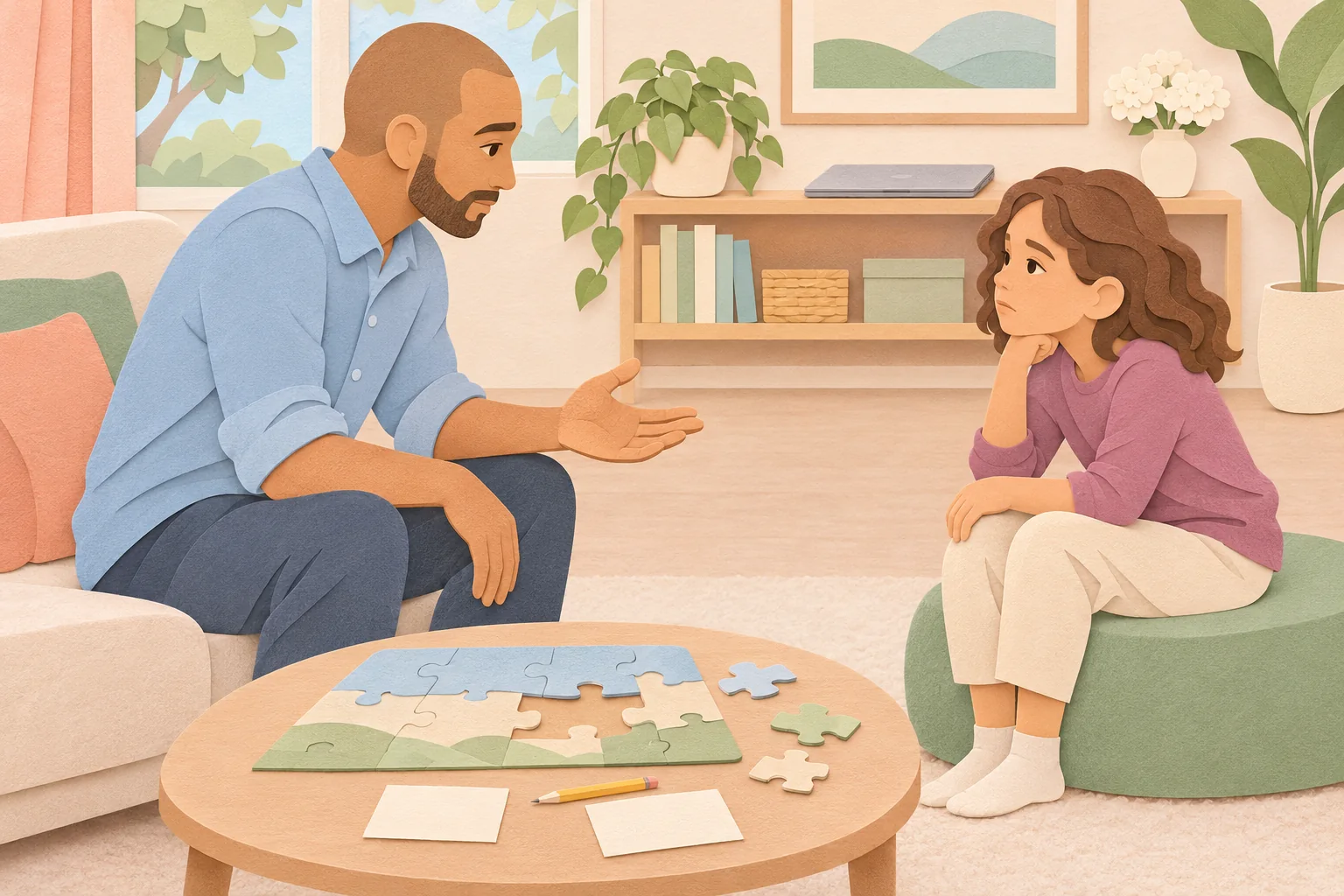
“But you promised.” You remember saying you would finish the puzzle together after lunch. Then you took a work call, answered another message and let the afternoon disappear. Explaining how busy you were may be true, but it does not acknowledge what your child was counting on.
For children aged 3–12, a useful response names the commitment, makes room for disappointment and identifies something you can actually do next. You cannot promise an immediate return of trust. You can take responsibility for the words and actions that are yours.
Begin with the promise they heard
Before choosing a script, get clear about what happened. Did you forget a definite commitment? Did circumstances change after you had checked? Or did you offer certainty before knowing whether the plan was possible?
Children and adults may also remember the wording differently. Avoid opening a courtroom debate over whether you said “definitely” or “probably.” Try: “You understood that we were doing this today. I can see why you were waiting.” You can clarify future wording once you have heard the disappointment.
UNICEF’s communication guidance recommends clear language, listening and making promises you can keep. When that standard has slipped, begin with an accurate account rather than another reassuring certainty.
Three short script cards
These are starting points for your own words. Save them privately on paper or a phone if useful. There is no need to hand your child a worksheet or ask them to rehearse forgiveness.
Card 1: I forgot or overcommitted
Say: “I said I would do the puzzle with you after lunch. I took on something else and did not come back. I am sorry I let you down. You should not have had to keep reminding me.”
Then ask: “What were you most looking forward to?” Listen before suggesting a replacement. Perhaps it was time together, finishing a particular part or having someone notice the work already done.
Next: Check what is genuinely possible. “I can put my phone away and sit with you for a short turn now, if you want. Or I can check tomorrow’s plan and tell you after dinner what time is available.” Only offer either option if you can deliver it.
Card 2: Something changed outside my control
Say: “I promised we would visit the library today. It has closed unexpectedly. I cannot make it open, and I know that still means you missed something you wanted.”
If you could have checked earlier: “I should have checked the opening notice before making that promise. That part was my responsibility.” Do not claim fault for a genuinely unforeseeable event, but own any part that was yours.
Next: “I will check when it reopens. Would you like to choose something else for today, or leave the decision for later?” Avoid replacing the lost outing with a supposedly better one the child must enjoy.
Card 3: I cannot honestly renew this promise
Say: “I said you could have that expensive set for your birthday before I checked the cost. I should not have promised it. I am sorry. We cannot buy it, and I will not tell you ‘next month’ when I do not know that.”
Next: State the real boundary. “We can look at options within our budget when you are ready.” Keep adult debt, blame and financial worry with adults. Your child can be disappointed without being asked to solve the household finances.
The aim is an honest correction. An impossible or unsafe commitment does not become something you must fulfil because you once said yes.
Let the response stay unfinished
Your child may say, “You always do this,” “I don’t believe you,” or nothing. Try: “You do not have to feel better about it now. I need to show you what changes.” Avoid demanding a hug, a reassuring answer or an apology for their disappointment.
The American Academy of Pediatrics’ communication guidance encourages adults to model full apologies, calm language and reflective listening. You might reflect the particular loss: “You had kept that part of the puzzle for us.” Check your interpretation rather than deciding what the child must feel.
If anyone begins hitting or throwing things, protect people and hold the safety boundary calmly. Your apology can remain valid while you prevent harm. Return to the conversation when it is possible to listen.
Match the amount of detail to the child
Ages 3–5: Keep the response concrete: “I said we would play. I didn’t come back. I’m sorry.” Show the next available action or a familiar picture cue. Avoid long explanations about competing priorities.
Ages 6–9: Explain which part you controlled and offer one or two real choices. A simple note can show the agreed follow-up. The child should not become your appointment manager.
Ages 10–12: Invite a more direct discussion of the pattern: “Was the hardest part waiting, missing the activity or not being told?” They may prefer a short private message followed by a conversation. Allow them to question whether your proposed repair is realistic.
At any age, make room for signing, drawing, a communication aid or a later response. Eye contact and speech are not proof that your apology has been understood or accepted.
Make follow-through visible to yourself
Before making another commitment, check the time, cost, transport and any other adult’s agreement. Distinguish “I would like to,” “I need to check,” and “This is agreed.” If you owe a decision, set a reminder yourself and return with the answer—even if the answer is that the plan is still uncertain.
A repair does not need a purchase. It may involve putting aside protected time, correcting information or telling the child promptly when circumstances change. A gift should not become the price of ending their complaint.
If the plan belongs on an existing visual schedule, use our guide to showing an unexpected change. When you do not yet know what you can offer, the “I don’t know yet” scripts help you keep uncertainty honest.
If the same promises repeatedly collapse, reduce the commitments and seek practical help with the pattern. One careful conversation cannot substitute for changing what keeps happening. The next small commitment you keep matters more than an elaborate speech about being trustworthy.
Sources and further reading
- UNICEF Parenting: clear communication, listening and keeping promises
- HealthyChildren.org: modelling apologies and listening at home
Read our editorial policy and health information guidance.