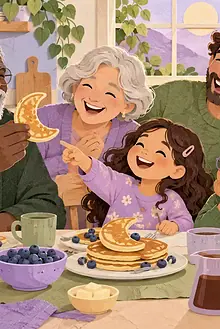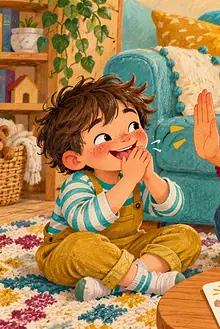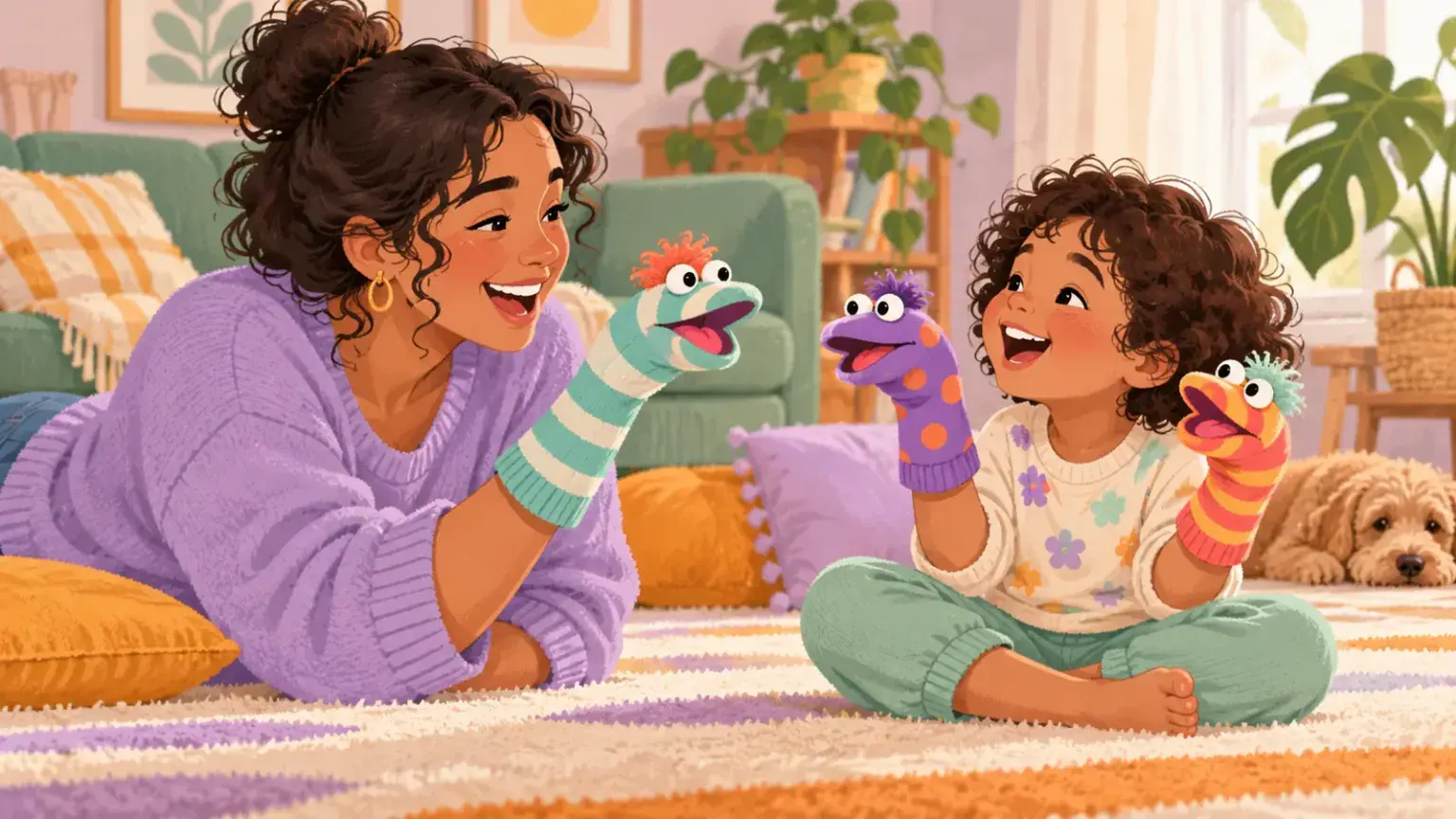
A silly voice, an absurd dance or a sock on the wrong hand can release tension faster than a lecture. Humour works best when the child feels invited into the joke. If the laugh depends on their fear, mistake, body, identity or private moment, the connection can disappear even when everyone else is amused.
Ask: who holds the power?
Adults control the audience, the story and whether a joke stops. That makes “only teasing” different between an adult and child than between equal friends. Before joking, ask whether the child can say no without being called sensitive. If not, choose humour that targets the situation, an imaginary character or your own harmless silliness.
Build shared jokes
Try naming the laundry basket “Captain Socks,” letting a banana speak in a dramatic voice, or inventing a ridiculous family handshake. Follow the child’s lead and stop while it is still fun. For babies and toddlers, repetition and gentle surprise can delight; avoid startling, restraint or pretending to leave. Preschoolers often enjoy nonsense. Older children may like wordplay, callbacks and memes—but an adult does not need to perform their culture back at them.
Read more than the laugh
Children sometimes laugh when nervous or when an audience is watching. Look at shoulders, eye contact, withdrawal and what happens afterward. Ask privately: “Was that fun for you too?” Accept the answer. Do not demand a courtroom explanation or recruit siblings to vote.
Leave certain topics alone
Do not joke about a child’s body, puberty, disability, learning, fear, friendships, romantic interests, toileting, appetite or mistakes they still feel ashamed of. Sarcasm is especially easy for younger children to take literally. A family nickname is only affectionate while the named person genuinely likes it.
Use humour beside the limit, not instead of it
You can say, “The toothbrush is reporting for duty,” while keeping bedtime. You cannot laugh away a child’s no to physical affection or use tickling to overpower them. This guide to greetings without forced hugs or kisses shows how warmth and consent can coexist. For steady connection outside a joke, try one-to-one time without a big outing.
Repair quickly when it lands badly
- Stop the joke and the audience.
- Name your action: “I made your mistake into a joke.”
- Acknowledge the effect without arguing about intent.
- Apologize and ask what would help now.
- Do not retell the story later.
A repair can be brief: “I thought that would be funny. It embarrassed you, and I am sorry. I will not use that story again.” Avoid “sorry you cannot take a joke,” which shifts responsibility back to the child.
Let children learn the same boundary
When a child’s joke hurts someone, separate creativity from impact: “You wanted a laugh, and that comment hurt your brother. Try a joke where no person is the target.” Model stopping when asked. The family rule can be simple: everyone should be able to laugh, and anyone can end the bit.
Protect the quiet child
Some children enjoy humour but rarely compete for the floor. Check that louder siblings are not deciding what counts as funny for everyone. A child who does not laugh is not spoiling the mood. Give them an easy exit, change the subject and invite their style of play later. Connection is the measure, not how much noise the joke produces.
Humour also changes with context. A joke that feels warm at home may feel exposing in front of friends, teachers or extended family. Ask before repeating a familiar bit to a new audience, and let the child retire it without explanation.