By EdCaptain editorial desk · Published
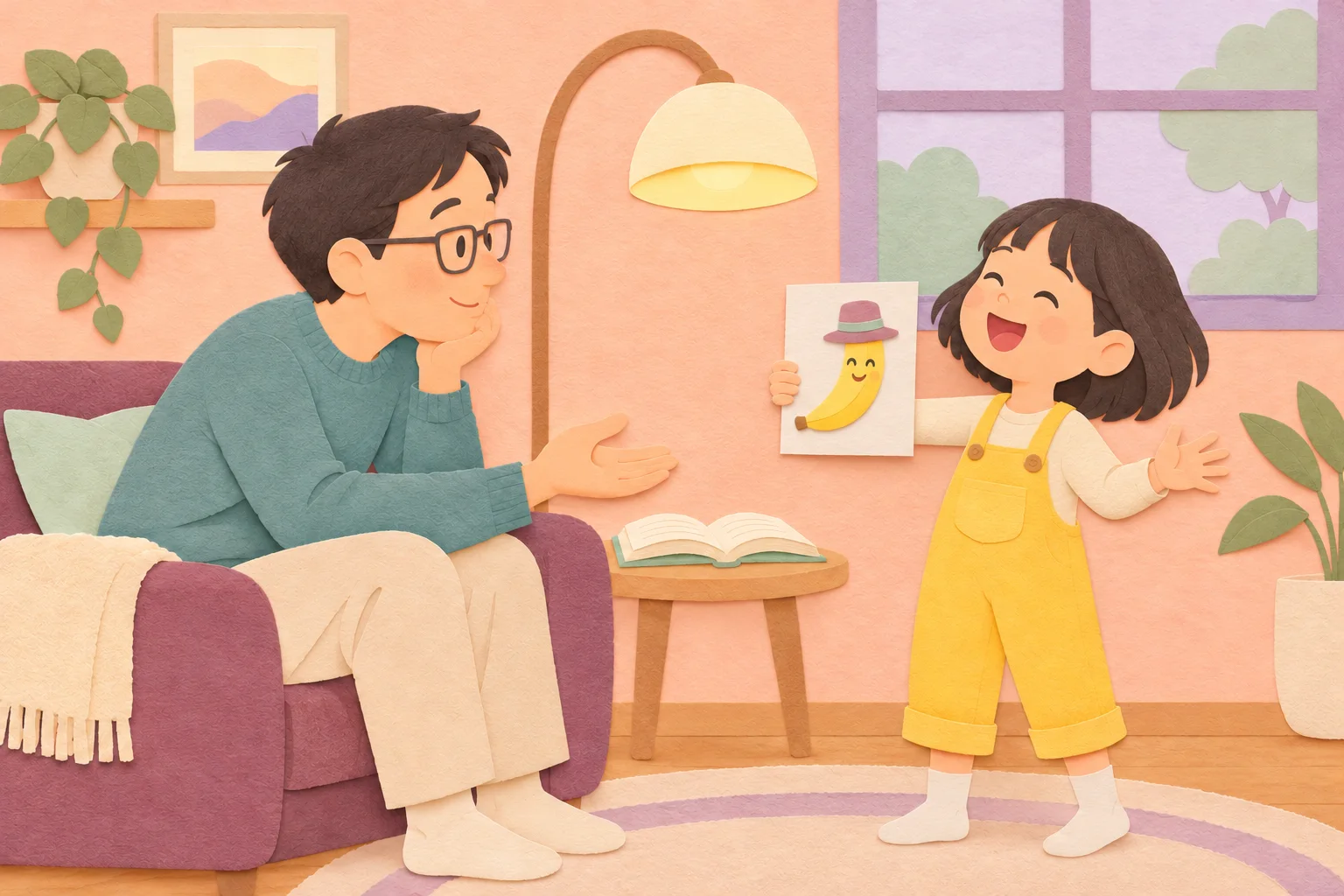
You already know the punchline. Your child is halfway through the same joke again, delighted by the ending you heard before breakfast. You want to enjoy their enthusiasm, but you also need to finish a conversation, think about dinner or simply hear something else.
For children aged 3–9, a familiar joke can remain enjoyable after its adult audience has lost the surprise. You can welcome the child’s humour and still take a listening break. A warm response need not be a bigger laugh at every retelling.
Start by noticing what is actually happening
Is your child enjoying the familiar exchange, practising the delivery or checking whether you are available? You do not need to know the exact reason to respond kindly. Avoid turning one repeated joke into a verdict about attention-seeking, maturity or social ability.
Sanford Health’s Parenting Services describes early school-age children repeatedly enjoying riddles and wordplay. Chicago Children’s Museum also describes nonsense in preschool humour and repeated jokes in the early school years. These are broad observations, not a timetable that every child must follow.
For a three- or four-year-old, a funny sound may be the whole point. A seven-year-old might be pleased to remember a setup and ending. Neither needs an adult comedy review.
Give the next telling a real, modest response
If you have the capacity, pause briefly and let the child finish. Try a smile, a playful reply or a specific observation: “You waited before the last word that time.” Choose something you actually noticed rather than inventing praise.
UNICEF’s communication guidance recommends attentive listening, specific noticing statements and clear, respectful language. Applied here, that can sound like: “You really enjoy that ending,” or “I remembered it, and I liked hearing your excited voice.” These are example responses, not a script you must perform.
If the child asks, “Why aren’t you laughing?”, you can answer honestly without dismissing them: “I know the surprise now, so I’m not laughing as much. I still like sharing a joke with you.” Avoid “It wasn’t funny the first time” or asking siblings to agree that the joke is worn out.
Say when your listening turn is finished
Make the limit about your availability, not the child’s personality. “You’re so annoying” gives a very different message from “I’m taking a break from jokes now.” You can be affectionate and definite in the same sentence.
Useful options include:
- “One more telling, then I need quiet while I read this message.”
- “I’ve heard it today. I can listen to a different thing, or we can sit together quietly.”
- “I can’t listen while I’m speaking to the nurse. Wait beside me, and I’ll tell you when I’m free.”
Choose the limit you mean. If you offer one more turn, listen to it and then stop negotiating about how many “last” turns remain. If you cannot offer another, say so without a long defence.
You do not need to offer entertainment in exchange for every boundary. The child may carry on drawing, play elsewhere safely or be disappointed near you. Disappointment does not mean the limit was unkind.
Make “later” concrete enough to trust
A vague promise can keep the child checking. If you genuinely intend to return to the joke, connect that to a moment you can recognise: “After I put the shopping away, I can hear one joke.” Keep the promise or explain the change.
UNICEF advises making only promises you can keep. If you are exhausted and cannot predict your evening, use a truthful present-tense answer: “I’m not available for more jokes now.” Do not promise a nightly comedy session to escape one difficult minute.
If another caregiver takes over, pass on the boundary without making the child a spectacle: “We’ve finished joke time for now.” Avoid announcing, “Good luck—you’ll hear that dreadful joke fifty times.”
Adjust the language to the child
For ages 3–5: keep the response short and concrete. “Last joke, then quiet” is easier to follow than a speech about audience fatigue. Show the next ordinary step: “I’m putting these cups away.” A child may need the same calm explanation again; you can repeat the boundary without reopening the listening turn.
For ages 6–9: explain that knowing the ending changes the listener’s response. Later, away from an impatient audience, talk about asking, “Would you like a joke?” and accepting “not now.” Model that yourself before telling a story they have already heard. This is an invitation to notice another person’s availability, not a test of whether the child can read facial expressions perfectly.
Use the child’s usual communication method at either age. A picture, signed joke, AAC message or slower delivery deserves the same respect. If you agreed to one telling, allow time for the whole message. Make your stopping point explicit rather than expecting the child to decode a sigh.
Do not make every retelling a lesson
You can occasionally ask whether the child wants help trying something new. You can also let a familiar joke stay familiar. Constant suggestions to improve timing or invent better material may turn a shared pleasure into work.
If they want fresh ideas, our family joke-writing activity offers a separate, optional way to play. It is not homework for earning your attention. If the actual difficulty is repeated toilet jokes in unsuitable moments, use the more specific time-and-place guidance for toilet humour.
A harmless repeated joke and a joke that hurts someone need different responses. Stop material that targets a person’s body, disability, identity, fear or private experience. Familiarity does not make hurtful content acceptable, and nobody owes laughter to keep the peace.
If you have already snapped
Repair the words without withdrawing a reasonable boundary: “I called your joke stupid. That was unkind, and I’m sorry. I still need a quiet break.” Do not require the child to reassure you or tell the joke again immediately.
Next time, give yourself permission to stop earlier. A brief, kind limit is easier to deliver before you are thoroughly irritated. You are making room for both people: a child who enjoys sharing humour and an adult whose attention has limits.
Sources and further reading
- Sanford Health Parenting Services: encouraging a child’s growing sense of humour
- Chicago Children’s Museum: children’s humour and repeated jokes
- UNICEF: listening, clear language and realistic promises
Read our editorial policy.