For many children, words about bottoms, burps and toilets are funny because they are surprising and mildly forbidden. The goal is not to convince a six-year-old that the joke is sophisticated. It is to teach context without making normal bodies feel dirty or shameful.
- Separate the body from the behaviour
- Use a time-and-place boundary
- Do not reward the loop
- Offer an immediate replacement
- Notice what the joke is doing
- Protect other children’s boundaries
- Keep health talk serious enough
- Adapt for communication and development
- A short script
- Coordinate with school without making it a label
- Sources and further reading
Separate the body from the behaviour
Say, “Bodies and toilets are not bad. That joke is not for the dinner table.” This is clearer than “That is disgusting.” Children need accurate, calm language for health, privacy and asking for help. Shame can make it harder to tell an adult about pain, toileting trouble or inappropriate behaviour.
Use a time-and-place boundary
Choose one simple family rule: bathroom jokes belong at a private silly time, not during meals, school, worship, medical conversations or when someone asks for them to stop. A preschooler needs brief repetition. An older child can understand that different audiences have different comfort levels.
Do not reward the loop
A huge reaction can become the most entertaining part. Keep your face and voice neutral: “Not here. Try another joke.” Then move on. Avoid long lectures in front of siblings or guests. Attention can return when the child switches material.
Offer an immediate replacement
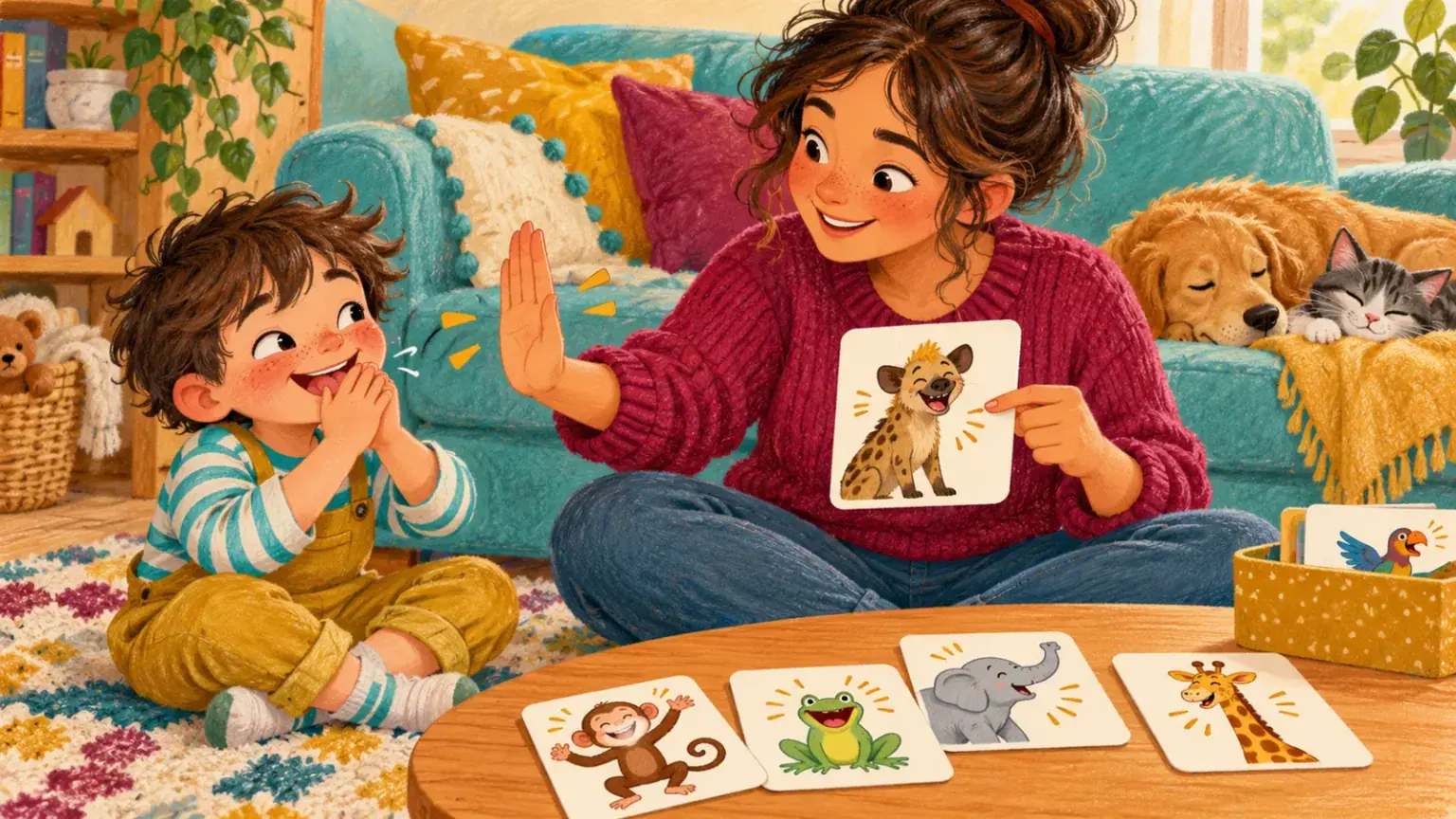
Children often need somewhere for the playful energy to go. Suggest an animal sound, absurd object combination or riddle. Try: “Give me a joke about a sleepy banana instead.” For a wider framework, use humour that connects without making someone the punchline.
Notice what the joke is doing
Sometimes toilet humour is a bid for connection, a way to handle embarrassment, or a quick strategy during boredom. Ask later, “Were you trying to make the group laugh?” Then help the child find another route. If the jokes appear mainly when anxious, overwhelmed or asked to perform socially, address that situation rather than treating the words as the whole problem.
Protect other children’s boundaries
No child has to listen, repeat a word or be named in the joke. Stop jokes about someone’s body, accidents, smell, underwear or toileting immediately. If harm occurred, help the child acknowledge it and repair without forcing the other person to laugh.
Keep health talk serious enough
When discussing constipation, pain, menstruation, hygiene or a medical visit, use direct words. You can be warm, but do not let joking prevent the child from answering. If symptoms are persistent, painful, bloody or worrying, seek qualified medical advice rather than assuming the subject is only comedy.
Adapt for communication and development
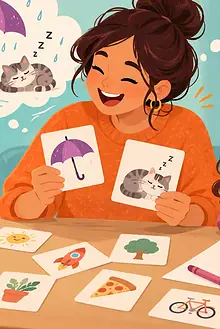
A visual cue such as a stop hand and a picture of the next topic may work better than repeated verbal correction. Some children repeat words for sound, predictability or social effect. Teach the alternative explicitly and avoid assuming defiance. Older children can help write a family rule, but adults remain responsible for keeping it respectful.
A short script
“You found that word funny. Bodies are not shameful. This is not the time for that joke. Choose an animal joke or save it for private silly time.” Calm consistency usually teaches more than outrage.
Coordinate with school without making it a label
If the same humour is causing problems in class, ask what happens before and after it rather than describing the child as inappropriate. Agree on one discreet cue and the same replacement choices used at home. The child should not become known to staff or peers by the joke. A brief, consistent response across settings is more useful than public reminders or losing every break.
At home, notice and praise the switch rather than repeatedly naming the problem: “You changed the joke when I gave the cue.” That reinforces the skill the family wants without turning humour into a character judgment.