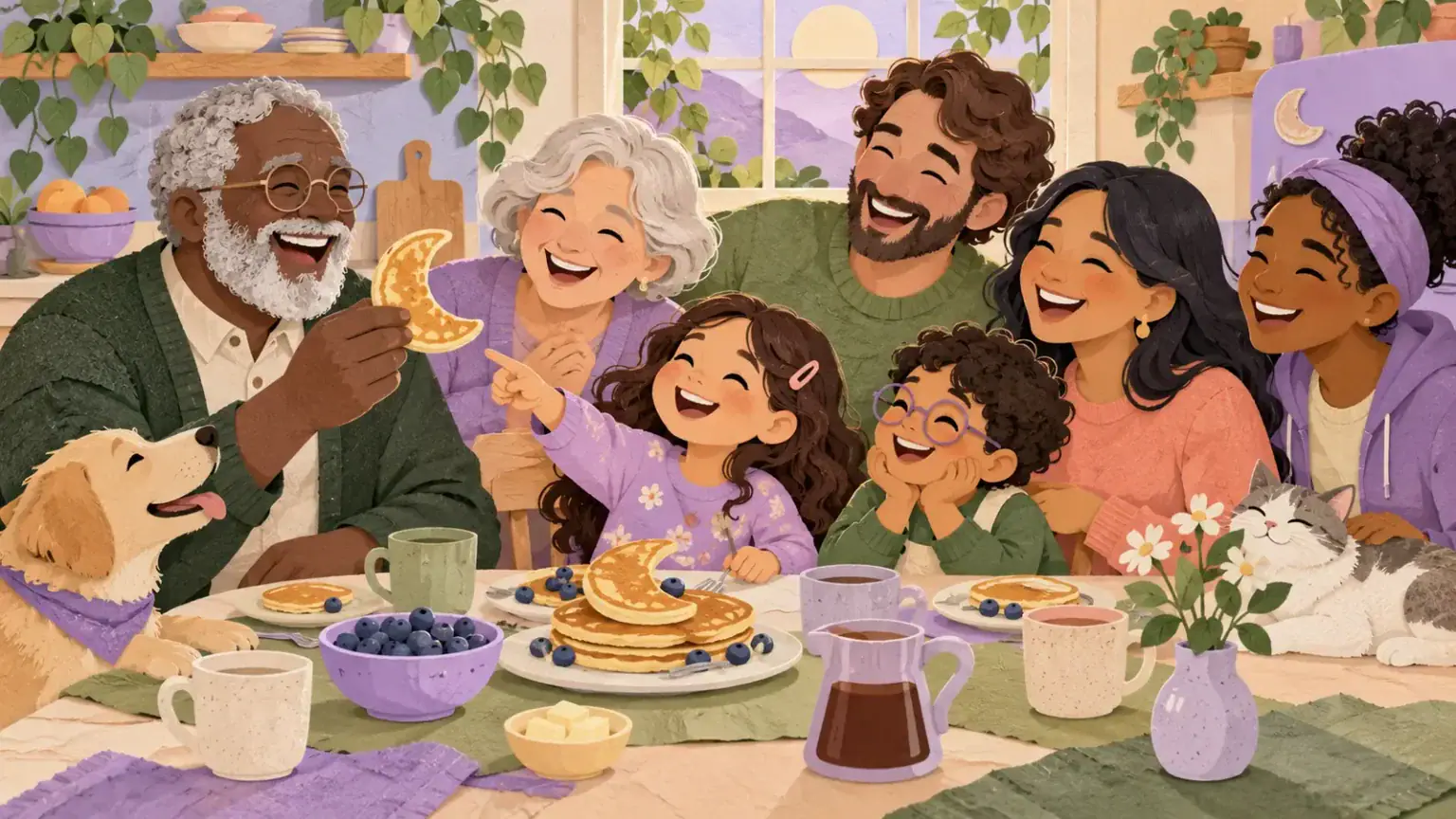
An inside joke can turn a lopsided pancake into a story the family remembers for years. It can also become a small locked door: everyone laughs except the person whose mistake supplies the punchline. The difference is not whether the joke is old or affectionate. It is whether every person affected still feels included.
Notice how the joke began
The safest recurring jokes usually grow from shared absurdity, wordplay or an event nobody was harmed by. Be cautious when the origin involved fear, toileting, puberty, a learning difficulty, an accident or a moment the child could not control. A family can remember an event without turning it into a nickname.
Check consent over time
A child who loved a joke at six may dislike it at eleven. Ask privately: “Is the moon-pancake story still fun for you?” Accept a no without arguing that it is tradition. Consent can change when the audience changes too. A joke enjoyed at home may feel exposing in front of friends.
Make the joke expandable
Good family humour lets people add rather than merely watch. A moon pancake can lead to star toast or a pretend restaurant menu. The joke becomes a creative world, not a fixed story about one person. Younger children, non-speaking family members and relatives who speak another language can join through gestures, pictures or props.
Watch for exclusion
Inside jokes become unkind when used to prove who belongs, whisper around a new partner, or leave one sibling permanently outside. If someone asks what is funny, explain it briefly or change the subject. Do not answer, “You had to be there,” in a way that keeps them at the edge.
Retire jokes cleanly
If a child asks for a joke to stop, stop repeating it. Do not sneak it into birthday speeches, captions or family chat. The privacy principles in asking before sharing a funny family story apply to recurring jokes too.
Use a simple family test
- Can the person at the centre laugh freely or decline?
- Would we tell it in front of their friend?
- Does the joke depend on a body, identity, disability or vulnerable moment?
- Can everyone understand enough to join?
- Will we stop the first time someone asks?
Repair when a beloved joke has worn out
Say: “We kept using that because we loved the memory. I see it no longer feels good to you. We will stop.” Avoid defending your intention. If it was shared online or with relatives, remove what you can and tell them not to repeat it. This is one practical form of the repair described in laughing at a small mistake and then making things right.
Create new humour on purpose
Use low-stakes material: a pet’s dramatic yawn, a made-up word, a recurring imaginary character or a silly sound for missing socks. Shared jokes should be renewable. A family does not need to keep mining one child’s childhood for material.
Keep the belonging bigger than the joke
Humour can strengthen connection, but people should not have to perform laughter to prove they are part of the family. Check in, make room for different styles and let quiet affection count too. For broader guidance, see how to laugh with a child rather than at them.
Be careful with family chat
A joke shared in a private family group can still travel beyond it through screenshots, forwarding or retelling. Ask before posting a child’s line, photo or voice note, even when every current member understands the context. If a relative repeatedly revives a retired joke, correct them directly rather than asking the child to defend the boundary. Adults set the culture that makes “stop” believable.