By EdCaptain editorial desk · Published
“Can we try this prank?” Your child has seen a clip, heard about it from a friend or imagined a version for someone at home. Before searching for props, ask them to describe what happens. The useful pause comes before there is an unsuspecting person, a camera or a mess to undo.
For families with children aged 6–12, this can become a practical planning conversation: what is the funny idea, who gets a choice, and what happens if it goes wrong? You can welcome creativity while refusing the prank.
Start with the idea your child already knows
Try: “Tell me the part you think is funny. What would the other person experience?” Let the child describe it without acting it out. You do not need to hunt for more extreme examples or play a dangerous video to make your point.
Australia’s eSafety Commissioner advises against introducing children to named harmful challenges or showing dangerous challenge videos as warnings. When a child already knows about one, discuss the possible harm calmly. This article is not a list of current trends, and a clip’s popularity would not make its contents safe.
If your child cannot explain the plan without “you’ll see,” keep it on hold. An adult needs enough information to make a decision before anyone is involved.
Separate surprise from loss of control
A surprising drawing can be funny. Being made to believe something frightening, losing access to a needed object or discovering that food has been changed is different. Children’s Hospital of The King’s Daughters recommends considering physical harm, emotional harm and trust when judging humour.
Set some plain household boundaries. No interference with food, drink, toiletries, medicines or assistive equipment. No painful contact, restraint, blocked routes, damage or tricks involving an emergency. Do not make another person’s fear, private information or distress the entertainment.
These are reasons to stop a plan, not problems to solve by promising to be careful. “We won’t change what someone eats for a joke” is clearer than “Only use a tiny amount.” Adults follow the same rules when they are the ones proposing the prank.
Ask who can actually say no
“They’ll laugh afterwards” is a prediction, not permission. Ask whether the person has agreed to this kind of play and knows enough to choose. They should be able to decline before it starts, stop during it and dislike the result without being called boring or sensitive.
For a family comedy scene, you can ask, “Would you like a silly surprise made from paper? Nothing will touch you or your belongings, and we can stop whenever you want.” If the explanation removes everything the child found funny, consider whether the original fun depended on the other person feeling confused or powerless.
Do not recruit a younger sibling because they are easier to persuade. Silence, freezing or uncertain laughter is not a reason to keep going. If willingness is unclear, pause and ask directly.
Make the camera a separate decision
Put phones away for the first conversation. Would the idea still appeal without a reaction video to share? If not, talk about the audience the child is imagining.
The American Academy of Pediatrics advises considering children’s privacy, possible embarrassment and future audiences before posting about them. It also warns that taking a post down cannot guarantee that copies disappear. Agreeing to play does not automatically mean agreeing to recording or sharing.
A straightforward family default is to leave surprise reactions unrecorded. If the family later wants to make a clearly staged comedy clip, discuss everyone’s role, recording and audience separately. An adult still decides what is appropriate to share; a child’s yes is not a reason to publish distress or private information. Our guide to funny family stories and privacy explores that decision.
Walk through the unfunny jobs
Before approving even a gentle idea, ask where it will happen, what will be moved and who returns everything to normal. Keep entrances, walking routes and essential belongings untouched. Do not involve pets or people who have not agreed to participate.
For ages 6–9, draw three simple boxes together: before, during and afterwards. The adult checks the setting and materials. Ask the child to point out where someone can stop the play.
For ages 10–12, have the child explain the likely result and a less convenient one: “What if they don’t enjoy it? What if someone else enters?” They can propose the cleanup plan, but adult permission still matters. Passing these questions does not guarantee safety or require you to approve the idea.
Keep the funny part in a clearly pretend version
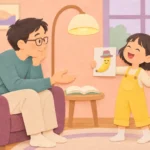
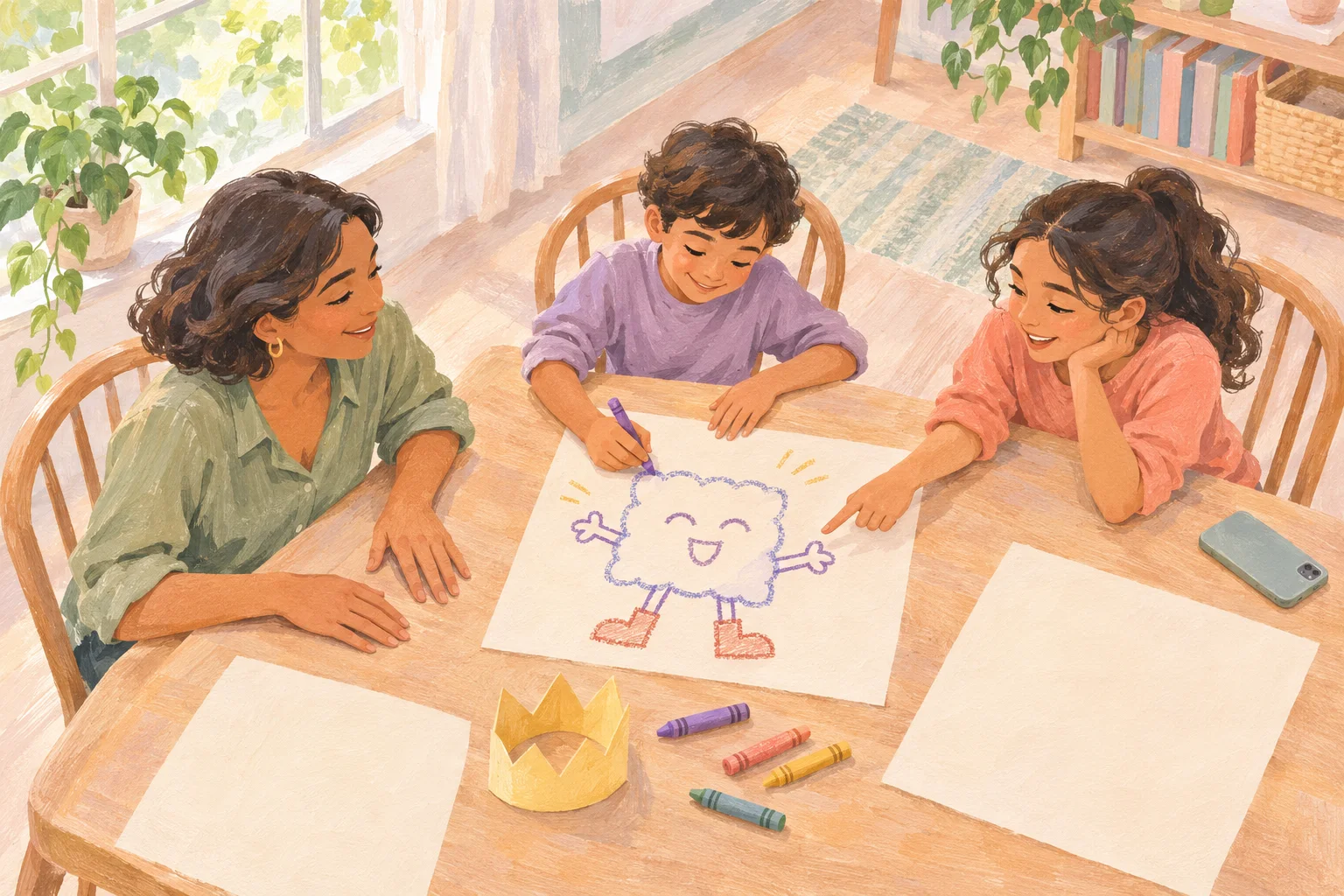
If the appeal is something ordinary behaving absurdly, try a five-minute paper scene instead. You need paper, crayons and a clear tabletop; no cutting, food, attachments to people or hidden objects are necessary.
- Ask who wants to join. Passing is allowed, and everyone knows it is pretend.
- Draw an impossible character, such as a square cloud wearing boots. A child can draw, describe, point or use their usual communication tool while someone else draws.
- Let the character apply for an absurd job. Take turns asking one playful question, with no requirement to perform or laugh.
- Stop when anyone asks, put the materials away and ask, “Which part was fun for everyone?”
Children aged 6–9 may prefer one question and a picture answer. Those aged 10–12 can add a short fictional dialogue or choose to direct rather than speak. Describe pictures aloud or use large, high-contrast marks as needed. If nobody wants a scene, keep the drawing and leave it there.
For humour during an ordinary task, our playful routines guide offers a different approach without tricking someone.
If the prank has already started
Stop the action and recording, check immediate safety and get appropriate help for any injury or exposure. Do not demand a laugh or an explanation from the affected person. Remove a shared recording where possible and ask recipients not to circulate it; do not promise that every copy can be recovered.
Later, help the child name the action and make a practical repair. UNICEF recommends clear, respectful communication focused on behaviour rather than attacking the child’s character. “You wanted a funny reaction; this frightened someone, and it stops” gives a boundary without declaring the child cruel.
You do not owe a replacement prank. Sometimes the decision is simply no. There is still plenty of room for humour that everyone can recognise as play.
Sources and further reading
- Children’s Hospital of The King’s Daughters: checking whether humour helps or harms
- eSafety Commissioner: talking about harmful online challenges without amplifying them
- American Academy of Pediatrics: children’s privacy before sharing online
- UNICEF: clear and respectful communication with children
Read our editorial policy.