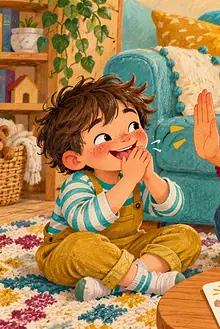
“Hold your horses” can sound like a baffling instruction when no horses are present. Some children are still learning figurative language; others consistently prefer direct speech. The task is not to train a child to laugh on command. It is to make meaning clear and protect them from being teased for misunderstanding.
- Assume the confusion is real
- Mark playful language
- Teach one phrase at a time
- Reduce sarcasm in important moments
- Give the child a repair phrase
- Stop the audience effect
- Respect different humour
- Check the environment
- When to seek more support
- A useful family promise
- Help relatives and peers understand
- Sources and further reading
Assume the confusion is real
If a child looks worried after a playful threat or idiom, explain immediately: “I said ‘we are in hot water.’ I mean we have a problem; there is no hot water here.” Do not extend the joke while the child becomes more anxious. Clarity is kinder than testing whether they can work it out.
Mark playful language
Use a predictable cue such as “joke voice,” a gesture or a picture card. Keep the cue respectful, not babyish. For written messages, an agreed emoji can help, but it should not be used to erase a genuinely hurtful statement.
Teach one phrase at a time
Draw the literal image on one card and the intended meaning on another. Ask where the child might hear it and what they could say when unsure. Revisit naturally rather than running a quiz. Many idioms vary by language and culture, so explain them rather than treating them as common knowledge.
Reduce sarcasm in important moments
Directions, safety rules, consent, discipline and health conversations need direct words. “Great job” said in an angry tone can be confusing and shaming. Say the actual message: “The paint spilled. Please get a cloth while I move the paper.” The guidance in laughing with a child rather than at them is especially important when communication styles differ.
Give the child a repair phrase
Practice: “Do you mean that literally?” “Was that a joke?” or “Please say it directly.” Accept the request without sighing or repeating the phrase louder. A child who uses AAC can keep one clarification message readily available.
Stop the audience effect
Never invite siblings to watch a child interpret a joke. If others laugh at the misunderstanding, interrupt: “We explain language here; we do not turn confusion into entertainment.” Later, guide repair and protect the detail from becoming a family story.
Respect different humour
A child may enjoy slapstick, visual absurdity, facts, puns or carefully structured jokes while disliking sarcasm. Follow what works. Shared humour is not more mature because it is subtle. This guide to inclusive family inside jokes can help the family build humour that is easier to enter.
Check the environment
If misunderstanding happens mainly in school, clubs or online chat, ask adults to use direct instructions and make teasing rules explicit. Older children may benefit from privately reviewing common phrases used by a peer group, without being told to mask discomfort.
When to seek more support
Literal interpretation alone does not diagnose anything. If it is part of broader communication, learning or developmental concerns, or if it regularly causes distress and exclusion, discuss observations with the child’s teacher, clinician or speech-language professional. Bring examples from more than one setting.
A useful family promise
“We will explain when language is confusing, and you can ask us to say it another way.” That promise protects trust while leaving plenty of space for humour the child genuinely enjoys.
Help relatives and peers understand
Tell trusted adults what works without describing the child as humourless: “Please signal when you are joking and explain if he asks.” Encourage peers to use the same direct repair they would want for any misunderstanding. The child should not be required to disclose a diagnosis or personal history to receive clear communication. Adults can normalize clarification by asking it themselves when a phrase is ambiguous.