A family comedy night does not need a microphone, a confident performer or an hour of prepared jokes. It works best as a menu of playful formats where people can participate, assist or simply watch. The aim is shared enjoyment, not deciding who is funniest.
Materials
- A few safe household props
- Paper and thick markers
- Picture prompts or familiar objects
- A timer used gently
- Optional AAC, sound buttons or captioned clips created by the family
Keep the event short—20 to 30 minutes is enough for many families.
Set the room
Use ordinary seating rather than a harsh spotlight. Leave a quiet place at the edge and keep exits clear. Reduce background music for anyone who needs to hear or process speech. Tell everyone in advance that watching and passing are valid forms of participation.
Agree on three rules
- No jokes about a person’s body, identity, disability, fear or private moment.
- Anyone can stop a bit involving them.
- No filming or posting without separate permission.
Review how to use humour without making a child the punchline if the family needs examples.
Offer a comedy menu
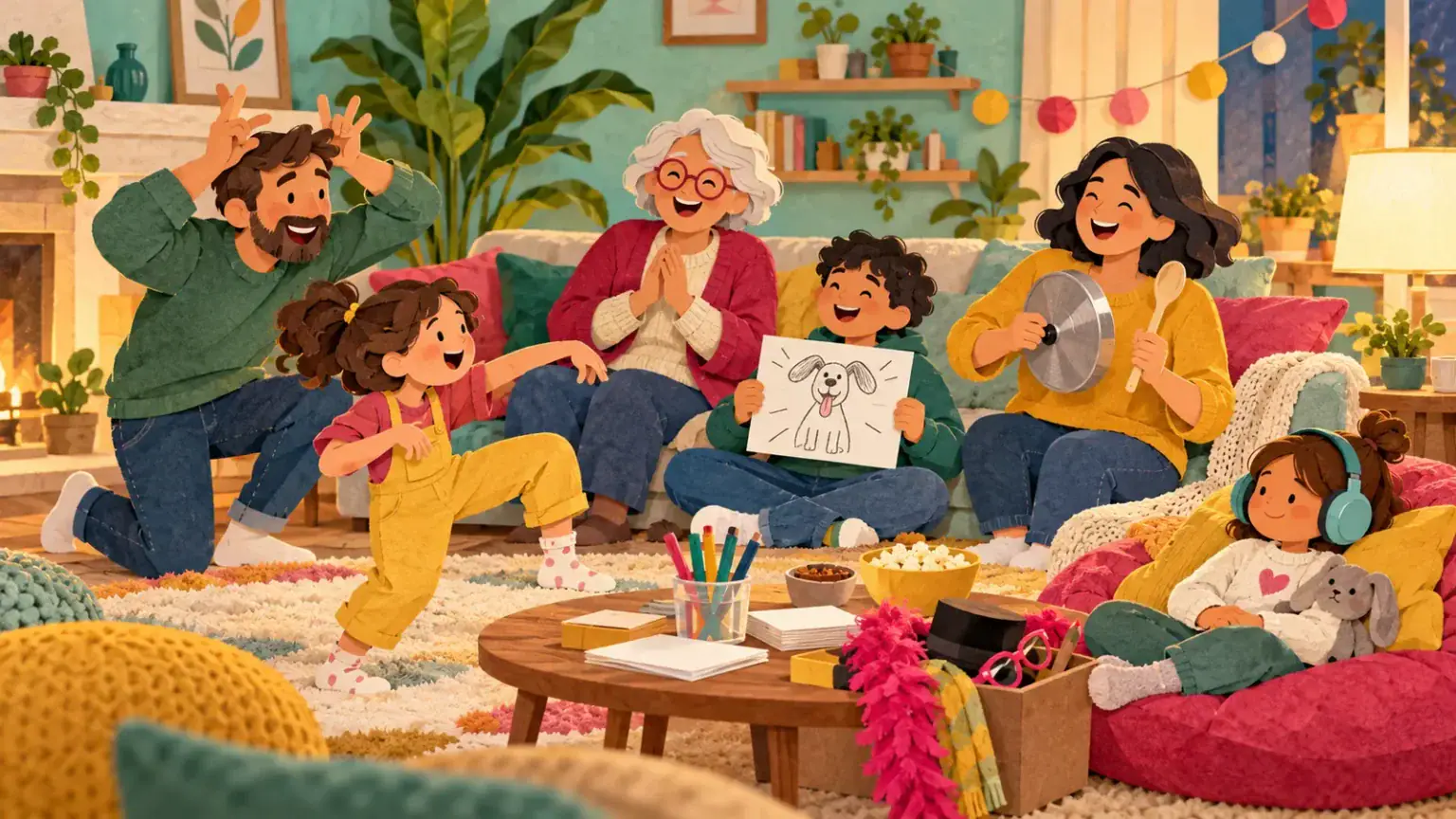
- Silent charades: act out an animal doing an impossible job.
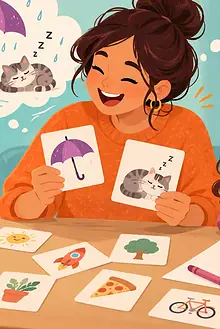
- Sound effects: create sounds for a picture story.
- Funny drawing: combine two harmless objects into one invention.
- Prop transformation: show three imaginary uses for a scarf or spoon.
- Story relay: each person adds one sentence; anyone can say “pass.”
- Prepared joke: share one line, riddle or visual gag.
Run five simple rounds
- Let each person choose a format.
- Give quiet preparation time.
- Share in voluntary order.
- Applaud participation, assistance and listening—not only laughs.
- End before energy collapses.
Make access ordinary
A non-speaking child can choose prompts, direct another performer or use a recorded sound. A child with limited mobility can lead drawing, facial expression or storytelling. Describe visual action for a blind family member and face a deaf or hard-of-hearing participant while speaking. Do not turn adaptations into an announcement about the child.
Handle a joke that lands badly
Stop, acknowledge the impact and move on without a public trial. The joke-maker can say, “I see that hurt. I will not use it again.” If a private detail was shared, remove recordings and protect it from retelling. Use the steps in repairing after a small mistake.
Include reluctant family members
Do not call a quiet child “the audience” as a permanent identity. Offer jobs such as choosing the next card, controlling the timer or arranging props. Accept a complete pass. A child may join after watching one round, or enjoy belonging without performing at all.
Reflect briefly
Ask: Which format felt easiest? Did everyone know how to stop? What should change next time? Save only material its creator wants saved. If one shared joke deserves another life, use the consent checks in building inclusive family inside jokes.
Safety
Choose props too large to swallow for young children, avoid blindfolds and risky climbing, and keep movement away from stairs, hot drinks and breakable objects. Humour should never require frightening, restraining or surprising someone who cannot opt out.
Keep competition out of it
A laugh counter, winner or ranking can make children choose bigger risks to get attention. If the family wants a closing ritual, let everyone name a favourite format, kind moment or inventive idea. Adults should avoid giving the longest applause to the most confident performer. The night succeeds when people feel safe enough to participate in their own way, not when one person dominates the room.
Keep the interval between events long enough that comedy night remains an invitation, not another family obligation. A spontaneous five-minute round after dinner may suit the household better than a scheduled monthly production.