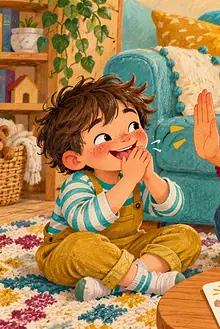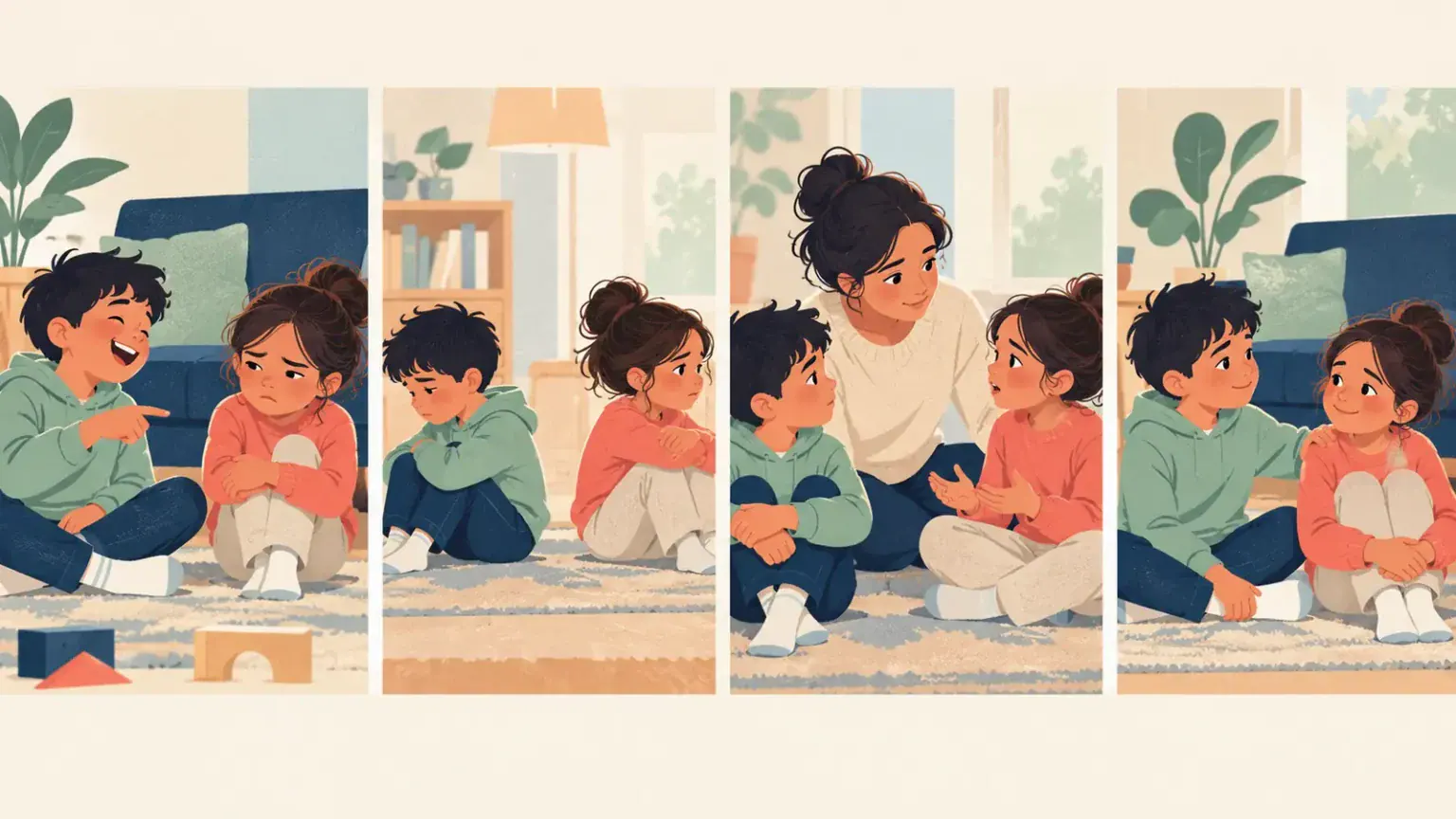
Siblings can build closeness through ridiculous nicknames, impressions and jokes nobody else understands. The same tools can become painful when one child controls the audience and another learns that protesting only produces more laughter. “They are both laughing” is not enough information.
Look for mutuality
Playful teasing moves both ways, changes when someone looks uncomfortable and stops at the first request. Hurtful teasing has a repeated target, uses private information, follows the child out of the room or gains power from an audience. A nervous smile may be an attempt to stay safe, not consent.
Intervene sooner when power is uneven
Age, language, disability, popularity and physical size affect whether a child can stop the exchange. Younger siblings need more adult protection. Step in immediately for threats, slurs, humiliation, sexualized comments, disability-based mockery or any physical intimidation.
Stop before investigating
Use a neutral direction: “Pause. That joke is not landing safely.” Separate children if needed and lower the audience. Do not demand an instant joint discussion while both are activated. Safety and calm come before deciding who started it.
Listen separately first
Ask the child affected: “What happened? What part hurt? What do you need to stop?” Ask the other child what they expected the joke to do. Avoid making the hurt child prove malicious intent. Impact matters even when the first attempt was playful.
Teach the stop rule
A useful family standard is: anyone can end a joke, and stopping is not an admission that the joke was bad. Teach siblings to notice a clear “stop,” turning away, silence or a changed face. The principles in laughing with rather than at a child apply between children too.
Guide a repair that fits
- Name the specific joke or action.
- Acknowledge what it did to the sibling.
- Stop repeating it and remove any post or recording.
- Ask what practical repair would help.
- Change the behaviour next time.
Do not force a hug, instant forgiveness or a scripted apology performed for the adult. The harmed child may need space.
Protect privacy as part of the rule
Bedrooms, diaries, bodies, friendships, health information and embarrassing memories are not comedy material. This guide to asking before sharing a funny family story offers a useful audience-and-consent test.
Do not ban every joke
After repair, help children find safer targets: an imaginary character, a family pet’s harmless habit, wordplay or their own consensual game. Shared humour can recover when the boundary becomes predictable rather than punitive.
Watch the pattern
Repeated targeted teasing, fear, avoidance, sleep changes or school problems deserve closer attention. Coordinate with school or a qualified professional when needed. A sibling relationship should not require one child to tolerate ongoing harm in the name of resilience.
Rebuild ordinary sibling time
After a repair, give siblings a low-pressure way to be together that does not require discussing the conflict again: drawing, preparing food, walking the dog or playing a cooperative game. Do not demand closeness, but do not let the family story freeze them as bully and victim forever. Watch whether the boundary holds during ordinary interaction; changed behaviour is the evidence that repair is working.
Parents should also examine the audience they create. Laughing, repeating the line to another adult or asking the child to perform it again can reward the teasing after verbally banning it. Model the boundary by refusing to make hurtful material entertaining. If adults tease each other, they should demonstrate genuine consent and stopping too.
Check in with each child a few days later. The child who was hurt may notice subtler repetition; the child who teased may need help finding another way to seek attention or connection. Follow-up prevents one formal apology from closing a pattern that has not actually changed.