“Give Grandma a kiss” may be intended as warmth, but a child who freezes, hides or says no is giving useful information. Family affection does not need to disappear. The goal is to make touch an invitation, not the price of being polite.
Teach two messages at the same time
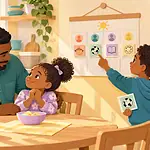
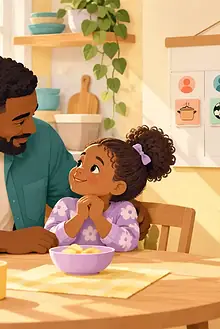
Children can learn, “We greet people kindly” and “You choose whether your body hugs or kisses.” Offer a menu: wave, smile, verbal hello, high-five, fist bump, hand on heart, signed greeting or a drawing delivered later. A child who uses AAC can choose a greeting button or gesture.
The American Academy of Pediatrics advises parents not to force or guilt children into hugs or kisses, including with grandparents, and to offer alternatives. This everyday practice helps children understand that bodies and boundaries deserve respect.
Prepare relatives before the visit
Do not wait until everyone is standing in the doorway. Send a simple message: “We are teaching the children to choose their greetings. Please offer a wave, hug or high-five and let them decide.” Present it as the family’s practice, not as a child’s embarrassing problem.
If a relative feels rejected, respond adult to adult: “She is glad to see you. She is choosing a wave today.” Do not ask the child to repair an adult’s disappointment with unwanted touch.
Model asking and accepting
Try, “Would you like a hug?” Then allow time for an answer. A body turning away, going still or hiding can mean no even without words. Respond neutrally: “Okay—wave or no greeting yet?” Children watch whether adults really accept the answer.
Ask before tickling, lifting, photographing or sitting a child on someone’s lap. Necessary care is different: adults may need to keep a child safe or provide health and hygiene support, but should explain what is happening and give choices where possible.
Support babies and toddlers
A baby cannot give verbal consent, so caregivers read cues and manage contact. If the baby turns away, cries or stiffens, take them back without apology. Let relatives connect through talking, singing or playing nearby. Toddlers can practise choices before a gathering using dolls: “Bear can wave, high-five or say hello.”
Handle the doorway moment
Stand close enough to support without answering for an older child. Offer the choices once, not repeatedly. If the child needs time, say, “We will settle in first.” Hunger, travel, noise and unfamiliar faces can make greeting harder; the answer may change later.
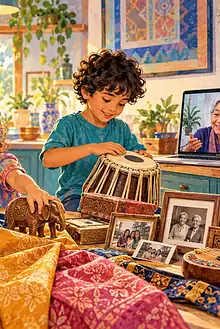
For celebrations, use the planning ideas in sharing heritage without an identity test: participation can take different forms. If several adults need agreement on family boundaries, adapt a brief family meeting before the event.
Teach respect in both directions
Body autonomy is not permission to touch others without asking. Children also need to stop when a sibling or cousin says no. Practise: ask, wait for a clear yes, and choose another greeting if the answer is no. Avoid forcing apologies through a hug.
When culture values physical greetings
Acknowledge the meaning: “In our family, hugs often show love.” Then add, “Love also means respecting someone’s body.” Families can preserve warmth through words, gestures, shared food, blessings and time together. A tradition remains meaningful when children participate safely rather than perform under shame.
If a child suddenly avoids a particular person
Stay calm and do not force contact. Ask open, non-leading questions in private: “I noticed you did not want to be near them. Is there anything you want me to know?” Listen and take concerns seriously. If a child reports unsafe touch or you suspect abuse, follow local safeguarding procedures and seek qualified help; do not conduct your own detailed interrogation.
A warm greeting is one freely given. When adults accept a wave as readily as a hug, children learn that connection and bodily respect belong in the same family.