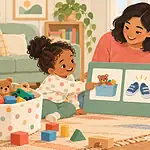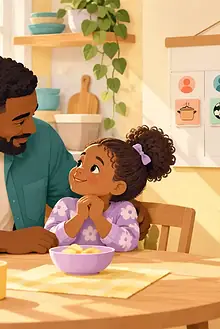
Waiting for the dal to cook? Sitting indoors through a downpour? Five minutes and something already in the room are enough to start.
Try this now: match two pairs of socks
Put two pairs of clean socks on a table. Pick one sock and look for its partner together. See what your child notices first. Is it the stripe, the colour or the soft toe? After one round, let them make the rule.
Words to try. “I found a stripy one. Which one would you put with it?” Then try, “Your turn to make up a way to play.”
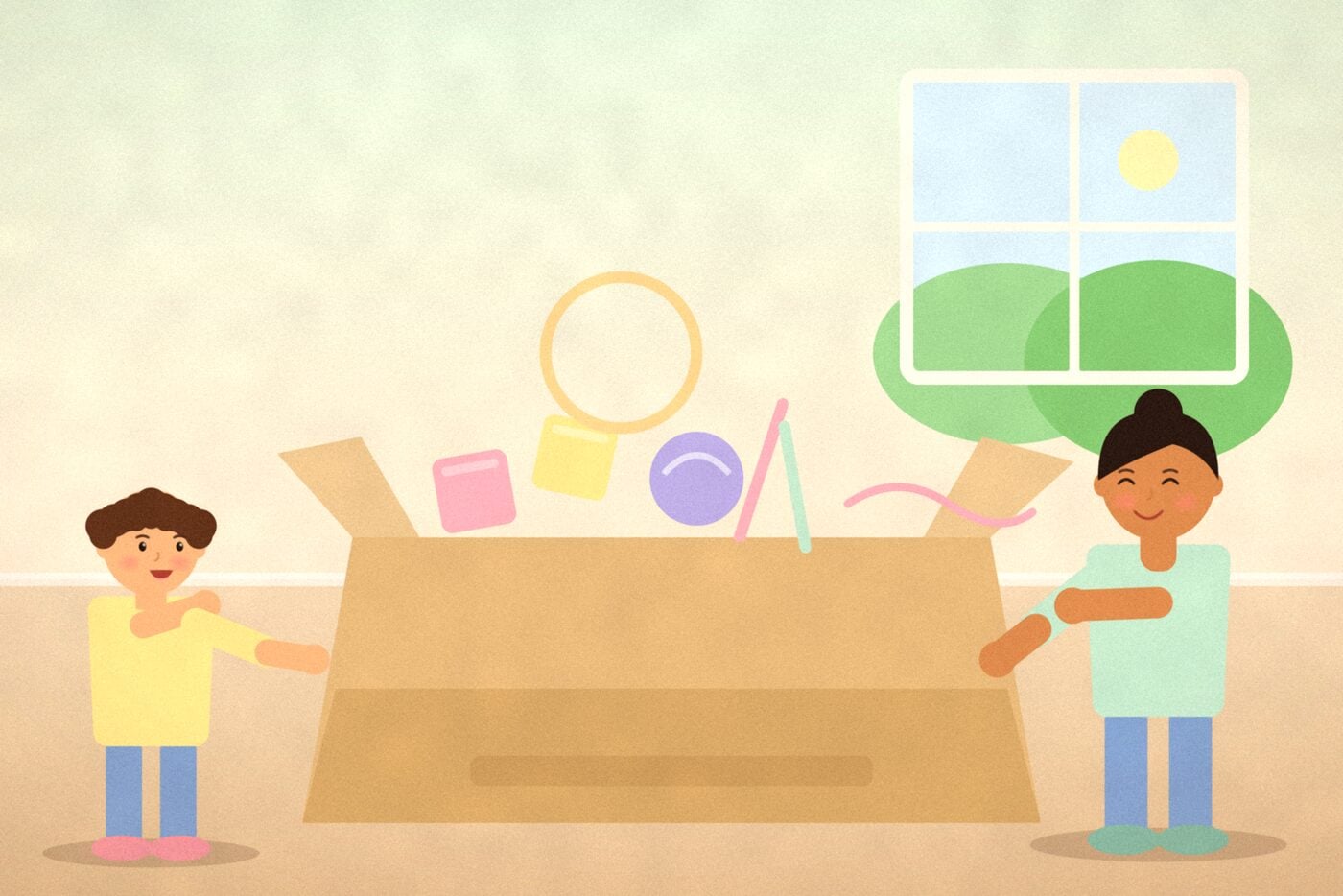
Open the free five-minute play cards for three ideas using clean socks, a light cardboard box or just yourselves. Read them on screen or print the whole set.
Adapt the games for age, space and access
- Preschoolers. Start with two clearly different socks. Let your child point, name, or hand you one while you do the matching together.
- School-age children. Invite them to invent a sorting rule or turn the box into a pretend shop with things that don’t exist. A shop that sells the smell of rain? Why not?
- Small space or different access needs. Play seated and put the objects within easy reach. Try textures or spoken clues if colours are hard to see. Take turns by pointing, nodding or choosing with a communication device. If sound is uncomfortable, use a hand gesture for the rhythm game.
Stay with your child and choose clean, intact materials suited to them. Keep small parts, sharp items, loose batteries and magnets out of the play space. An adult can check an empty box for staples or rough edges first.
What to try next
Use EdCaptain’s play picker when you have another few minutes. For a reusable kit, see the home play box guide.
For one more game that needs no materials, make up a story together, one line at a time.
Sources and editorial review
- UNICEF Parenting’s Playbox
- NAEYC’s examples of everyday play materials
- American Academy of Pediatrics’ choking prevention guidance
Editorial source check: 7 November 2026.