Age guide: 3 to 10 years. Adapt the contents to your family.
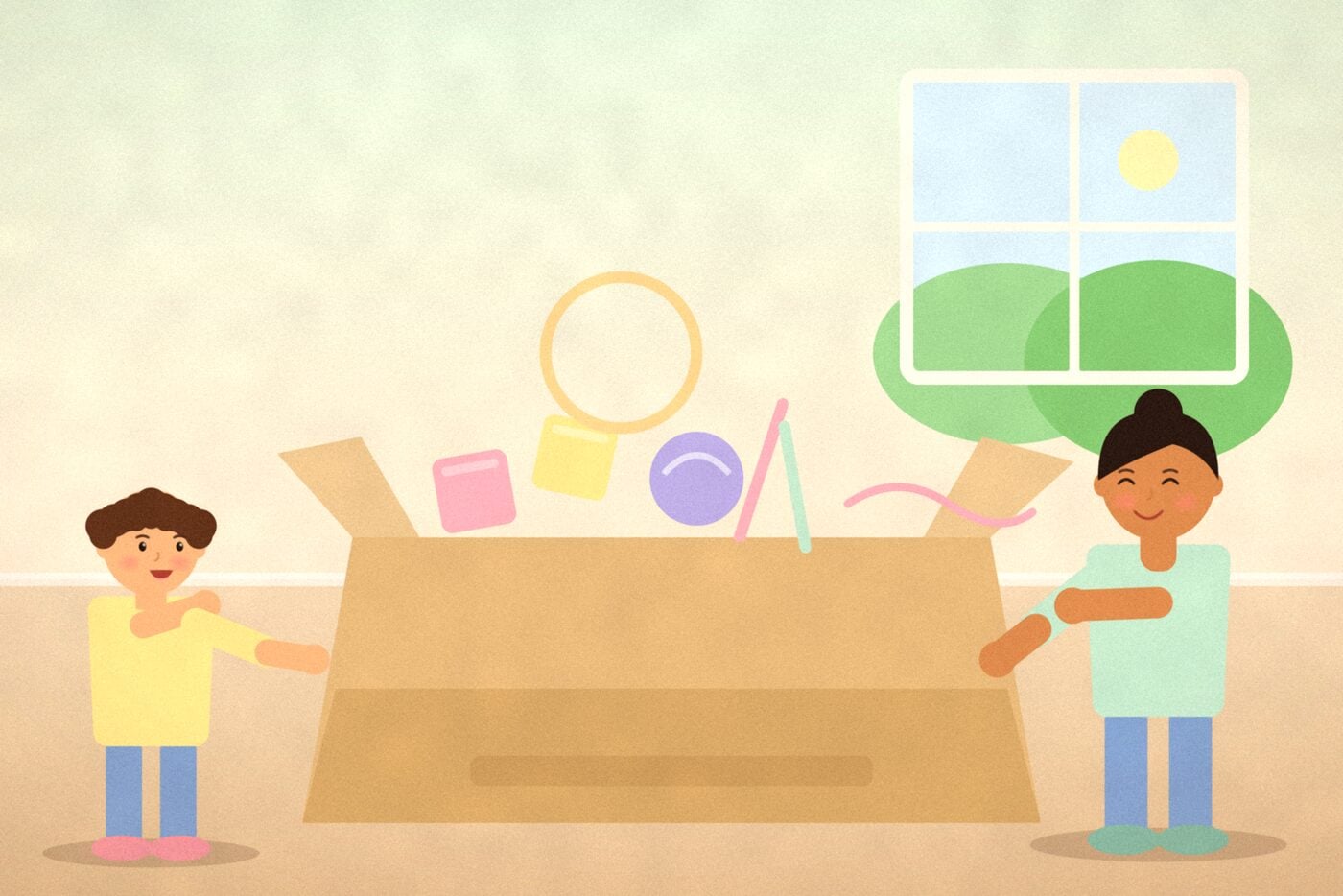
You do not need a cupboard full of educational toys. Most of the games on this site rely on the same dozen ordinary things. Keep them together in one box or basket, and you are ready for a wet afternoon in about a minute.
What goes in the box
- Paper and something to draw with. Plain paper, old envelopes, markers or crayons.
- Chalk. For lines, hopscotch squares and faces on the pavement.
- Masking tape. For squares on the floor, a start line or a number line.
- Child-safe scissors and glue. Supervise young children.
- Picture books. Include ones with counting, rhymes or animals.
- Wooden blocks. Any size, or large stacking cups.
- Boxes. Shoeboxes, cereal boxes, cardboard tubes. See the cardboard box idea for ways to use them.
- A couple of buckets or bags. For sorting, carrying and hiding things.
- A hoop, a skipping rope or a length of string. For puddles, rivers and lines.
- A ball and a few beanbags. Rolled-up socks work well.
- Music. A playlist with fast and slow songs.
- A basket of small things. Spoons, pegs, pine cones, shells. Check each item against a toilet roll tube. Anything that fits inside is a choking hazard for children under three.
Keep it safe
Look through the box every few weeks. Remove broken pieces, batteries, tiny parts and anything sharp. If an older child shares a toy with a younger sibling, make sure it is suitable for both.
Keep it fresh
Take a few items out and swap in something new now and then. A basket that looks different each week gets more interest than a pile of everything.
Let your child help
Ask your child to choose a few things to add. Giving them a say makes the box feel like theirs, and you may find you are using it more than you expected.