- Find the particular thing they feel they are missing
- Give a family answer, not a verdict on everyone else
- Separate learning, visiting and taking part
- Make the school plan before the day arrives
- Practise one reply, with permission to say less
- Offer connection without a competition
- Sources and further reading
By EdCaptain editorial desk · Published
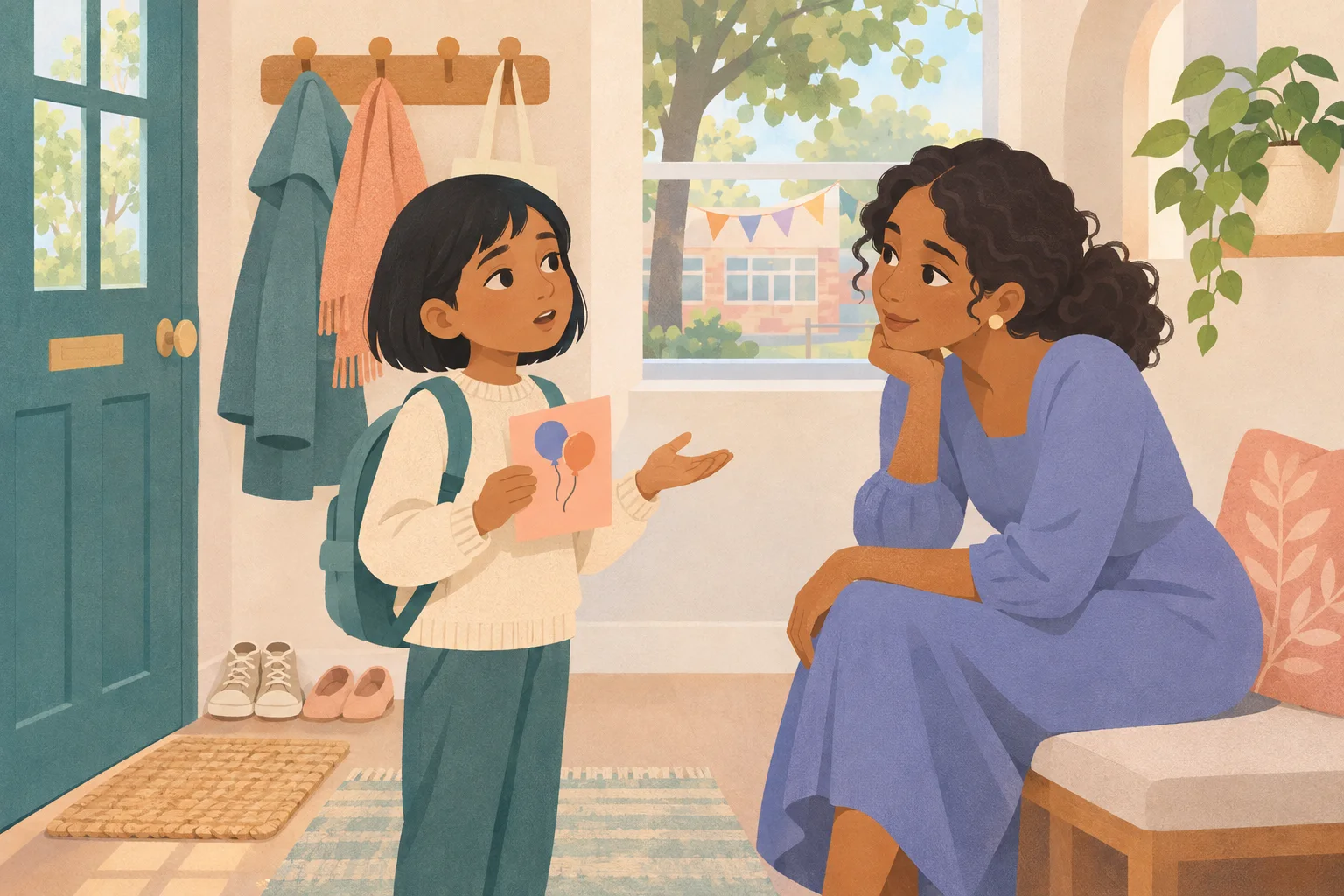
“Everyone is doing something for the holiday. Why aren’t we?” Your child may be asking about beliefs, but they may also be thinking about a classroom party, a costume, a gift or being the only person with a different answer on Monday.
For children aged 6–12, start by finding out which part hurts. You can explain your family’s choices clearly, respect other families and take disappointment seriously at the same time. An upcoming school event needs an adult plan, rather than a child carrying a vague instruction to “just explain it to your teacher.”
Find the particular thing they feel they are missing
Ask: “What have people been talking about?” Then try: “Which bit would you most like to do?” A child wanting time with friends is asking something different from a child wondering why your family does not share a religious belief.
Reflect the answer before offering reasons: “You were looking forward to being with your friends, and now you’re worried you’ll sit somewhere else.” Or: “You like the decorations and wish we had some.” Avoid correcting “everyone” before hearing the feeling underneath it.
The Kids Mental Health Foundation notes that children whose family holidays differ from those around them can feel left out. You do not need to prove that your own celebrations are better to acknowledge that experience.
Give a family answer, not a verdict on everyone else
Choose a short explanation that is actually true in your home. For example:
- “That holiday belongs to a different religious tradition. It isn’t one we observe, and it matters to some of your friends.”
- “Our family doesn’t observe religious holidays. Other families do, and we can learn about what they mean to them.”
- “We do mark this day, but we don’t exchange presents. Different families make different choices about it.”
Distinguish belief, custom, cost and logistics. If the real issue is that you cannot afford travel this year, do not invent a rule about your culture. Equally, a family boundary does not need a long defence of private finances or adult disagreements.
Use “in our family” rather than “people like us always…” Some relatives or families within your community may observe the day differently. A child who notices that difference has not caught you out; it is a chance to be more precise.
Separate learning, visiting and taking part
These are different decisions. Reading an accurate book about a holiday, visiting a friend, watching a performance and joining a religious observance need not have the same answer.
NAEYC’s guidance distinguishes learning about a holiday from celebrating it as a participant. It also cautions that commercial versions of holidays are not automatically neutral. So before saying yes or no to a “just-for-fun” school activity, ask what will actually happen.
You might be comfortable with your child hearing how a classmate’s family celebrates, while choosing another arrangement for a specific ritual. Another family may draw that boundary differently. Explain your own decision without requiring your child to agree that it feels fair immediately.
If a friend invites your child, speak with the host directly about the activity, supervision and any food or access needs. Do not send the child to negotiate conditions at the door.
Make the school plan before the day arrives
Contact the teacher or organiser privately. Start with the actual event rather than assuming the title tells you everything. A useful message might be:
“Our family doesn’t observe this holiday. My child is worried about missing time with classmates. Could you tell me what the session includes, whether any parts are optional, and what the supervised alternative would be? We’d like a clear arrangement that respects our family and keeps our child included.”
Work through a few concrete questions:
- What is the purpose? Is this learning about traditions, a social gathering, a performance or an observance?
- Which parts are involved? Ask about songs, readings, costumes, food, visitors and any participation expected from children.
- What can be agreed? Discuss the particular concern, the school’s policy and available alternatives. Avoid assuming one rule applies in every country or setting.
- Who will support the child? Confirm the supervising adult, location and transition between activities. Ask how staff will explain arrangements without singling the child out.
- What will your child hear? Give them the confirmed plan in simple words. If it remains unresolved, tell them you are still speaking with the school.
If a proposed alternative is simply sitting alone without a clear activity or supervision, raise that concern. Ask about a meaningful arrangement with staff support. The child should not have to choose between keeping a family boundary and being left to manage the day alone.
Practise one reply, with permission to say less
For ages 6–9, rehearse a concrete sentence: “We don’t celebrate that at home. What game are you playing?” They can ask a trusted adult for help instead of explaining beliefs.
For ages 10–12, offer a little more choice: “I’m happy to hear about yours, but I don’t want to explain my family’s beliefs right now.” Ask whether they want help discussing the event or would prefer you to handle it privately.
A child using signing, pictures or a communication device can use their usual way to express a preference or request help. Avoid turning a family explanation into another performance they must master.
Our guide to asking about different beliefs respectfully can help with peer questions. Respect runs both ways: your child can learn without becoming a spokesperson for a whole community.
Offer connection without a competition
Ask what would help after the event: time with a friend on another day, an ordinary family outing, or a quiet evening together. You do not owe a bigger gift or a rival celebration to make the disappointment disappear.
If your family has its own observances, explain their meaning when they occur and invite your child’s ideas. Our guide to sharing heritage without an identity test offers ways to keep that invitation warm. Families with no religious observances can also name the ordinary occasions and relationships they value.
If there is teasing, record what your child reports and contact the school through its pastoral or safeguarding process. Do not make educating peers your child’s responsibility or suggest that a better explanation will stop bullying. Check back after the event: “Did the plan happen? Was there anything you want me to know?”
Your child can belong in the family, stay curious about friends and still wish one particular day had been easier. Leave room for that answer.
Sources and further reading
- NAEYC: learning about holidays, participation and family perspectives
- The Kids Mental Health Foundation: supporting families whose holidays differ from the majority
Read our editorial policy.