Children notice differences. A head covering, a festival day, a prayer before eating or a classmate who says their family does not believe in God can prompt a direct question—sometimes in a very public place. The aim is not to give a complete lesson on world religions. It is to help your child stay curious without turning another person into a display or a stereotype.
Begin with one calm sentence
Try: “Families have different beliefs and traditions. We can ask respectful questions, and we do not decide what a whole group is like from one person.” This answers the social question before the factual one. If you know the answer, share a short explanation. If you do not, say, “I’m not sure. Let’s find a reliable source, or we can ask if your friend wants to tell us.”
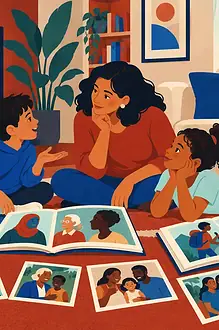
A child’s question can also be about belonging: Will we still be friends if we believe different things? Make the reassurance explicit. People can care about one another, cooperate and play together while holding different beliefs. UNICEF’s child-friendly Convention on the Rights of the Child explains that children have freedom of thought and religion and that no child should be treated unfairly because of religion or family beliefs.
Teach the difference between asking and demanding
Give your child a simple three-part test before asking someone about a belief or practice:
- Is this my information to request? A person may not want to explain something private.
- Can I ask without judging? “What does that mean to your family?” is different from “Why do you do that strange thing?”
- Can I accept no? Respect includes letting someone say, “I don’t want to talk about it.”
Practise with low-pressure examples. “I noticed you don’t eat that food. Is it okay if I ask why?” Or, “What do you enjoy about your celebration?” Remind children that one classmate cannot speak for everyone who shares a religion or cultural background.
Use “some,” not “all”
Small language choices prevent big generalisations. Say “Some Muslim families…,” “Some Christian families…,” or “In this family…” rather than announcing what an entire group does. Within every religion and non-religious worldview, families interpret and practise traditions differently. A book, video or family visit can show one experience, not the only experience.
This is the same skill children use when they ask about cultural differences: notice, ask kindly, listen, and avoid turning one example into a rule.
Match the conversation to the child
- Ages 3–5: Keep it concrete. “That family celebrates in a different way. Different does not mean wrong.” Focus on kindness and shared activities.
- Ages 6–9: Introduce words such as religion, belief, tradition and non-religious. Compare practices without ranking them.
- Ages 10–12: Discuss how people within the same community can disagree. Check whether online videos are made by trustworthy organisations or by people describing their own lives.
- Teens: Invite discussion about freedom of belief, discrimination and the line between questioning an idea and attacking a person. Let them refine their own views without requiring a declaration.
When your child says something hurtful
Correct the comment without labelling the child as bad. “That word can make people feel mocked. Let’s try again.” Ask where the idea came from. A meme, playground comment or overheard adult conversation may need to be unpacked. Then offer an accurate replacement: “One person’s behaviour does not tell us what everyone in their religion is like.”
If another child has been targeted, centre repair. Your child can give a specific apology—“I repeated a joke about your religion. It was disrespectful, and I won’t use it again”—and change their behaviour. For related language practice, see how to respond when a child faces accent or language teasing.
Keep learning ordinary
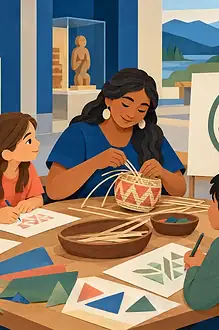
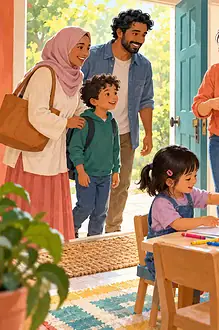
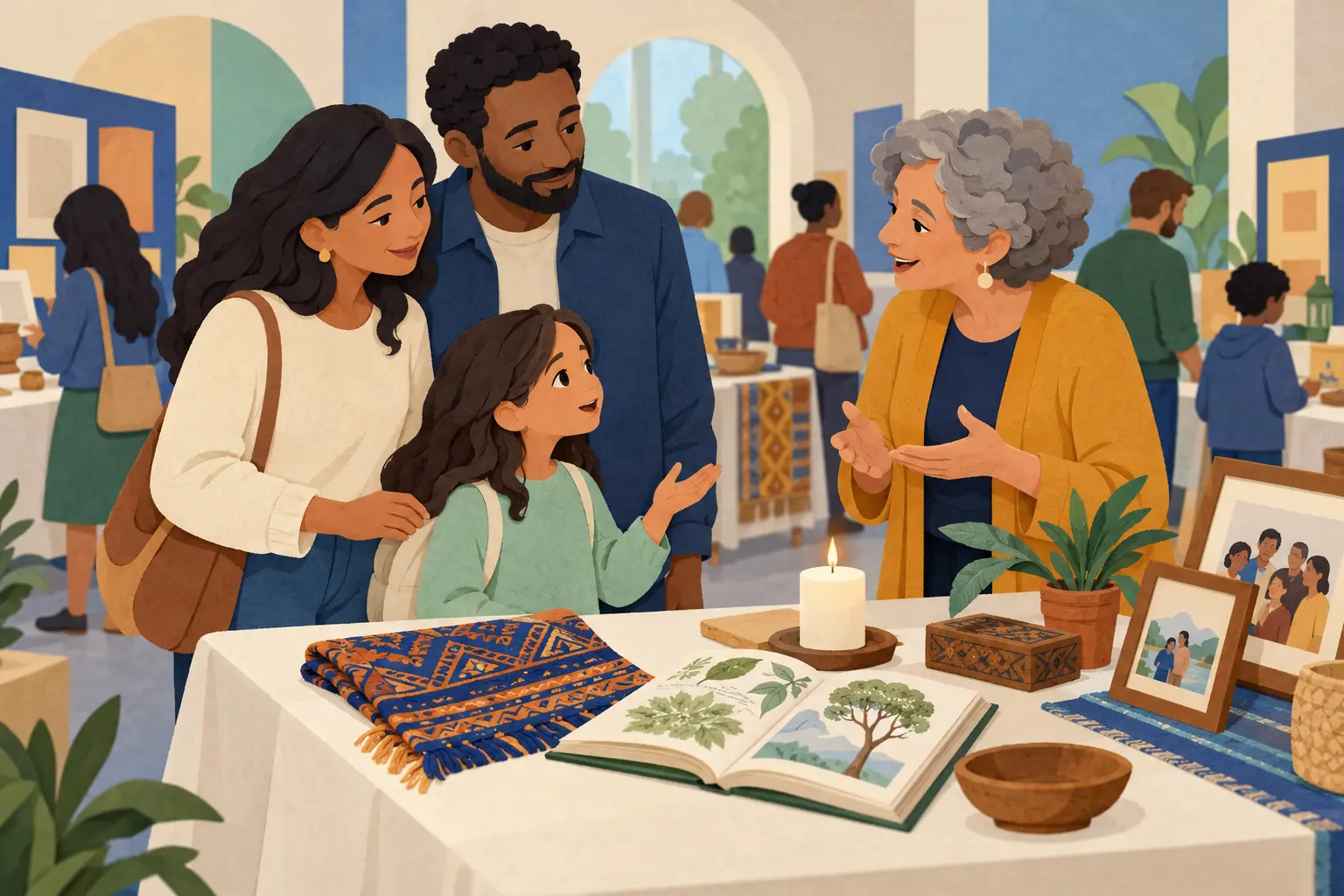
Choose books created by people from the communities represented. Attend public cultural events when guests are welcome, follow the host’s guidance and avoid treating sacred spaces as entertainment. At home, make room for your own family’s beliefs while speaking accurately about others. “This is what our family believes” leaves space for “Other families believe differently.”
The goal is not perfect vocabulary after one talk. It is a repeatable habit: ask rather than assume, learn from reliable sources, protect privacy, and defend everyone’s right to belong.