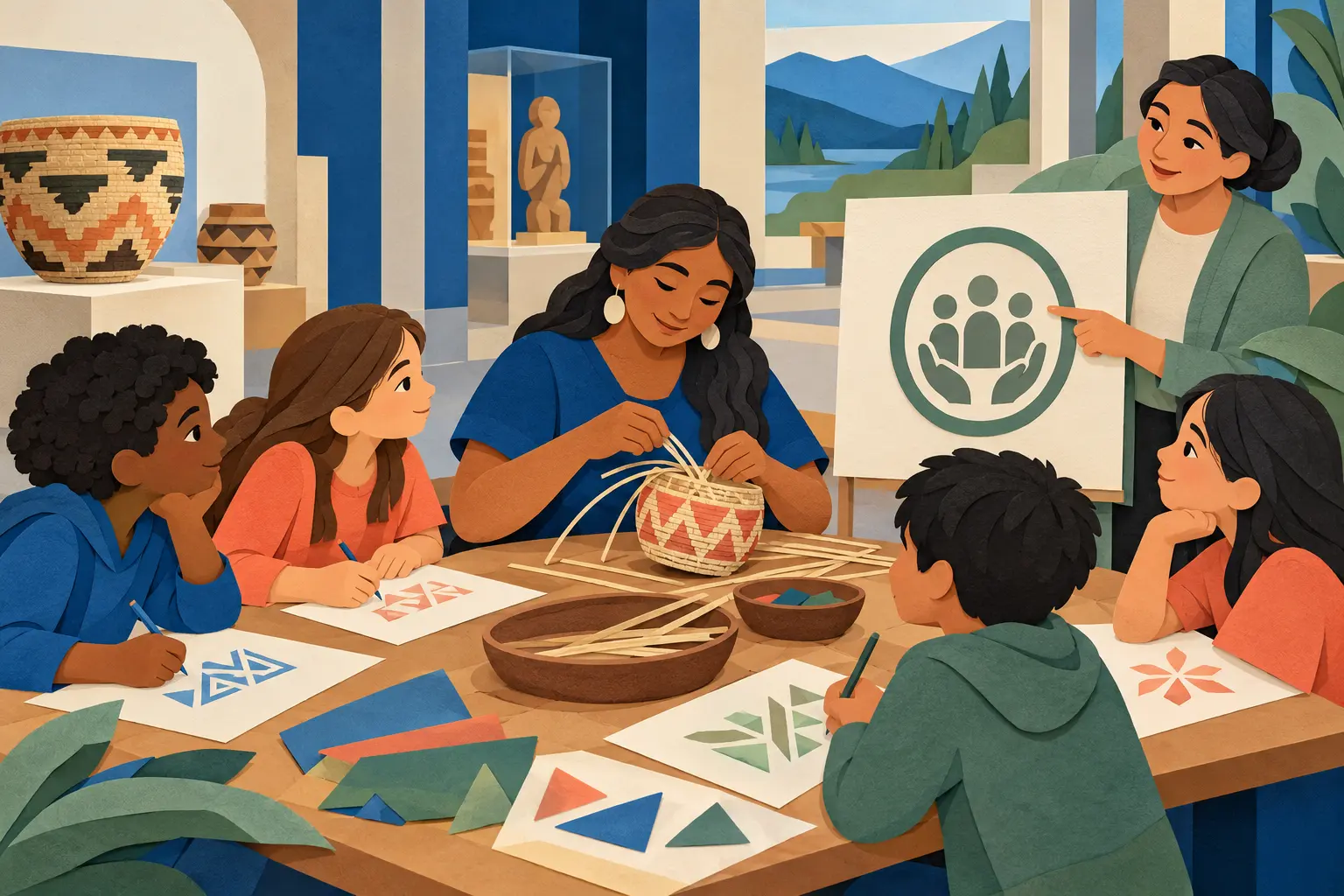
Children often show interest by copying: a dance they saw, a hairstyle, a festival decoration or clothing from a story. That curiosity can open a rich conversation. It can also flatten a living culture into a costume if the activity removes meaning, ignores community voices or treats something sacred as a prop.
You do not need a perfect rule for every situation. Teach a process: learn the context, listen to people from the culture, check whether participation is invited, and choose a respectful way to engage.
Start with the “why,” not the look
Ask, “What do we know about what this means?” A pattern, object or ceremony may be decorative in one setting and connected to identity, religion, mourning, achievement or community responsibility in another. If your only source is a costume shop, influencer or craft page, pause before copying.
Look for a museum, cultural centre, educator or creator from the community. Read more than one account, because no community is uniform. Use careful language: “This source describes how some families celebrate,” rather than “This is what they all do.” UNICEF’s child-friendly rights guidance affirms children’s right to their own culture, language and religion; respect begins by treating those practices as belonging to people, not as free-floating themes.
Ask whether you are invited
Public celebrations, workshops and community events often explain how guests can participate. Follow the host’s instructions about clothing, photography, food and sacred spaces. An invitation to observe is not automatically permission to copy a ceremony later or post someone’s image.
Teach children a useful sentence: “Is this something visitors can join, or is it better for us to watch?” Accept either answer warmly. Permission should be freely given, and one friend cannot grant permission on behalf of an entire people.
Move from costume to connection
School “culture days” can reduce identity to flags, food and dress. Broaden the activity. Learn a person’s name correctly. Read a story by an author from the place. Explore a contemporary scientist, athlete or artist as well as history. Notice that people wear ordinary clothes, disagree with one another and lead varied lives.
If clothing has ceremonial or religious meaning, choose another way to learn unless knowledgeable community guidance says guests may wear it. Children can sketch what they notice, compare textile techniques without reproducing protected designs, or make an original pattern inspired by shapes in their own environment.
Give credit and support the source
When you cook, make art or listen to music, name where the recipe, technique or song came from. Buy from creators and businesses connected to the tradition when possible. Avoid renaming a cultural practice as a new “trend.” Credit is not a magic permission slip, but it helps children see knowledge as something people create, carry and share.
For more ideas about broadening a child’s picture of everyday life, use worldwide culture exploration and respectful questions about cultural differences.
Try a four-step family check
- Source: Who taught us this, and are community voices present?
- Meaning: Is it everyday, celebratory, earned, sacred or restricted?
- Permission: Are guests invited to participate, and under what conditions?
- Impact: Could our use turn people into a joke, stereotype or decoration?
If you learn that a past activity was disrespectful, model a calm correction. “We used that symbol without understanding it. Now we know more, so we won’t use it that way again.” Repair might include removing a post, crediting a source, apologising or choosing a community-led resource.
Adjust for age
- Ages 6–9: Use the ideas of special, shared and private. “Some things are shared with visitors; some belong to a community.”
- Ages 10–12: Compare a community source with a commercial product and discuss what context disappears.
- Teens: Explore power, profit and who gets praised or punished for the same style. Invite them to check before posting or buying.
Appreciation is not timid distance. It is active, informed relationship: listening, crediting, accepting boundaries and staying open to correction. A child can delight in the world’s variety without treating anyone’s identity as a costume.