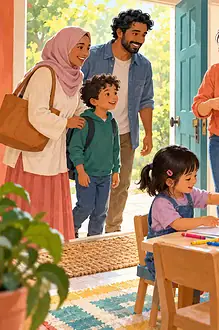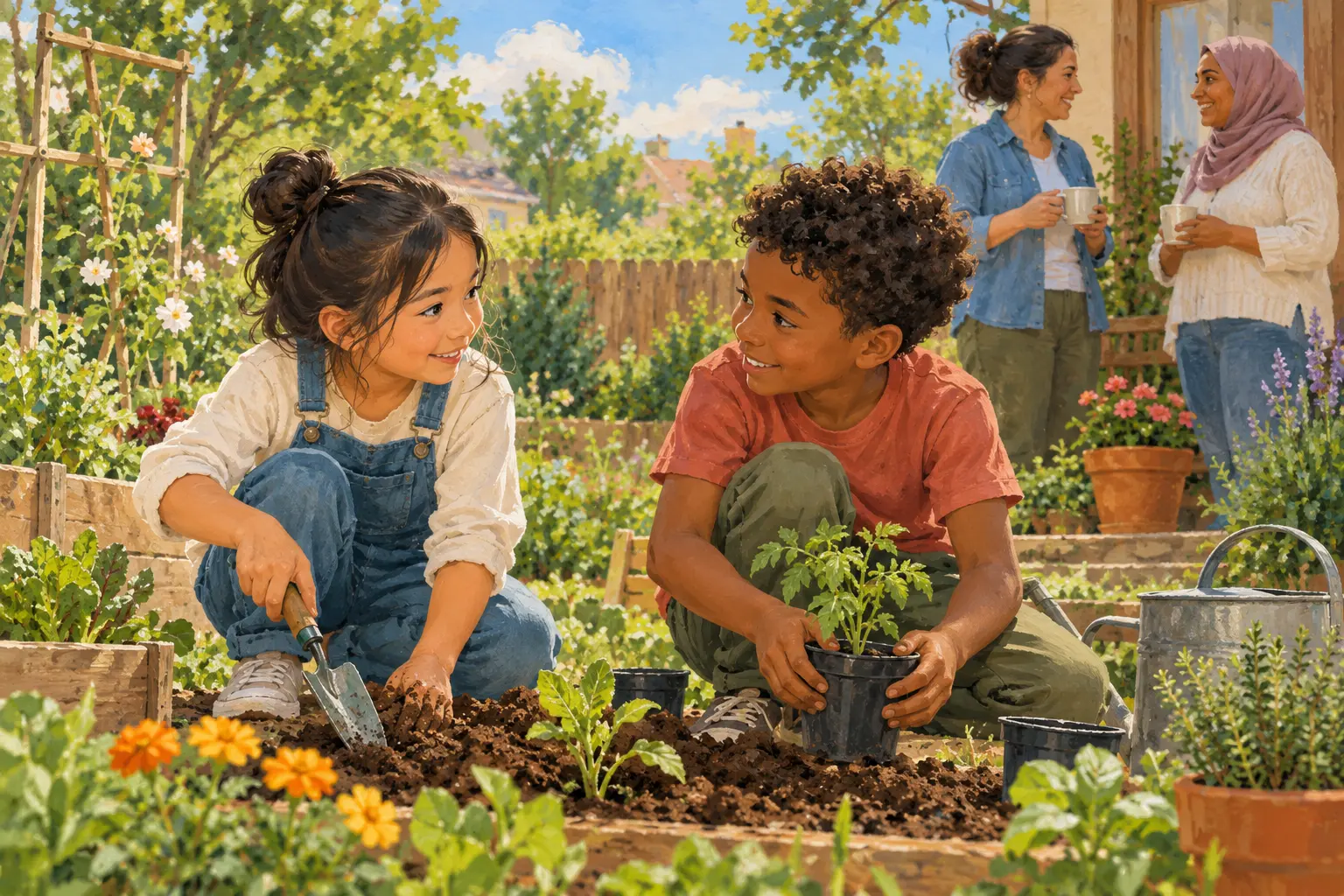
Cross-cultural friendship is still friendship: shared jokes, small loyalties, disagreements, invitations and repair. Children do not need a speech about diversity every time they meet someone with a different background. They do benefit from a few concrete skills that keep curiosity from becoming intrusion and difference from becoming distance.
1. Learn the person’s name
Ask once, listen closely and try again. “Could you say your name slowly?” is respectful; replacing it with an easier nickname without permission is not. If a child makes a mistake, they can correct it briefly and continue. The goal is effort, not turning the name into a public performance. See our name-pronunciation practice for useful phrases.
2. Ask open questions—and accept privacy
“What do you like to do after school?” creates connection. “Why do your people do that?” makes one child represent a whole group. Encourage questions about a friend’s own experience: “Does your family celebrate that?” “What part do you enjoy?” A friend may answer, change the subject or say it is private. Respect all three.
3. Do not rank differences
Children compare lunches, houses, rules and celebrations. Help them replace “normal” versus “weird” with specific descriptions: spicy or mild, quiet or noisy, earlier or later, familiar or new to me. “I haven’t seen that before” is honest without declaring something wrong.
When a child dislikes a food or activity, separate taste from culture: “You can say the flavour is not for you. You may not call someone’s food disgusting.” Our guide to asking about cultural differences builds the same habit.
4. Make invitations flexible
A friend may have religious observances, language classes, extended-family commitments, food restrictions or different supervision rules. A declined invitation is not necessarily rejection. Children can offer another time or activity: “Would Saturday afternoon work?” “We can meet at the library instead.” Caregivers should handle sensitive logistics directly rather than asking children to negotiate adult rules.
5. Share without demanding a trade
A child can invite a friend to a public celebration, teach a game or offer food, but should not expect access to the friend’s traditions in return. Friendship is not an exchange of cultural performances. Let shared interests—football, drawing, coding, music—carry as much weight as background.
6. Interrupt teasing
Practise short bystander phrases: “That name isn’t a joke.” “People speak in different accents.” “That’s a stereotype, not a fact.” A child can stand beside the targeted friend, invite them away, save evidence of online harassment and tell an adult. They should not be expected to confront a group when it feels unsafe.
If a comment goes wrong between friends, a clean repair helps: “I made an assumption about your family. I’m sorry. I’ll ask instead.” Avoid asking the hurt friend to immediately reassure the speaker. The steps in repairing a misunderstanding can guide the next conversation.
7. Stay curious after the first mistake
Children will mispronounce, misunderstand and sometimes ask clumsy questions. Shame can make them avoid difference; accountability helps them learn. Adults can say, “That question made an assumption. How could you ask about this person’s experience instead?” Then let the friendship move forward.
Practice by age
- Ages 6–9: Rehearse names, invitations and one line for stopping teasing. Use stories with varied characters in ordinary roles.
- Ages 10–12: Discuss group chats, jokes and how to check whether a claim about a culture is reliable.
- Teens: Talk about power, dating, faith, family expectations and privacy. Respect their friendships while staying available for safety concerns.
What caregivers can model
Let children hear you ask how to pronounce a name, correct your own generalisation and make room for another family’s needs. Expand your social and media circles without treating anyone as a diversity lesson. UNICEF’s rights guidance emphasises respect for children’s identities, views, languages and cultures; those principles become real in ordinary interactions.
A strong cross-cultural friendship does not require children to stop noticing differences. It lets them notice with care, ask without entitlement, share without pressure and repair without drama. Those are friendship skills anywhere.