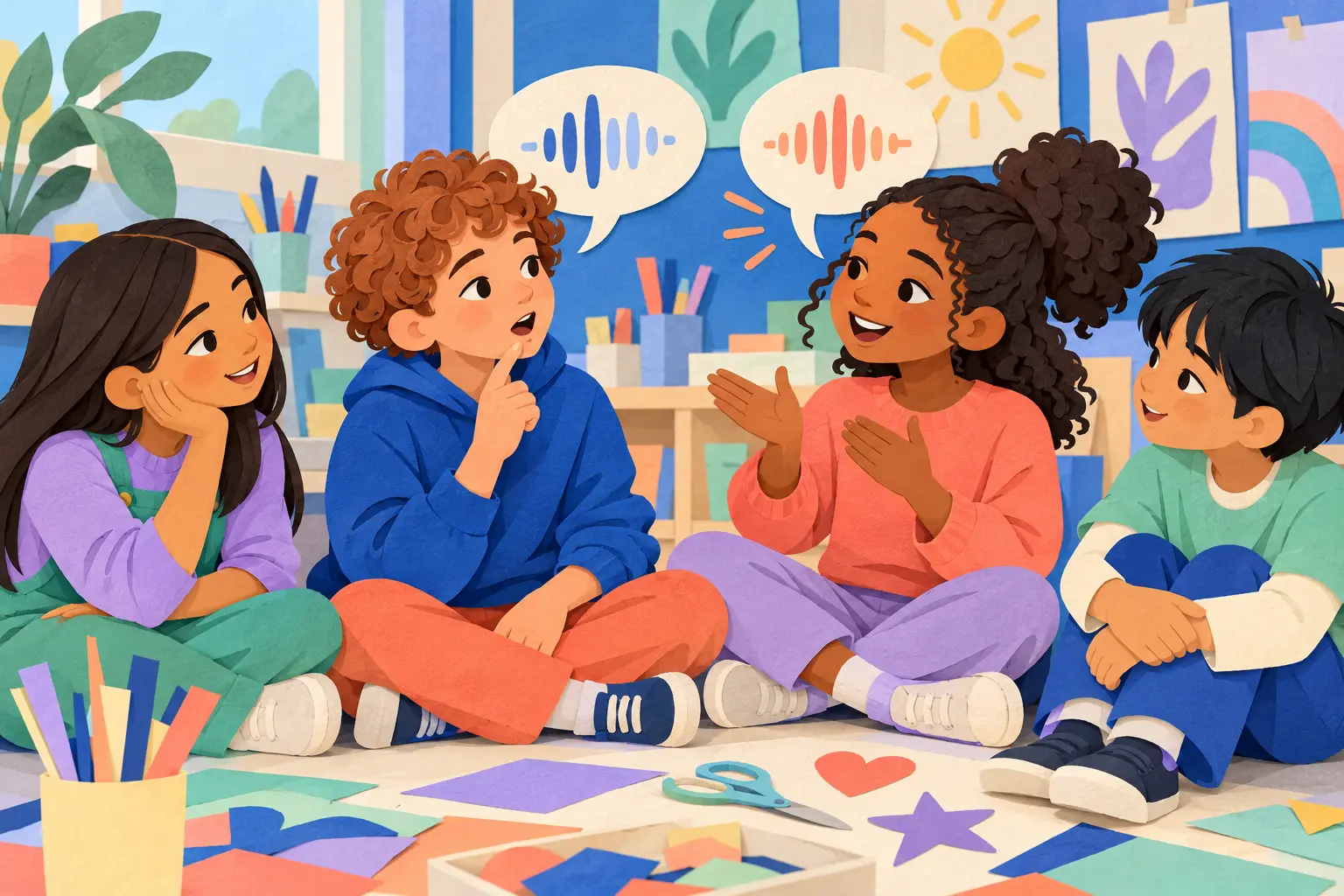
A name is not a test of whether a child has a “good ear.” It is part of how a person is addressed and recognized. Children will meet names they have not heard before, and they will sometimes make mistakes. Respect is shown by caring enough to ask, practise and correct the mistake without turning it into a joke.
Model the four-step habit
- Ask: “Could you say your name for me?”
- Listen: Stop talking and attend to the sounds and rhythm.
- Try: Repeat it once: “Did I say that correctly?”
- Remember: Use a private sound note or association that does not mock or alter the name.
If the person offers a nickname, use it. Do not invent an easier nickname or say the original is “too hard.” Some people may choose not to correct others; that does not mean accuracy is unimportant.
Practise without putting someone on display
At home, use names from your child’s class list, books, sports team or community—with a reliable pronunciation source when available. Break a name into sound chunks, then join them at normal speed. Pay attention to stress: the right sounds with emphasis on the wrong syllable may still sound different.
Avoid exaggerated repetition in front of the person. Two careful attempts are usually enough for the moment. Your child can say, “I want to get it right. May I ask again later?” Then practise privately.
What to say after a mistake
Teach a short repair: “I’m sorry, Amina. Thank you for correcting me.” Then say the name correctly and continue. Long explanations—“I’m terrible with names” or “Your name is so unusual”—can make the other person manage the speaker’s feelings.
If your child has repeatedly used the wrong name, help them take responsibility: “I have said your name incorrectly more than once. I’m practising it and will do better.” Improvement matters more than a dramatic apology.
Challenge name-based teasing
Names should not be material for jokes, chants or comparisons to foods and objects. Give children direct language:
- “That is their name. Say it respectfully.”
- “If you’re unsure, ask instead of guessing.”
- “We don’t shorten someone’s name unless they ask us to.”
UNICEF’s work on intercultural education emphasizes mutual knowledge, respect and dialogue. Its reporting on discrimination also includes language, ethnicity, religion and nationality among grounds on which children can be excluded. Correct name use is one small, everyday way to practise inclusion.
Make room for accent and language differences
Two respectful speakers may pronounce a name somewhat differently because their languages use different sounds. The goal is a good-faith approximation guided by the person, not a contest in perfection. A child with a speech or hearing difference can communicate respect by asking, using an agreed version, signing or using another accessible method.
If a teacher or group leader repeatedly mispronounces a child’s name, a parent can write a friendly phonetic guide or audio recording, while also asking the adult to check directly with the child. The burden should not stay entirely with the child whose name is being missed.
Help your child advocate for their own name
Some children freeze when their name is said incorrectly. Rehearse options:
- “It’s pronounced…”
- “I use my full name, please.”
- “Could I say it once more?”
- “This spelling may help you remember the sound.”
Respect the child’s choice about when to correct. They may assess the setting, safety and effort differently each time. Pride in one’s name can connect with our guide to feeling proud of cultural roots.
Build the habit across family life
Check pronunciations before a birthday party, school event or appointment. Correct relatives gently and consistently. When reading together, do not skip unfamiliar names; look them up. Our guide to repairing misunderstandings offers a wider pattern for noticing, correcting and moving forward.
The lesson is simple: unfamiliar does not mean unimportant. A child who learns to ask without embarrassment and repair without defensiveness has a practical tool for respectful relationships.