By EdCaptain editorial desk · Published
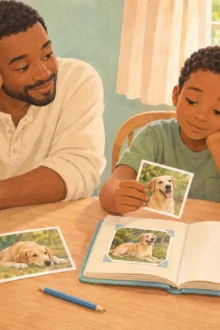
You take an old family picture off the shelf. Your child notices immediately: “Can I have that? I still want it.” For you, the image may hold a painful ending. For your child, it may also hold a beach picnic, a favourite dog or the way everyone looked when they were small.
For children aged 6–12, you can make room for those memories without promising that the old family arrangement will return. Start with a small, reversible decision about the picture, rather than asking your child to settle how everyone should feel about the past.
Ask what they want to keep
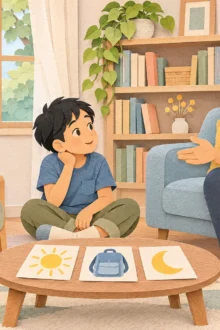
Try: “What would you like to do with this picture?” They might want it beside their bed, in a folder, or simply somewhere it will not be thrown away. Ask one question, then listen. Keeping a photograph does not by itself tell you whether a child is hoping for reunion, missing someone or enjoying a memory.
YoungMinds reminds parents that a child’s feelings about separation can be different from their own. You can be relieved that the relationship ended while your child misses parts of the life you shared. Neither feeling needs to cancel the other.
There is no need to begin a whole-family sorting session. One picture and one clear next step may be enough: “I’ll put this somewhere safe tonight. Tomorrow we can choose a place for your copy.”
Give the child a place for their pictures
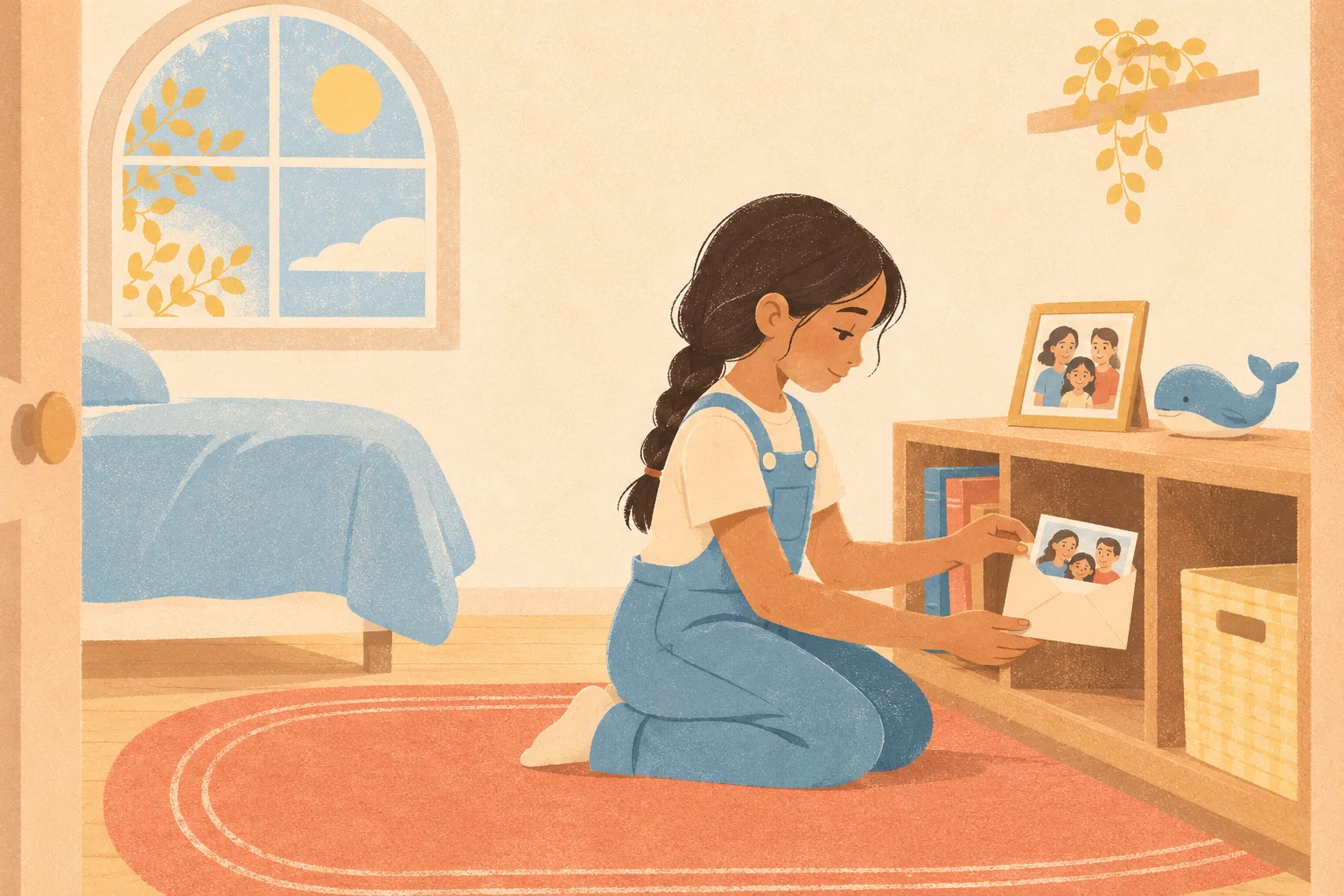
A simple folder or envelope can work; this need not become a craft project or an emotional exercise. If your child wants to take part:
- Offer a small selection. Use ordinary, appropriate pictures you already have permission to access. Avoid handing over a whole device containing private adult messages or intimate images.
- Let them choose. A picture of the old kitchen may matter more than the formal family portrait. Do not require equal numbers of pictures of each parent.
- Make a copy where possible. Preserve irreplaceable originals while giving the child something they can handle. If a picture belongs to someone else, arrange permission yourself.
- Agree where it will live. A bedroom shelf, an accessible folder or a private digital collection are options. Ask whether they want help opening or finding it.
- Keep the choice revisable. “You can put it away or bring it out again.” Ask before discarding their chosen copy.
The Public Health Agency of Canada includes keeping some photographs in both homes among its practical transition suggestions. That is an option, not a requirement to duplicate every memory or transport a special album at every handover. Adults can arrange copies without making the child negotiate between homes.
When you cannot bear to see the photograph
You do not have to keep a couple’s portrait in the living room to respect your child’s attachment to it. Separate the shared display from their access to a suitable picture: “I’m changing the pictures in this room. You can keep this one in your folder.”
Avoid “How could you want that after what happened?” or asking the child to remove the other parent from a picture to protect your feelings. The American Academy of Pediatrics advises against making children choose sides or relying on them for adult emotional support.
If looking together is too much today, make a concrete alternative: “I can help you find the envelope, but I’m not ready to go through the whole album. Would you like to look by yourself, or with Auntie when she comes?” Only offer an adult who is trusted, available and appropriate for your child.
Process the painful parts with an adult friend, counsellor or other suitable support. Our guide to rebuilding adult connection when parenting feels lonely offers a starting point.
Let a happy memory stay true without rewriting the relationship
You might say: “You remember making that enormous sandcastle. Tell me about it.” There is no need to add a judgement about whether the adults were really happy, or explain private events that happened later.
If the picture prompts “Why can’t we be like that again?”, answer the actual question with what is known now: “You wish we still lived together. We are living separately now, and that picture is from before the change.” If the separation is permanent, say so gently; if future arrangements are undecided, do not invent certainty.
Keeping a memory is not an agreement to reunite. If that hope becomes the main worry, our guide to self-blame and reunion questions addresses the conversation in more depth.
Match the choices to your child
- Ages 6–9: offer concrete options such as “in this folder or beside your bed?” Help with copies and storage. They can point to a favourite detail without explaining their feelings.
- Ages 10–12: ask about privacy and whether they want captions, dates or no discussion. A digital collection may suit them, but check shared-account access and automatic sharing before adding images.
- Different communication or access needs: use familiar pictures, signing, a communication device or simple choices. Describe an image if that helps. Do not treat silence as permission to display or discard it.
Siblings can choose differently. One may want the old portrait; another may not want to see it. Give each a personal storage option instead of taking a family vote. Keeping a picture privately also does not mean agreeing to post it online.
Leave room to stop—and put safety first
A child may close the folder halfway through. Let them stop without completing a story or naming a positive feeling. You can offer an ordinary next step: a snack, a game or some quiet. Looking at photographs is not a treatment, a test of adjustment or something a child must do.
If an image feels frightening, do not press them to look or insist that the person pictured deserves affection. Where abuse, coercion or unsafe contact is involved, seek specialist safeguarding and local legal advice; an album is never a reason to bypass protective arrangements or initiate contact.
Ask a paediatrician or qualified child mental-health professional for advice if distress is persistent, worsening or interfering with sleep, school, eating or everyday life. Seek immediate local emergency help if anyone is in immediate danger.
For tonight, the useful promise may be modest: “I won’t throw your chosen picture away. You can decide later whether you want to look at it.” Then follow through.
Sources and further reading
- American Academy of Pediatrics: supporting children through separation and divorce
- YoungMinds: different feelings, parent support and safety after separation
- Public Health Agency of Canada: practical ways to support children through family transitions
Read our editorial policy.