- Explain the pet’s plan separately from the child’s plan
- Find the particular thing the child misses
- Make contact plans only after adults confirm them
- Keep the animal’s welfare part of the decision
- Offer a reminder without turning it into a farewell
- Protect the child from negotiation and pressure
- Notice how the wider change is going
- Sources and further reading
By EdCaptain editorial desk · Published
The new bedroom is ready, but your child keeps asking about the dog’s empty spot beside the sofa. The family pet is alive and being cared for, yet living apart from them is another change to absorb after a separation.
For children aged 6–12, the useful starting point is a truthful explanation of where the pet will live and what is actually known about seeing them. You can take the child’s attachment seriously while keeping decisions about housing, care and contact with the adults.
Explain the pet’s plan separately from the child’s plan
Do not assume that explaining two homes has answered “What about our cat?” The American Academy of Pediatrics specifically includes pets among the practical questions children may have about separation.
Use the facts that apply: “Milo will live at Mum’s house. Mum will give him his meals and arrange his care. You’ll be staying here tonight. We are still checking what visits are possible.”
Avoid saying the animal “chose” one parent or that keeping the pet proves who loves the family more. If the child asks why, give a short practical reason you know to be true, such as a confirmed housing restriction. They do not need an account of the adults’ ownership dispute.
If arrangements are undecided, say so and name the next update: “The adults haven’t finished making the plan. I will tell you what we know after we speak on Friday.” That is an update date, not a promise that a visit will follow.
Find the particular thing the child misses
Ask: “When do you notice missing Milo most?” It may be the walk after school, saying goodnight or the familiar greeting at the door. A child who misses one routine needs something more specific than repeated reassurance that the pet is fine.
Listen before offering a substitute. Try: “You liked sitting near him while you read. This room feels different without him.” You do not need to insist that a photograph, toy animal or another pet will feel the same.
For ages 6–9, focus on the next ordinary moment: “After school we’ll have a snack, then you can choose whether to look at Milo’s picture or go outside.” Keep the choice optional.
For ages 10–12, ask which missing routine matters most and whether they want help planning something for that time. They might prefer company, quiet or an activity with a friend. Respect a child who wants fewer reminders today.
Offer pictures, signing, drawing or their usual communication device if talking is difficult. Let the child indicate “miss,” “question,” “later” or “no thanks” without requiring a spoken explanation.
Make contact plans only after adults confirm them
Before telling the child they can see the pet, confirm the practical arrangement through a safe adult channel. Check:
- Permission: has the adult caring for the animal agreed to this particular visit or update?
- Timing: is there a confirmed day, place and adult responsible for transport?
- Suitability: does the arrangement fit the pet’s needs as well as the child’s?
- Backup: who will explain a cancellation, and when will there be another update?
A familiar photograph or occasional factual update may be possible even when a visit is not. Ask whether the child wants that. Do not describe a video call as a guaranteed conversation with the animal or make the pet perform for the camera.
If contact is uncertain, avoid putting a hoped-for visit on the child’s calendar. If a confirmed plan falls through, acknowledge both facts: “The visit isn’t happening today, and you were looking forward to it. I’ll handle finding out what happens next.”
Keep the animal’s welfare part of the decision
Relate’s guidance on sharing a pet after a breakup advises considering suitable housing, care needs, available time and costs. It also cautions that moving between homes will not suit every animal. An equal split of time is not automatically the best arrangement.
If someone proposes having the pet follow the child between homes, adults should check feasibility before presenting it as an option. Ask the veterinarian about concerns specific to this animal rather than asking the child to prove the pet can cope. This guide cannot determine the right living arrangement for an individual pet.
Do not promise that taking on every walk, feeding or expense will earn the child a different decision. They can share what matters to them, but adults remain responsible for safe, sustainable care.
Offer a reminder without turning it into a farewell
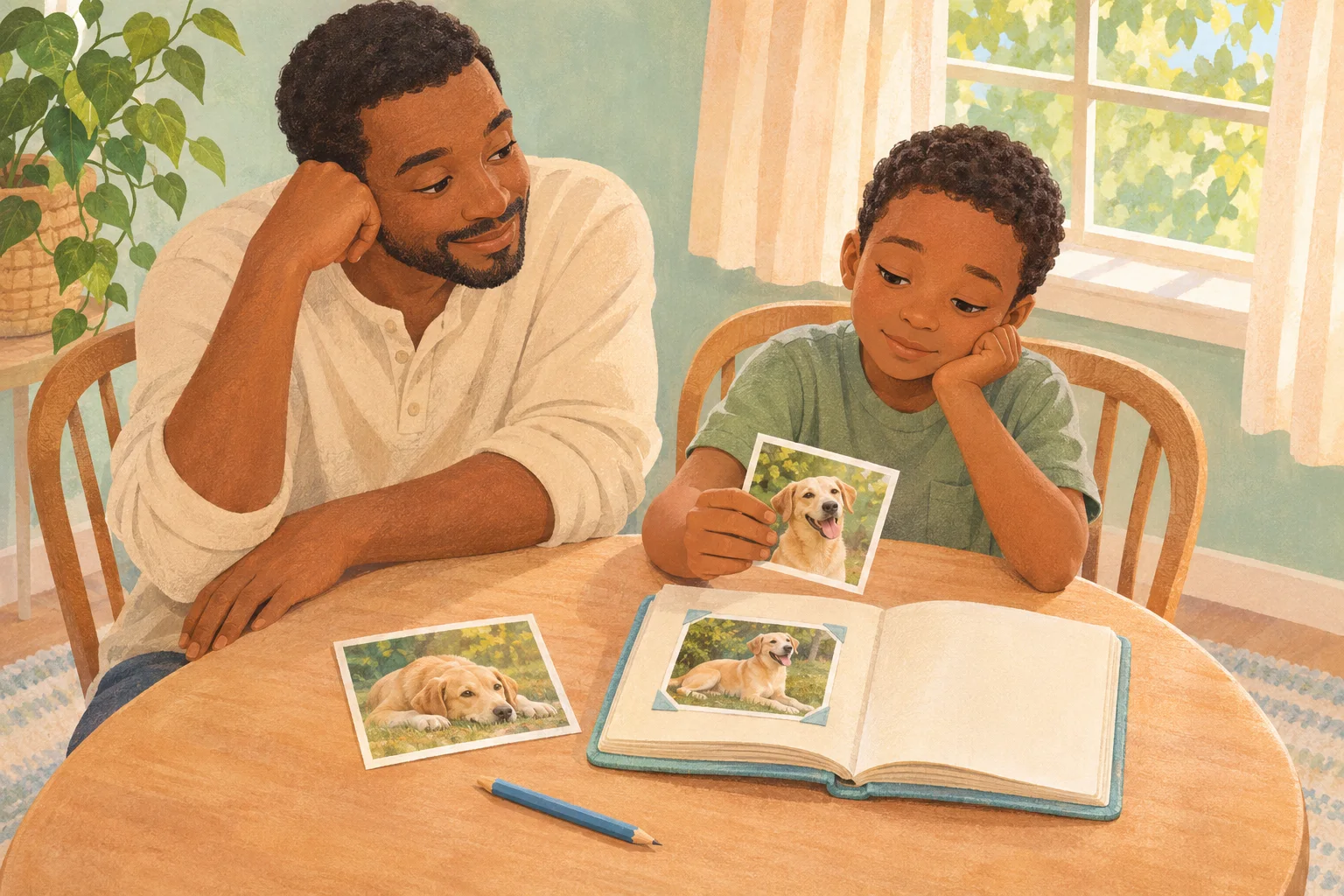
A child might want a small album with pictures they already have, a drawing for their room or a funny story about the animal. They might not want any of these. Present them as ways to keep something familiar nearby, rather than as a ceremony they must complete.
Let the child choose a picture and where it belongs. Respect the other household’s privacy: do not request or circulate images that reveal a protected address, school route or private adult information. A familiar older picture is enough.
Keep the pet’s care supplies where they are needed. Do not take its bedding, medicine or essential equipment to create a keepsake. Equally, avoid adopting a new animal as a quick promise to stop the sadness; another pet would bring its own long-term needs and responsibilities.
Protect the child from negotiation and pressure
“Ask Dad to let the dog come” gives the child an adult task, even when it sounds like you are supporting their wish. Use your agreed communication route yourself. Our guide to keeping children out of co-parent messages can help change that pattern.
Never make a pet visit conditional on the child choosing a parent, carrying information or agreeing to contact they find unsafe. Follow applicable orders and safety plans; a wish to see an animal does not override them. Legal ownership and contact rules vary, so seek qualified local advice for a dispute.
The RSPCA describes how threats involving pets can be part of domestic abuse. If the animal is being used to control or frighten someone, seek specialist domestic-abuse and animal-welfare help through a safe route. Do not send the child to check on or retrieve the animal. Immediate danger requires urgent local emergency help.
Notice how the wider change is going
Missing the pet may sit alongside missing a bedroom, familiar street or ordinary family routine. Our guide to moving after separation can help make those other changes more concrete.
Keep listening without treating every difficult evening as a verdict on the arrangement. If changes in mood, sleep, eating, schoolwork or daily life concern you, speak with the child’s health professional or school support team. For concerns about the animal’s health or behaviour, contact its veterinarian.
A steady response can be simple: “You can miss Milo here. You don’t have to stop caring about him, and you don’t have to sort out the adults’ decisions.”
Sources and further reading
- AAP: children’s questions and support after separation
- Relate: practical decisions when separating adults share a pet
- RSPCA: pets, domestic abuse and specialist support
Read our editorial policy.