Children often connect events to themselves. A preschooler may believe a tantrum caused a parent to leave. A school-age child may try to behave perfectly so the family reunites. A teenager may replay an argument they overheard and decide they should have stopped it. One conversation rarely removes that belief; children need clear reassurance repeated through the transition.
Say the essential message plainly
Use three sentences: “This is an adult decision. You did not cause it. It is not your job to fix it.” Avoid vague phrases such as “We just need space,” which can sound temporary when the decision is final.
The American Academy of Pediatrics recommends telling children they are not responsible and will continue to be loved. Match detail to age, but do not give intimate relationship information or ask the child to judge who was right.
Find the child’s private theory
Ask gently: “What do you think made this happen?” or “Is any part of this feeling like your fault?” Listen before correcting. A child may reveal a specific link: “Dad left after I shouted,” or “If I get better grades, Mum will come back.”
Answer the exact belief: “Your argument did not cause the separation. Adults can be upset about many things, and the decision belongs to us.” Do not dismiss the idea as silly.
Respond honestly to reunion hopes
If reunion is not planned, do not preserve hope to avoid tears. Say: “I know you want us to live together again. We will not be a couple again. We will always be your parents.” If the future is genuinely undecided, say what is known: “We are living separately now. We will tell you when adults make a decision.”
Acknowledge the feeling before changing the subject: “You wish this were different. It hurts.” The child does not need to approve of the separation to adapt to reality.
Keep adult problems with adults
Do not confide financial worries, infidelity, legal strategy or loneliness. Do not say the child is “the only thing keeping me going.” That turns reassurance upside down and makes the child responsible for a parent’s wellbeing.
Use an adult support network, therapist or legal adviser. Keep communication with the other parent direct so the child is not a messenger. These message boundaries offer practical examples.
Use behaviour to reinforce the words
Arrive when promised, maintain routines and tell the child about changes in advance. Protect their relationship with both safe parents. When adults repeatedly fight at handovers, children may conclude they must manage the conflict despite being told otherwise.
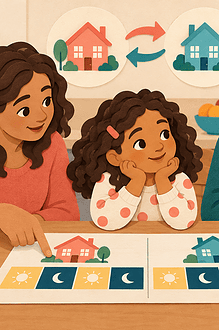
A calm transition plan such as this two-home handover guide helps make the reassurance believable.
Adapt the conversation by age
- Preschool: use concrete plans—who will do bedtime and where the child sleeps tonight.
- School age: correct magical thinking and invite questions more than once.
- Preteens: discuss schedule changes and friendships while protecting adult privacy.
- Teens: give honest practical information and a voice in logistics, without making them a decision maker in the separation.
Expect the question to return
A birthday, holiday, new partner or school event can reopen hope and blame. Repetition does not mean the first talk failed. Say the same core message calmly. Parents should align on the explanation where safe, even if their feelings differ.
If the child shows persistent guilt, withdrawal, panic, self-harm talk, major sleep or eating changes, school decline or aggression, contact a paediatrician or qualified child mental-health professional. Immediate danger requires local emergency help.
The goal is not to convince a child that separation is good. It is to free them from an adult burden. They are allowed to grieve, love both parents and continue being a child while adults take responsibility for what comes next.