Children often notice tension before adults announce a separation. What unsettles them most is uncertainty about their own life. A clear first conversation can remove three heavy burdens: Was this my fault, can I fix it, and who will care for me?
First, understand what the conversation needs to do
When it is safe and possible, agree on a brief message and tell children together. Keep blame, money disputes, legal strategy and intimate history out of the conversation. State what is decided, what is not yet known and when the child will receive an update.
A practical way forward
- Say plainly that the separation is an adult decision, the child did not cause it and cannot repair it.
- Give this week’s practical facts: sleeping places, school transport, contact with each parent and important routines.
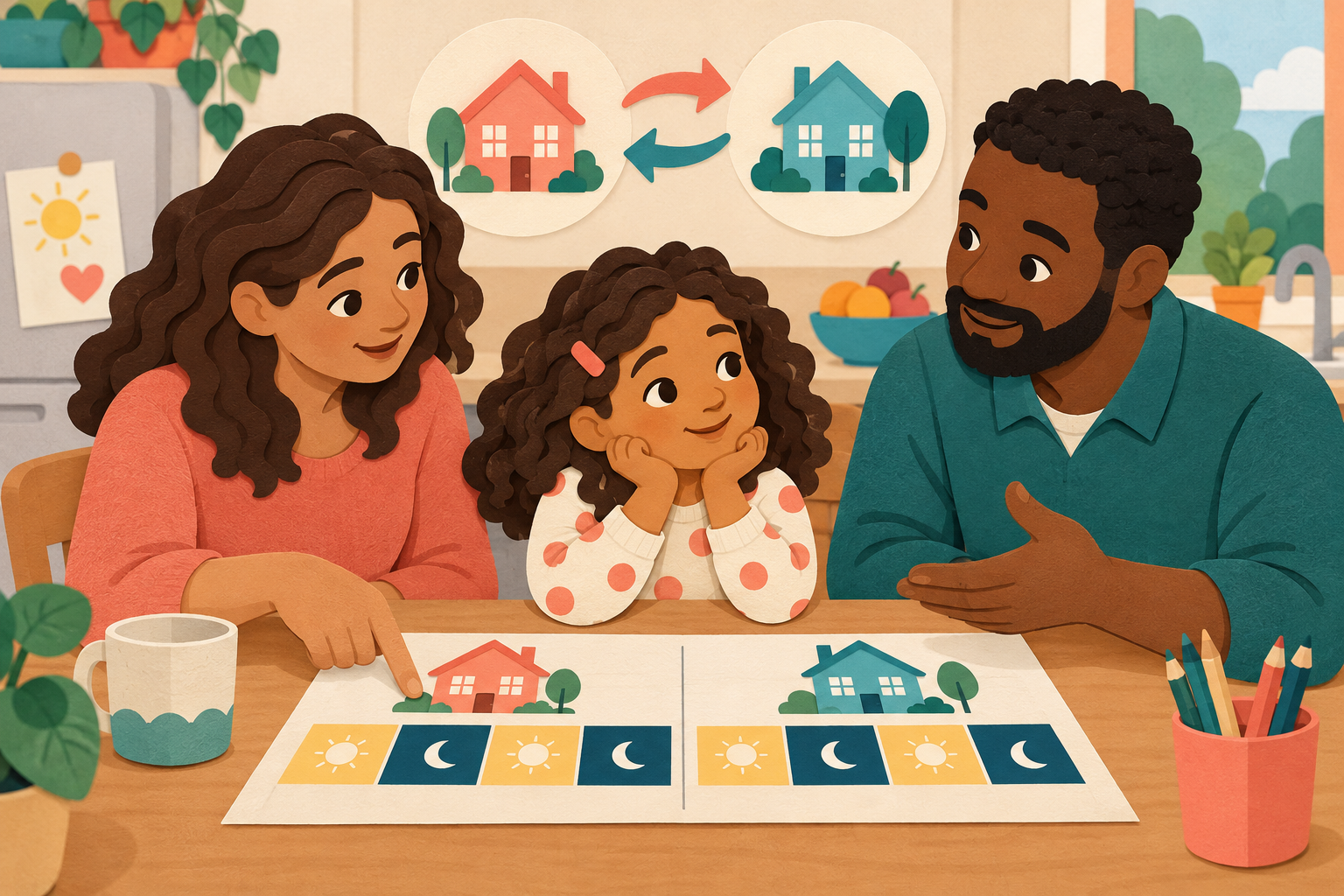
- Use a simple calendar for younger children, while avoiding any loyalty test about where they prefer to be.
- Tell teachers or childcare staff enough to understand changes in sleep, mood or concentration.
Words you can use
Try: “We have decided to live in different homes. This is an adult decision. You did not cause it and you cannot fix it. We both love you and will keep taking care of you.” A short opening is enough. Pause, listen, and let the child’s next question guide the depth of the answer. If they do not want to talk, say you will check back without making them responsible for restarting the conversation.
Adapt the message to age and ability
Younger children need repetition and concrete schedules. School-age children may imagine reunification or blame themselves. Teens deserve honest practical information and privacy, but should not become advisers or substitute partners. Children who communicate differently may benefit from visual schedules, pictures, written choices or extra processing time. Keep the core message consistent even when you simplify the words.
What to avoid
- Do not use the child as messenger, spy or referee.
- Do not criticize the other parent within earshot.
- Do not ask the child to keep the separation secret.
When to bring in more help
Temporary clinginess, anger or sleep trouble can occur. Seek help when distress persists, school functioning falls sharply or conflict makes the child feel unsafe. Family violence, coercive control or threats require a safety-led plan and specialist support.
One conversation rarely finishes a difficult subject. Return in ordinary moments, notice behaviour as well as words, and keep warmth and boundaries together. Useful related reading includes bridging communication gaps, building a trusted-adult network, and supporting worries and knowing when to seek help.
Make the plan workable in real life
Children may test whether the new plan is real by asking the same question or behaving more dependently. Answer consistently. A favourite item in each home, predictable calls and a written schedule can reduce the mental load. If plans change, tell the child directly and take adult responsibility instead of blaming the other household.
At handovers, use neutral words and allow the child to miss the other parent without treating that feeling as rejection. New partners, moves and altered holidays deserve separate conversations rather than being bundled into the first announcement. Children adjust better when adults absorb complexity and offer them dependable care.
- Choose a calm time rather than starting in the heat of conflict.
- Ask the child to repeat the plan in their own words.
- Write down the next small step and who will help.
- Return to the subject after the child has had time to process it.
Children also need permission to love both parents and to enjoy time in either home. A good day with one parent is not a betrayal of the other. Adults can make this explicit and avoid asking for detailed reports after visits.