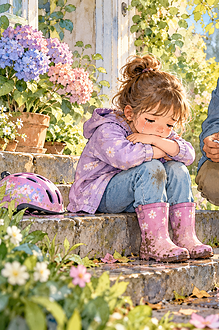
Fear of the dark, dogs, storms, separation, mistakes, bad news or speaking in class can appear at different ages. Occasional worries are part of meeting a complicated world. The useful question is not “Is this fear silly?” but “How intense is it, how long is it lasting, and how much is it changing my child’s life?”
Listen before reassuring
“There is nothing to worry about” can close the conversation. Start with curiosity: “What part feels scary?” “When does the worry show up?” “What do you imagine might happen?” Reflect the feeling without confirming an unlikely danger: “Your mind is sending a strong alarm. Let’s work out what we know and what might help.”
If your child needs time before talking, use drawing, dolls or a bedtime check-in. Ten minutes of undistracted connection can make it easier for worries to surface. The child-led special-time routine is one simple starting point.
Practise coping when the child is calm
- Take a slow breath together, lengthening the exhale.
- Name one fact in the present: “We are indoors and the thunder is outside.”
- Choose a useful sentence: “I can feel scared and take one step.”
- Break the feared task into a small, repeatable step.
Do not force a child into the most frightening version of a situation or ridicule them for avoiding it. Gentle, gradual practice works best when the child knows the plan and can recover between steps. For a slow social start, see supporting a slow-to-warm-up child and apply the same principle of preparation without labels.
Keep ordinary life steady
Predictable meals, movement, sleep and school routines can reduce uncertainty. Check whether frightening videos, news or peer messages are feeding the worry and adjust access without making the world sound more dangerous. For school worries, coordinate quietly with the teacher or counsellor so the child has a plan that supports attendance rather than repeated escape.
Watch function, not just frequency
A fear deserves extra attention when it persists or grows, causes repeated physical symptoms, prevents sleep, school, play or friendships, or requires the whole family to reorganise life around avoidance. A sudden change after bullying, a loss, violence, illness or another frightening event also warrants support.
Talk with your child’s doctor or a qualified mental-health professional if worry is interfering with daily life. Do not diagnose from a checklist or promise a particular treatment. If a child talks about self-harm, suicide or not wanting to live, cannot stay safe, hears or sees things others do not, or is in immediate danger, seek urgent local emergency or crisis help and stay with them.
Adapt your language by age
Preschoolers benefit from simple facts and repeated routines. School-age children can map the worry and choose one brave step. Preteens and teens often want privacy and a say in the plan; ask before offering advice, while still acting when safety is at risk.