Parents may fear that a child growing up between cultures will lose an important language, faith, story or way of life. That fear can turn heritage into a test: speak perfectly, enjoy every dish, dress correctly, choose one side. Children are more likely to build a living connection when culture is offered with warmth, honesty and room for their own questions.
- Begin with ordinary life
- Use the languages you can use warmly
- Tell stories with context
- Make participation an invitation
- Allow a both-and identity
- Respect the other parent’s culture
- Examine traditions as well as celebrating them
- Connect children with living people
- Respond to rejection with curiosity
- Create something new together
- Sources and further reading
Begin with ordinary life
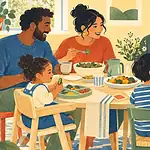
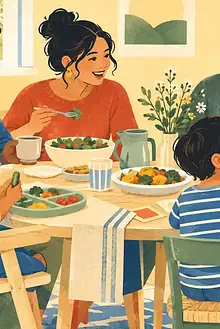
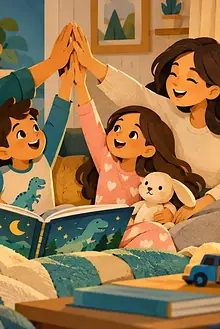
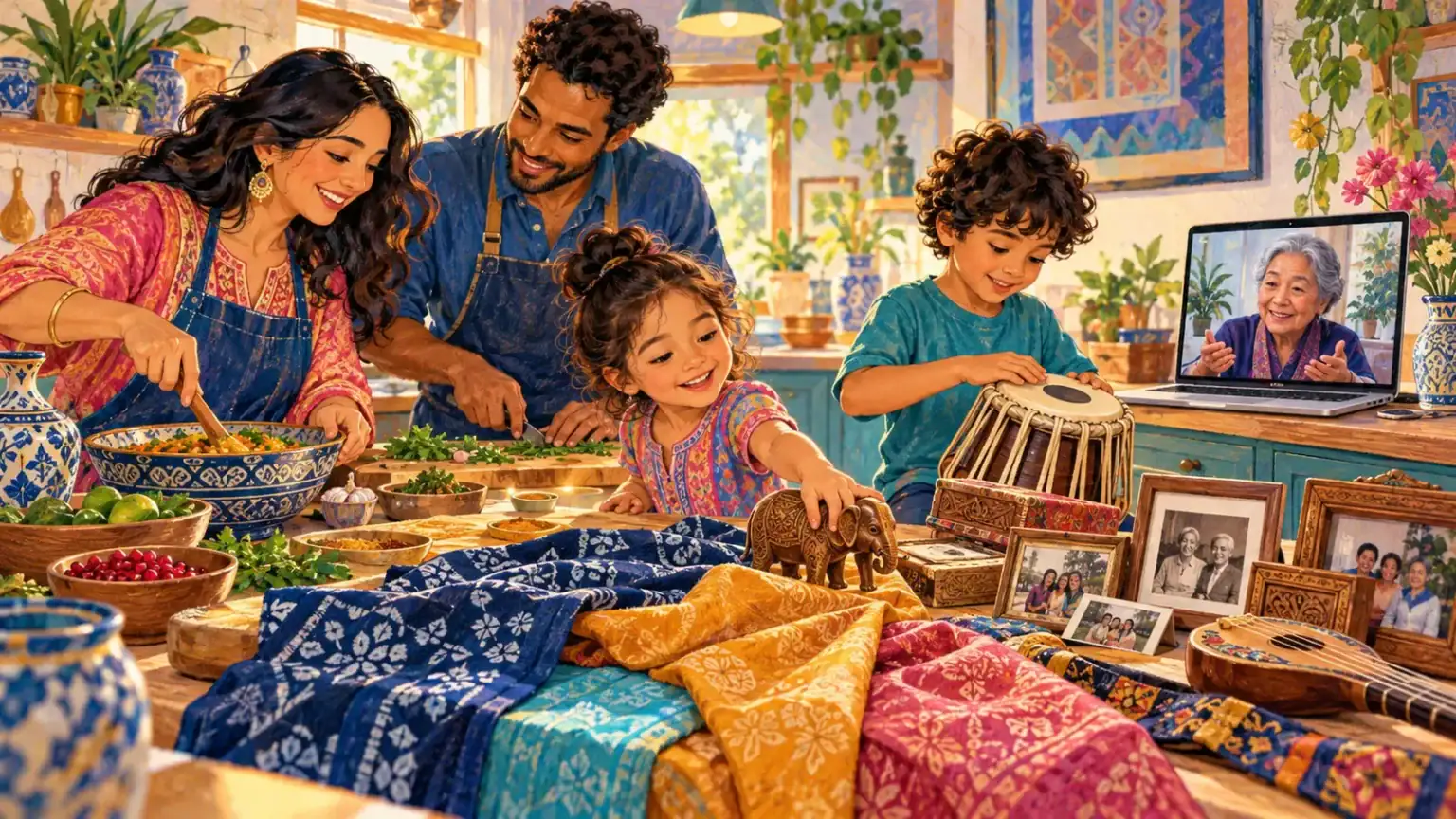
Heritage is not only festivals and formal clothes. It lives in greetings, recipes, songs, humour, names, family stories, care for elders and ways people solve problems. Choose practices the family can repeat: a bedtime song, Sunday call, market visit or recipe prepared together.
The American Academy of Pediatrics encourages parents to speak positively about family history and traditions while showing respect for other cultures. Pride and openness can coexist.
Use the languages you can use warmly
Talk, sing and read in the language that lets you connect naturally. A child may understand more than they speak, mix languages or prefer one in public. Do not mock pronunciation or withhold affection until they answer correctly.
AAP guidance notes that multiple languages do not cause speech or language disorders and can support family and cultural ties. If a child has a communication concern, seek a qualified professional who understands multilingual development or works with an interpreter.
Tell stories with context
Share how a tradition began, who practises it and how it has changed. Include migration, resilience and achievement without presenting any culture as flawless. Say, “This is how Grandma did it,” rather than “Real members of our family always do this.”
Make participation an invitation
Offer roles: choose music, stir the dish, ask an elder a question, photograph an object or design a new decoration. Adapt for disability and sensory needs. A child can listen from another room, use an alternative food or skip uncomfortable clothing and still belong.
Allow a both-and identity
A child may be Indian and Kenyan, religious and questioning, connected to one parent’s heritage more strongly at one stage and curious about another later. Do not demand a percentage or force them to defend one side against relatives, peers or strangers.
Correct comments such as “You are not really one of us” or “You do not look like this family.” The child’s identity is not a debate for adults.
Respect the other parent’s culture
In multicultural or separated families, do not present traditions as rivals. Coordinate important dates where possible and avoid using the child to prove loyalty. The planning principles in holidays across two homes can protect cultural celebrations after separation.
Examine traditions as well as celebrating them
Families can preserve art, language, community and values while changing practices that harm, exclude or deny a child’s rights. Explain the distinction: “This has been done in our community, but we choose a safer and fairer way.” Respect for ancestors does not require repeating every practice.
Connect children with living people
Call relatives, visit community events, meet artists or cooks, and invite elders to tell their own stories. Ask permission before recording or publishing. Avoid turning one person into a spokesperson for an entire culture.
For distance, adapt the shared-project ideas in building long-distance grandparent connection.
Respond to rejection with curiosity
A child who refuses a language class may be tired, embarrassed, experiencing racism or needing more choice. Ask what is hard. Reduce pressure, find peers, change the format or pause. Connection can return later if the door remains open.
Create something new together
Blend recipes, translate a family saying, make a playlist across generations or add a new ritual. UNESCO describes living heritage as something transmitted across generations that also adapts over time. Change does not automatically mean loss.
Children have a right to their language, culture and religion. They also have a right to grow. The goal is not perfect reproduction of the past; it is a secure invitation to know where they come from and help decide what they carry forward.