Age guide: 3 to 10 years. Useful after any of the games on this site.
The game is only half the story. What you say afterwards can turn ten minutes of running about into something your child remembers and uses. The good news is that you do not need a script or a long chat. A few simple questions are enough.
Three kinds of question
Try one or two, not all of them, and let your child’s answers lead.
Looking back. What did you like best? How did you work that out? What was your plan? What was the hardest part? These help your child describe what they did.
Looking around. Where have you seen something like this before? When have you done a similar thing at home or at school? Does it remind you of a story? These connect the game to everyday life.
Looking ahead. What would you do differently next time? What else could we try? Who could we teach this game to? These invite your child to take the idea further.
If your child says “I don’t know,” that is a perfectly good answer. Stay quiet for a moment, or say, “Let me know if you think of something later.”
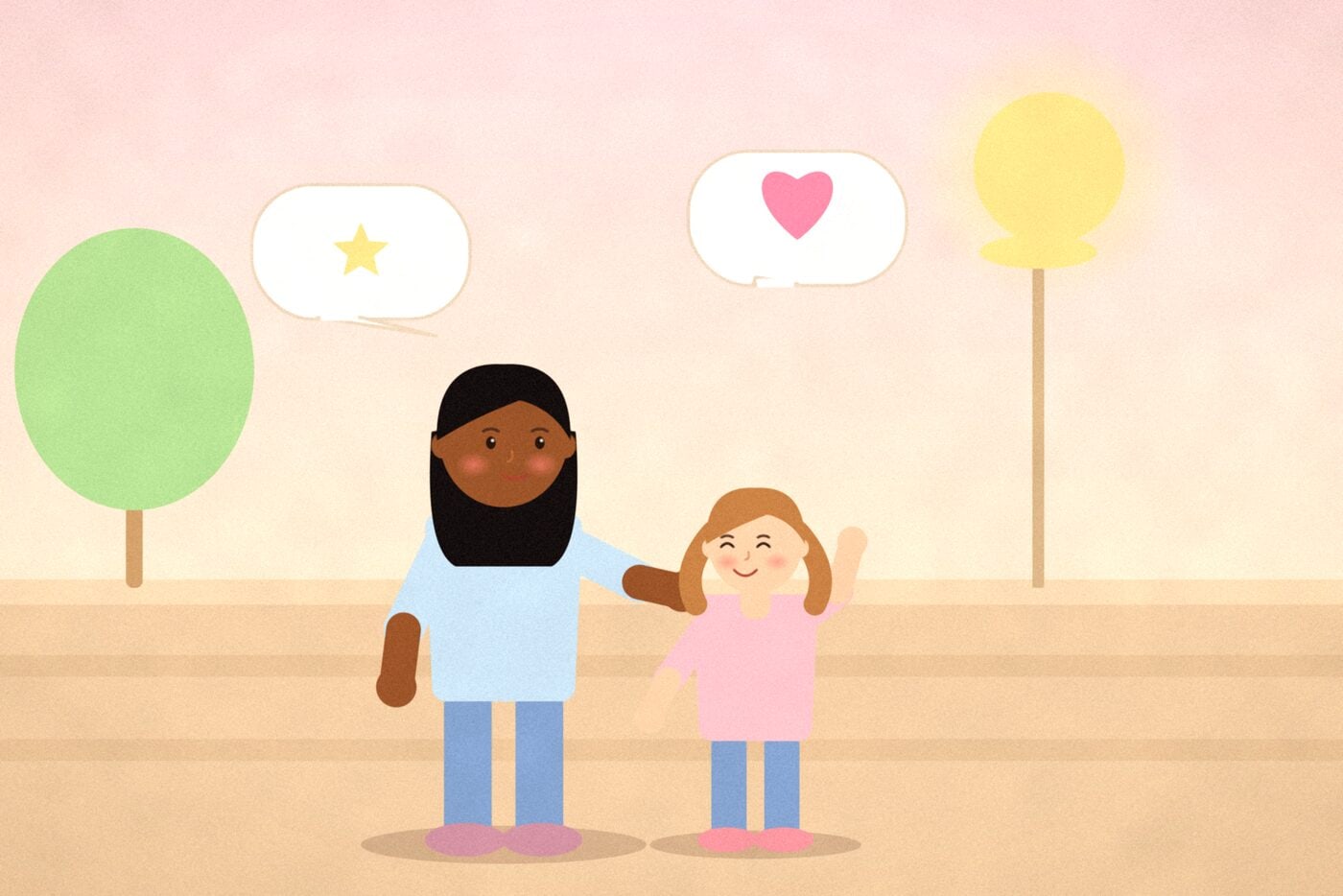
Praise the plan, not just the result
If a child tells a story or builds a tower, notice how they went about it: “You decided what to build first.” “You tried a different way when that fell.” It gives them something they can repeat. For more on this, see praise that helps.
Games without a loser
Many of the games here work best when nobody wins or loses. A few ways to take pressure off:
- Play together towards one goal, such as reaching ten points as a team.
- Cheer for players who are still finishing, instead of just the first one.
- Give the “middle” spot in a circle game a little celebration. Whoever is in the middle gets to choose the next move.
- Keep the focus on trying, not on scoring.
When someone gets upset
Sooner or later, somebody feels cross or left out. It is not a sign the game has gone wrong. Pause, name what you see (“You wanted a turn”), and decide together what to do. Our ideas for sharing without the tug-of-war may help. Take a break and come back later if you need to.
Keep it short
Two minutes of talk is plenty. A game that ends while everyone still wants more is usually a good game.