One child is ready for a story at seven. Another is finishing homework. A teenager wants the kitchen after everyone else is asleep. Families often respond by forcing one bedtime or improvising every evening. Neither is necessary.
Siblings can share a wind-down window while keeping different sleep times. The useful distinction is between what the family does together and where each child’s individual routine ends.
Start with sleep needs, not sibling comparison
Bedtimes should reflect age, wake time, sleep pattern, health needs and how the child functions during the day. They should not be prizes for maturity or punishments for behaviour. A younger child may occasionally stay up for an event; an older child may sometimes need an earlier night.
Explain fairness plainly: “Your bodies and mornings are different, so your finish times are different. Everyone gets a routine that helps them be ready for tomorrow.” Avoid announcing that one child is the baby or the responsible one.
Create a shared evening anchor
Choose one event that includes everyone when possible: dinner clean-up, a ten-minute family read, preparation for tomorrow or a quiet check-in. Then the paths separate.
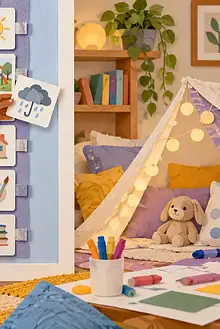
A visual plan might show:
- shared tidy and bathroom turns;
- younger child: pajamas, story, cuddle, lights low;
- older child: quiet activity, personal care, prepare school items;
- teen: agreed device and noise boundaries, then own wind-down.
Pictures may suit younger children; older children may prefer a private checklist or alarm. Do not put a teenager’s personal hygiene routine on a public family chart.
Plan the one-adult handoff
If one adult is managing several children, overlap only what is safe. The older child might read independently while the younger child receives a short story. A preschooler should not be left supervising a baby, and an older sibling should not become the default bedtime parent.
Use small, reliable promises: “I will sit with you for five minutes after I tuck her in.” A timer can help the adult remember, but it should not be used to eject a child mid-conversation. If two children need help at once, name the order: “I’m helping with teeth, then I’ll come to your room.”
Manage noise and shared bedrooms
When siblings share a room, identify a low-light, low-noise place where the later sleeper can spend the final part of the evening. Prepare clothes and bags outside the bedroom. Use headphones only at safe volumes and when the child can still hear necessary alarms or adults.
The earlier sleeper may need white noise, but keep volume low and place the device away from the bed. The later sleeper needs a clear return routine: enter quietly, use a small light and avoid searching through drawers.
Handle protests without reopening the whole plan
A younger child may say, “It’s not fair.” Agree with the feeling without pretending the times are equal: “You wish you could stay up too. Your bedtime is now. Tomorrow we can choose the story together.” Offer choice inside the limit—two pajamas, one of two books—not a negotiation about the limit itself.
If the older child exploits the quiet period, address the specific issue rather than moving everyone to the same bedtime. A later finish depends on keeping noise low and following the agreed routine.
Review daytime evidence
If a child is repeatedly taking a long time to fall asleep, waking exhausted, snoring loudly, gasping, having persistent nightmares or struggling substantially during the day, discuss the pattern with a qualified health professional. Do not solve ongoing sleep problems solely by moving a chart.
For bedtime requests that keep multiplying, see a kinder finish to bedtime. Families in two households may also use bedtime anchors across two homes.
The goal is not a silent corridor at a perfect time. It is an evening in which each child knows when connection happens, what they do next and why different finish lines can still be fair.