At 7:20, one child is brushing at the sink, another needs the toilet immediately, and a third cannot find a towel. “Hurry up” describes the adult’s feeling, but it does not tell anyone what to do next.
A shared-bathroom routine needs two kinds of planning: private access for toilet, bathing and changing, and flow for tasks that can happen elsewhere. The aim is not to process children like an assembly line. It is to reduce avoidable collisions while protecting dignity.
Map the actual bottleneck
For two mornings, notice where the queue forms. Is there only one toilet, one mirror, one hairbrush or one adult who can supervise toothbrushing? Which tasks truly require the bathroom? Dressing, hair detangling, packing toiletries and applying moisturiser may be moved to a bedroom or another safe, well-lit place.
Ask each child what feels difficult. One may need more time for motor tasks. Another may dislike noise or strong smells. A child who menstruates may need discreet storage and a bin. Fair does not mean giving everyone identical minutes; it means designing access around real needs.
Build a visible sequence
Put four to six steps where they are used. A younger child’s card might show toilet, flush, wash, brush, wipe sink and leave. An older child may need only a short checklist outside the door. Keep personal care details private rather than displaying them to visitors.
Use names, colours or symbols for turn order. If emergencies override the order, say that in advance: “A person who urgently needs the toilet goes first. Brushing can pause.” A door sign—free, occupied, help needed—can reduce knocking for children who read or understand symbols.
Give every person a home for supplies
- Use separate, clearly marked toothbrushes and cups.
- Store medicines, razors, cleaning chemicals and electrical items securely away from children.
- Keep a small basket for each child’s everyday safe items.
- Place a stable step stool and non-slip mat where needed, without blocking the door.
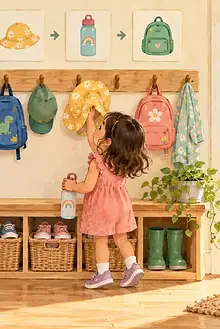
- Keep towels reachable and provide a hook low enough for younger children.
A picture routine cannot compensate for an environment the child cannot physically use. Move the soap, towel or basket before adding more reminders.
Teach the routine outside the rush
Walk through one child’s sequence on a calm afternoon. Model a step, practise together and reduce help gradually. For toothbrushing, younger children still need adult supervision and may need an adult to finish the brushing; independence should match skill rather than age pride.
Use one clear direction at a time. “Put your toothbrush in your cup” is more useful than “Stop messing around.” When the routine works, name the concrete action: “You moved your basket out so your sister could use the sink.”
Prepare a backup version
Water cuts, sickness, guests and oversleeping will disrupt the ideal order. Create a minimum routine: toilet, hands, teeth and essential health or menstrual care. Hair styling and long showers can wait. Keep a spare toothbrush and basic supplies, but do not share personal hygiene items.
For a child with sensory or mobility needs, a different schedule or equipment may be necessary. If bathing itself is difficult, EdCaptain’s sensory-friendly bath or shower routine offers focused adaptations. For the wider morning, use the calmer school-morning plan rather than loading every solution onto the bathroom.
Protect privacy as children grow
Knock, wait for an answer and provide private changing space. Siblings may need separate bathing well before adults expected. Never make a child explain a body, period, continence or medical need to earn more time. If one child requires assistance, agree on who helps and how the door will be managed safely.
A calmer shared bathroom is not perfectly silent. It is a space where everyone knows the order, can reach what they need, has a route for urgent needs and receives privacy without having to fight for it.