School holidays remove the timetable that has held much of the family week together. That freedom can feel wonderful—and oddly tiring. Some children ask what is happening every ten minutes. Some teenagers sleep through half the day. Adults may be working, caring for several ages or trying to make limited money and energy stretch.
A holiday rhythm is not a home-made school day. It is a handful of dependable points that help everyone locate themselves while leaving broad spaces open.
Choose anchors before activities
Begin with events that happen on most days: wake-up range, first meal, outside or movement time, quiet period, evening meal and wind-down. Pick three or four that matter most. “Breakfast, move, quiet, reconnect” may be enough.
Anchors are more reliable than promises such as “zoo at ten.” An outing can be placed between anchors and changed if weather, money or energy changes. The anchor still holds: after breakfast comes a check of the day; after lunch comes quiet time; after dinner comes the usual wind-down.
Make one light visual
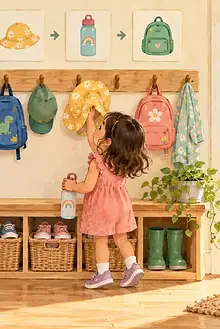
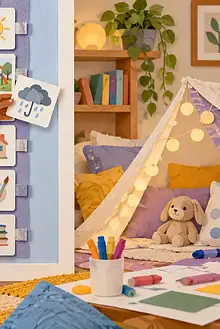
For younger children, use pictures for morning, middle of day and evening. Older children may prefer a whiteboard or shared calendar. Include a symbol for “choice/open time” so blank space does not look like a mistake. If plans are uncertain, say so: “After lunch, either the library or home play. We will decide at eleven.”
Review the plan once, not continuously. A two-minute morning huddle can cover:
- what is definitely happening;
- one thing that might change;
- who is working, resting or going out;
- one household job everyone will help with;
- where children can find food, water and safe activity choices.
A sample rhythm that can bend
Morning anchor: eat, get washed and dressed, then do a quick room reset. After that, children choose free play, reading or an outing.
Midday anchor: lunch followed by a quiet block. A toddler may nap; a school-age child may draw or listen to an audiobook; a teenager may have private time. Quiet does not have to mean sleep.
Afternoon anchor: some form of movement or fresh air when safe and possible—walking, wheeling, dancing, active chores or a playground visit.
Evening anchor: a meal, shared tidy and a familiar wind-down. Bedtimes can remain age-appropriate rather than identical.
Plan for workdays and low-energy days
If an adult is working from home, show clearly when they are available and when they are not. Prepare two or three reachable activity baskets rather than an entire craft shop. Rotate materials instead of leaving everything visible. Pair independent blocks with short, predictable connection: ten minutes together after a meeting can be more dependable than vague promises all afternoon.
On a low-energy day, shrink the plan without treating the day as a failure. Breakfast, floor picnic, quiet block, walk to the corner and story still form a day. Expensive entertainment is optional. Ordinary materials and everyday routines can support play and participation.
Make room for different ages
Babies and toddlers need care routines and frequent movement spread through the day. School-age children can help choose a menu of options and take responsibility for one small preparation. Tweens and teens need meaningful privacy and a voice in shared commitments. Ask before scheduling them as unpaid entertainers for younger siblings.
For days with several fixed events, adapt EdCaptain’s flexible weekend visual plan. Near the end of the break, restart ordinary routines one at a time rather than imposing a dramatic reset.
Review the rhythm after three days
Ask what is repeatedly difficult. Is lunch too late? Is the quiet block unrealistic for one child? Does everybody need to get outside earlier because afternoons are hot? Change the structure, not the child’s character. The best holiday rhythm is visible enough to answer “what happens next?” and loose enough to let a holiday still feel different.