By EdCaptain editorial desk · Published
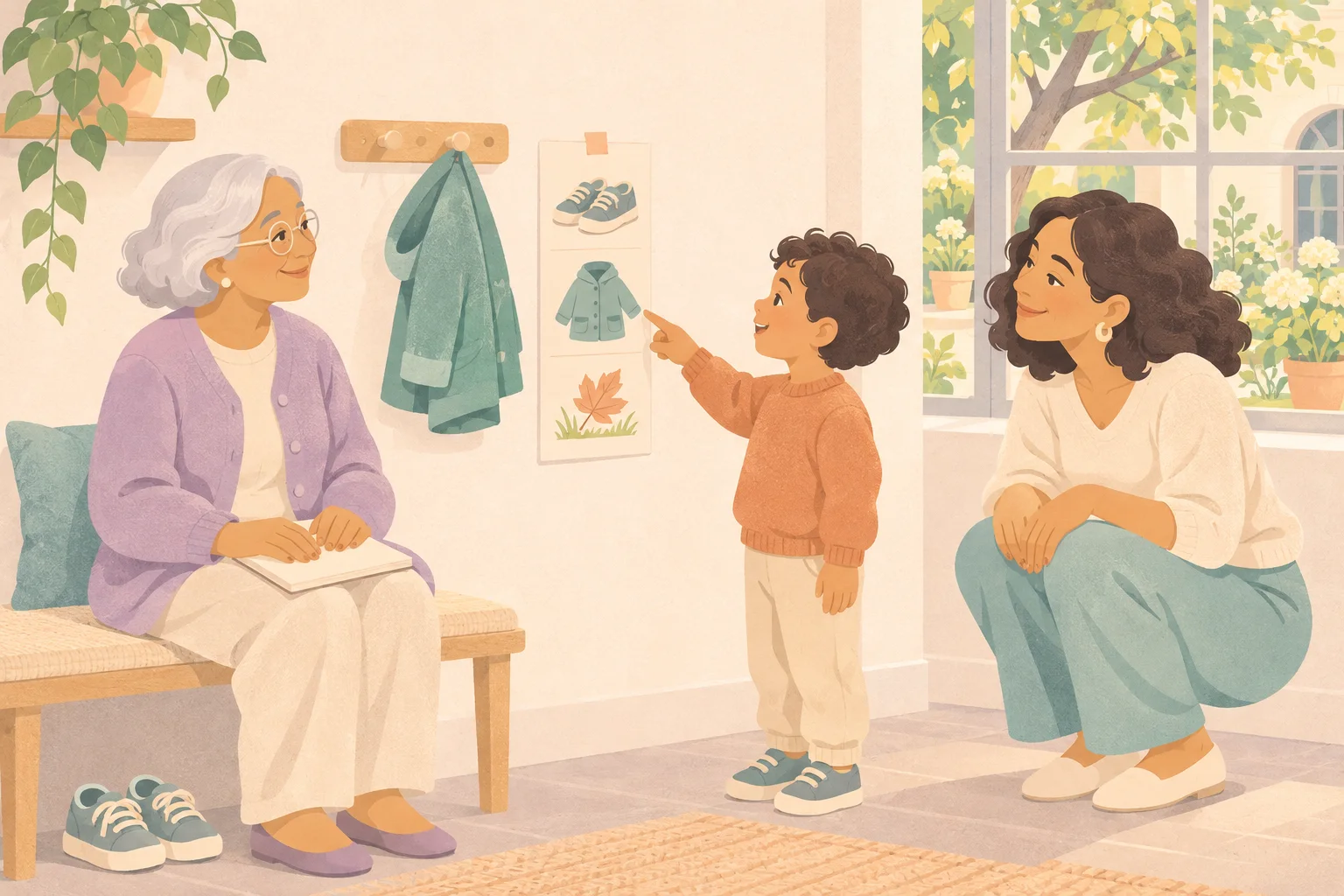
Grandma calls it one thing; you use another word. Your preschooler hears both every day. A picture routine can give everyone a shared reference without asking the family to use only one language.
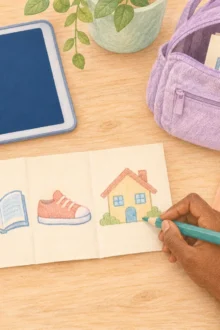
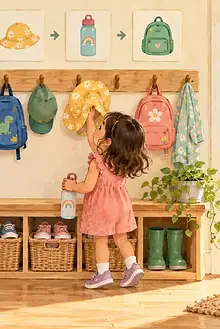
For children aged 3–5, the useful agreement is about what happens: which picture means putting shoes on, where the coat goes and who helps with the zip. Caregivers can use different languages while showing the same familiar actions.
Keep the languages; clarify the routine
England’s Department for Education guidance on additional languages supports children’s home languages and recommends sharing routine information with families. It also describes using photographs and demonstrations to make routines understandable. You do not need to replace comfortable family conversation with English to make a picture strip work.
Start by asking the adults what the child actually does in this moment. “Get ready” may mean shoes to one caregiver and shoes, coat, bag and toilet to another. That difference needs an adult conversation, whatever languages are spoken.
Choose one small routine to coordinate, such as getting ready for a short walk. This is not a whole-day translation project. If the chart itself is difficult to use, our guide to making a routine chart usable can help you simplify it first.
Agree on the meaning before making the cards
Talk together at a calm time, using adult language help if needed. Walk through the actual space. For each proposed picture, agree on three things:
- The action: what will the child do or join in with?
- The help: what remains the adult’s responsibility?
- The finish: how will everyone know this step is complete?
For a coat picture, the shared meaning might be: the child brings their coat and puts their arms in; the adult helps with the fastening. It should not mean “do every fastening alone” with one caregiver and “wait while I fetch everything” with another unless that difference is explained.
Adults do not have to say a word-for-word translation. Each can use a natural short phrase in the language they share with the child. Keep the action recognisable, and avoid turning every step into a request to repeat vocabulary.
Make one small, readable set
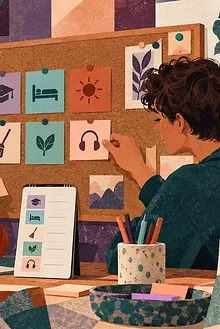
You need paper or card, a pencil and a safe place to display the sequence. Familiar drawings or your own photographs may work. A photograph of the child’s real coat is often worth trying before an unfamiliar symbol; check what the child understands rather than assuming pictures speak for themselves.
The Illinois Early Learning Project’s preschool guidance describes home-language labels and visual aids alongside predictable routines. At home, a short label in each caregiver’s preferred written language can help adults remember the agreed meaning. It is optional: a child need not read the labels to participate.
Check spelling and everyday meaning with a fluent adult. If scripts differ, keep both legible instead of squeezing one into tiny print. Do not use national flags to stand for a child’s language or assign one language the “proper” label. If labels crowd the pictures, put the adult notes on a separate page.
For adults who prefer spoken information, walk through the sequence together or make a private voice note, with everyone’s agreement. Do not include sensitive details in a shared recording or publicly post photographs of the child.
Teach it together through the real activity
Just One Norfolk’s NHS visual-timetable guidance explains that adults need to teach children how to use the pictures at activity changes. A shared family strip also needs that introduction.
- Show the first picture. Get close enough to share attention. Name the action in the language you normally use together, then demonstrate it.
- Do that step with the usual help. The picture is a prompt, not a test of independence. Leave time for the child to respond.
- Show that it is finished. Turn the card over or move it to a finished place. Use the same finishing method whichever adult is helping.
- Point to the next action. The next caregiver can use their own familiar words while keeping the agreed meaning.
- Review with the adults later. Notice which picture, instruction or practical obstacle caused confusion. Adjust that part rather than adding more languages to an already crowded card.
Do not rehearse the entire sequence twice merely to hear it in both languages. On an ordinary day, the adult who is helping can speak naturally. The other language remains welcome when another caregiver joins.
Let the child communicate without interpreting for adults
Your child may point, gesture, sign, use a communication device or answer in a different language. Respond to the message. There is no need to insist on the “right” language before helping with a coat or opening a door.
If two adults disagree about the instruction, pause and clarify it between yourselves. Avoid asking the preschooler to explain what one adult meant to the other. Arrange adult interpretation for important care conversations; a picture strip cannot carry medical, safeguarding or emergency instructions.
Keep the child’s existing communication supports available. For low vision or other access needs, seek advice about usable contrast, size, position or a familiar object cue. Do not force looking, pointing or touching as proof of understanding.
When another caregiver does things differently
Some differences are harmless. One adult may sit on the bench to help with shoes while another uses a stable chair. They can explain that without rebuilding the chart. A changed activity or sequence needs a visible update; our guide to showing an unexpected change covers that situation.
If you discover that a picture means two different actions, revise it together. For example: “We used this card differently. This one will mean coat on; then we show going outside.” Treat it as a tool to repair, not evidence that a language or caregiver is the problem.
Keep loose cards, magnets, pins and small fastenings away from children who might mouth them, and supervise the routine normally. Pictures do not replace help or safety decisions. After a few uses, ask the adults what became clearer and watch whether the child can access the next step with support. A useful shared routine leaves room for several languages and ordinary family warmth.
Sources and further reading
- Department for Education: supporting children who use additional languages
- Illinois Early Learning Project: helping preschoolers learn in two languages
- Just One Norfolk NHS: introducing and using a visual timetable
Read our editorial policy and health information guidance.