Age guide: 3–10 years; adapt format to communication needs
You printed the chart, found the magnets and introduced the new system with the enthusiasm of a television presenter. Three days later, you are still the only person checking it. Before buying a better planner, ask whether this one is doing a useful job.
The short answer
- A chart is a prompt, not a skill lesson.
- Start with one short routine.
- Use a format your child understands and can reach.
- Change the tool when the tool is the problem.
Head Start recommends using visuals, modelling steps and allowing practice when teaching routines. The examples below are ways to explore those ideas at home, not a validated assessment of your child’s abilities.
1. Ask your child to explain the chart
Try: “Show me what this picture means.” A drawing of a tidy room may mean something very different to a child than to an adult. If the symbol is confusing, take a photo of the actual task or use a familiar object as a cue.
For a child who prefers text, decorative pictures may add clutter. For another, written instructions may be inaccessible. Match the format to the person using it.
2. Shrink the job
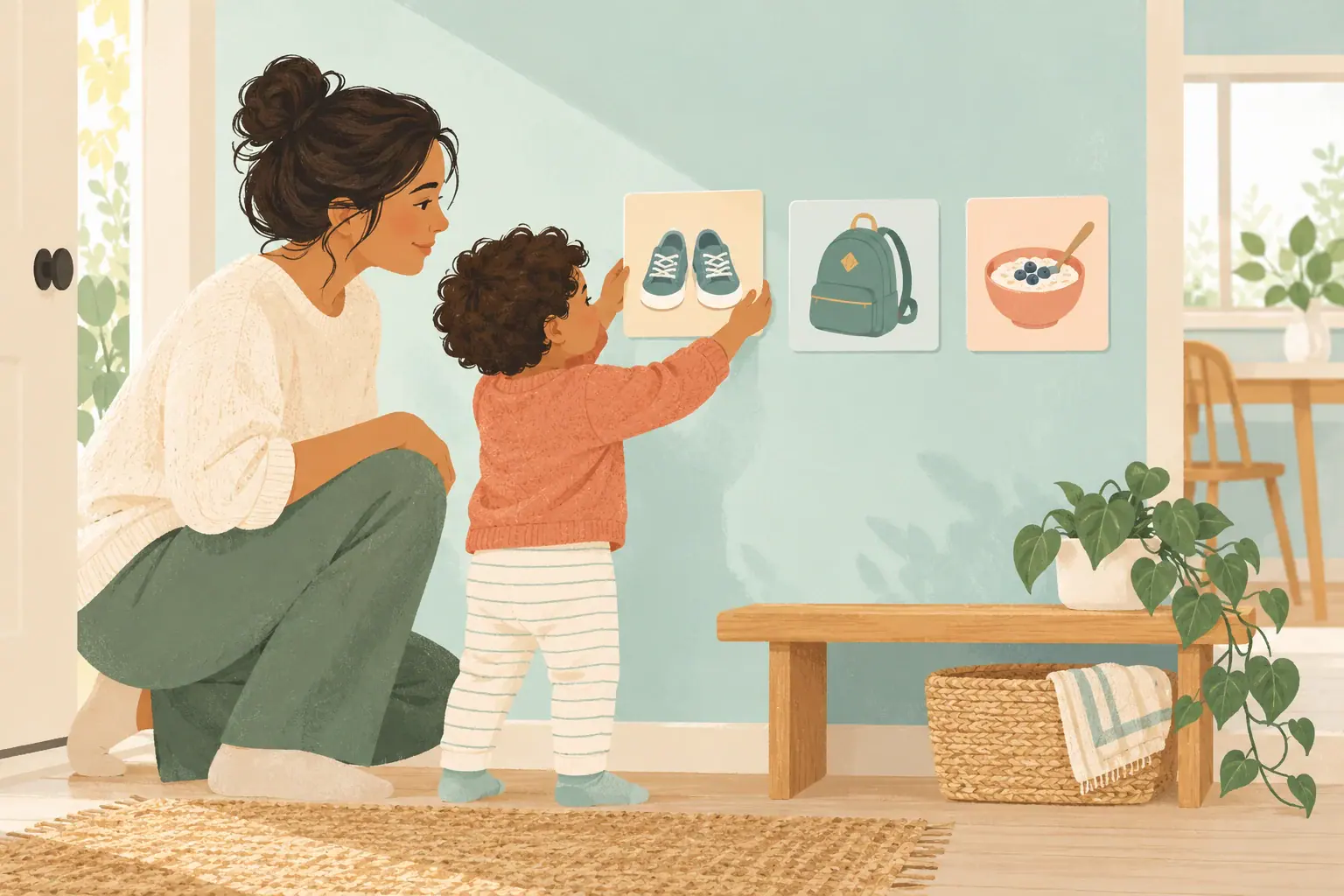
A whole-day timetable can hide the very step you want to support. Try a card for just the troublesome moment: “Shoes, bag, meet at the door.” This is an example, not the right sequence for every family.
- Remove tasks that do not belong to this moment.
- Split any step that still needs an adult explanation.
- Keep necessary help visible in the plan.
- Make changes with your child, rather than secretly changing the rules.
3. Walk through it when there is no deadline
Pretend it is time to leave and try the sequence together. Let your child discover practical obstacles: the shoes are upstairs, the picture is too high, or the bag is too heavy. Fix what you can.
Then use a brief prompt such as “What does your card show next?” If that adds frustration, demonstrate instead. Repeatedly pointing to a chart is not more respectful than repeatedly shouting the instruction.
4. Separate remembering from earning
A visual schedule shows what happens. A reward chart records progress towards a goal. They can serve different purposes. You do not have to turn each routine into a competition, award points for feelings, or compare siblings.
Keep any agreed reward simple and achievable. Do not remove food, affection, bathroom access or needed support because a square is empty.
5. Run a small usability check
After a few days, ask three questions: “Could we find it?”, “Did we understand it?”, and “Did it help?” Keep what works and discard what does not. The trial period is a practical suggestion, not a deadline for mastery.
A child who still needs reminders has not failed the chart. If everyday organisation remains difficult across settings, coordinate with relevant professionals about useful supports. The best tool is the one that helps your family, even if it is an ordinary note on scrap paper.
Keep exploring
- School mornings without the daily emergency: a plan you can actually use
- “How many times do I have to ask?” Make the next request easier to follow